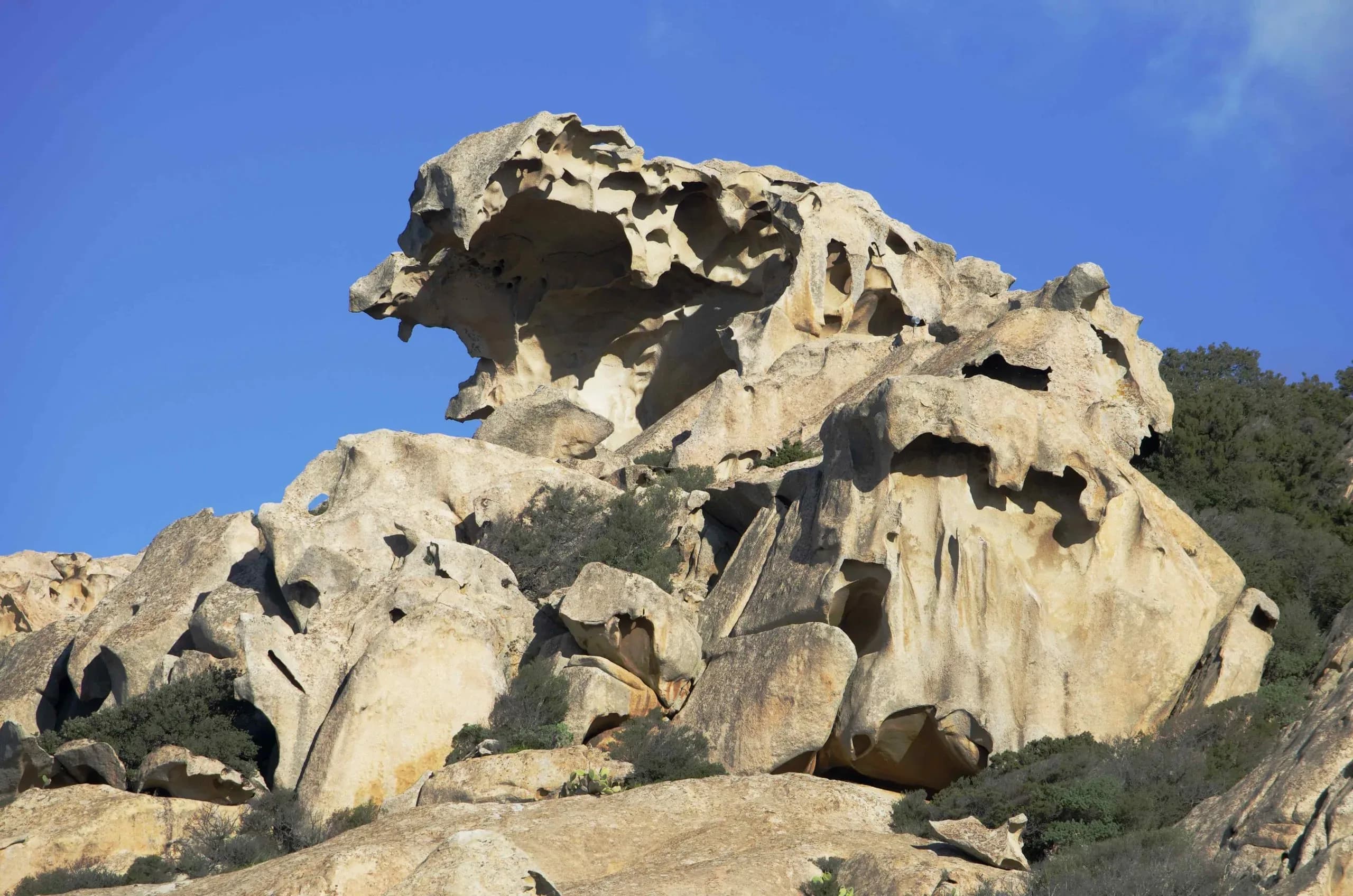

Capo d'Orso, also known as Roccia dell'Orso (the Bear Rock), is a granite headland just outside Palau in Gallura, on Sardinia's north-east coast. Wind, salt and rain have sculpted the granite over thousands of years into a shape that really does look like a seated bear gazing out to sea, and for generations sailors used it as a landmark for crossing the Strait of Bonifacio. Today it's the symbol of Palau and a short, rewarding viewpoint that most visitors can manage in half an hour or so.
Getting there
From Palau, follow the signs for "Capo d'Orso" or "Roccia dell'Orso"; it's about five minutes by car, and the last stretch runs along a well-maintained local road. If you're navigating by GPS, search for "Roccia dell'Orso Palau" rather than just "Capo d'Orso", since the name is shared with a headland on the Amalfi Coast.
There's parking near the entrance, though in peak summer months it can fill by late morning, so aim for early or late in the day. A short, signed footpath leads from the car park to the rock and its viewpoints.
The walk
The path up is short: allow 10 to 20 minutes each way, with some wooden steps and stretches of uneven granite underfoot. It's an easy walk for most visitors with average fitness, and families do it often, though closed shoes with a bit of grip are more comfortable than sandals. Along the way the air carries the scent of wild myrtle, lentisk and low juniper, and lizards dart between sun-warmed stones. Allow 45 to 90 minutes round trip if you want time to sit and take in the view. The steps mean the final stretch isn't suitable for wheelchairs or most pushchairs.
What you'll see
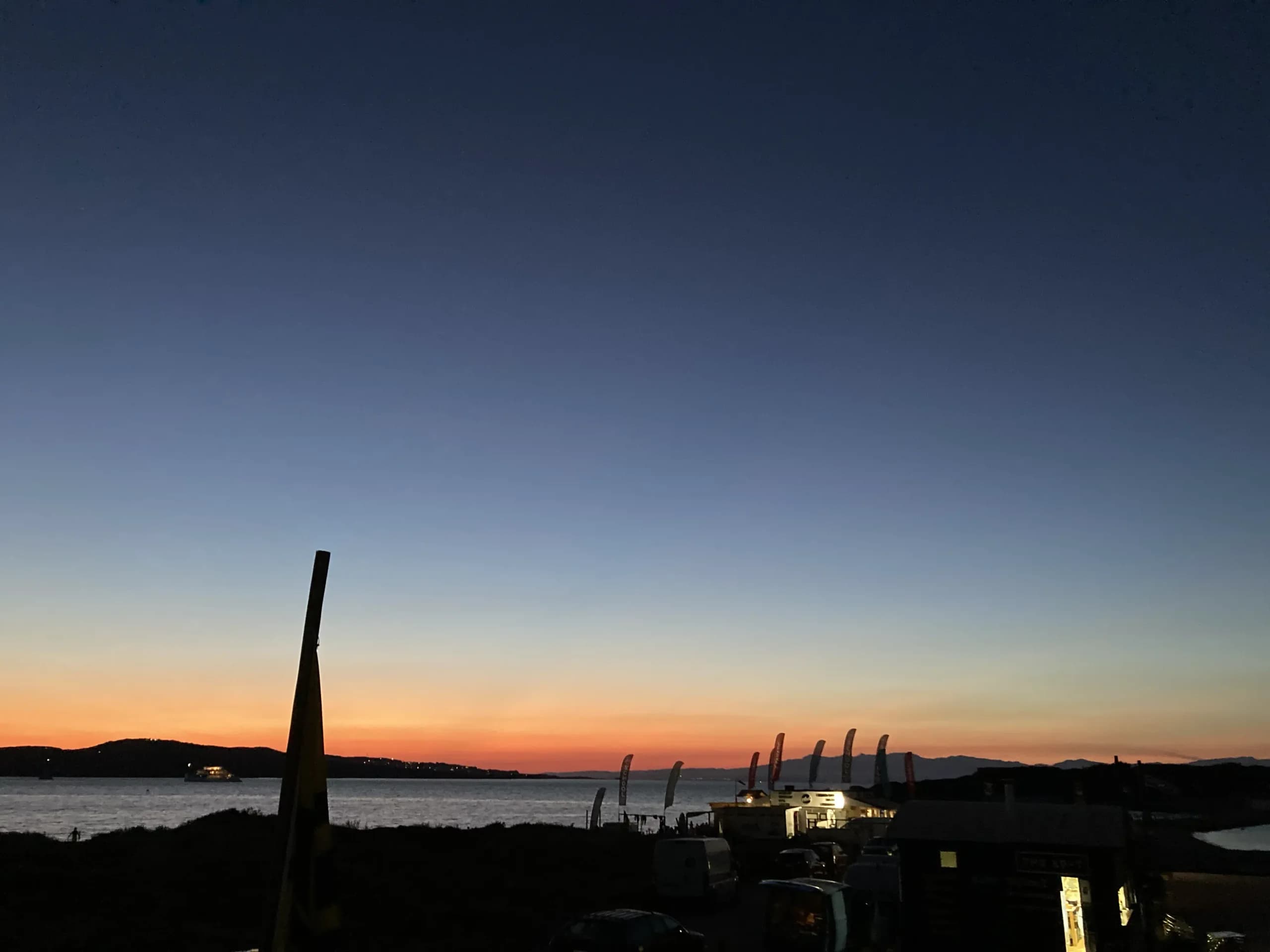
Up close, the bear's shape is made up of tafoni: honeycomb-like hollows that form as salt and moisture weaken the granite and grains fall away, a slow weathering process known as corrasion. From the panoramic point at the top, the view opens out over Palau's harbour and its ferries crossing to La Maddalena, with the islands of Spargi, Santo Stefano and Caprera all visible, and on exceptionally clear days the peaks of Corsica on the horizon. The light shifts through the day, from pearly blue in the morning to deep turquoise at midday and warm gold towards sunset.
Opening hours and tickets
The box office and entrance are in Palau, at via Roccia dell'Orso 17. Entry is regulated and requires a ticket, and it is worth booking online through the official visit page, especially in peak season. The site opens daily through the season, with hours that lengthen towards midsummer:
- 1 April - 30 April: 09:30-18:30
- 1 May - 31 May: 09:30-19:00
- 1 June - 14 June: 09:30-19:30
- 15 June - 30 June: 09:30-20:00
- 1 July - 23 August: 09:30-20:30
- 24 August - 13 September: 09:30-20:00
- 14 September - 30 September: 09:30-19:30
- 1 October - 24 October: 09:30-18:30
- 26 October - 2 November: 09:30-17:30
The last tour starts around 45 minutes before closing. Visits are guided: tours run in Italian and English as standard, with French, German and Spanish on request, and occasional night tours are offered.
Tickets are €3.00 for adults, €2.00 for ages 11 to 18, and free for ages 0 to 10, with a group rate of €2.50 per person for parties of 15 or more. A combined ticket covering Capo d'Orso, the Monte Altura fortress and the Palau ethnographic museum is €7.00 (€4.00 for ages 11 to 18, €6.00 for groups), which is good value if you plan to see more than one.
Best time for photos
Golden hour, either the first hour after opening or the last couple of hours before closing, gives the softest light, cooler temperatures and fewer visitors, and it's when the granite and sea take on their warmest tones. Bring a wide-angle lens for the full panorama and a mid-range zoom or short telephoto to pick out the islands. The site is exposed and can be windy even on a calm-looking day, so a windproof layer helps keep both you and your camera steady, and it's worth keeping a firm grip on phones and hats near the edges.
Good to know before you go
Wear comfortable, grippy shoes, and bring water, sun protection and a hat, as the path has little shade. Stay on the marked paths and respect the barriers around the rock: the granite can be polished and slippery, and climbing into the tafoni damages them. Take any litter away with you, and note that drones are subject to strict rules in Italy and may not be permitted at the site.
Capo d'Orso suits families and casual walkers well, but the steps and uneven surfaces mean it isn't a good fit for anyone with limited mobility. Pets are welcome, provided you keep them under control and are considerate of other visitors.
Make it a day
Capo d'Orso pairs naturally with a wander around Palau: browse the marina, stop for a gelato, and step a street or two back from the waterfront for small workshops selling filigree jewellery, Gallura cork ware, hand-painted ceramics and woven textiles. From Palau, a ferry runs throughout the day to La Maddalena, where you can drive the panoramic ring road, join a boat tour to the coves of Spargi, Budelli and Santa Maria, or visit Caprera's beaches and the Garibaldi Compendium museum. Porto Rafael, a low-key village of granite and pastel houses, is a good spot for an aperitivo, and the 19th-century Fortezza di Monte Altura above Palau is worth the extra time if you have it, with gun emplacements and sea views that tell a different story of this coastline.
Contacts and official information
For current hours, tickets, group bookings and closures, contact the site directly.
- Phone: (+39) 327 2986345 · (+39) 347 0913032
- Email: info@museipalau.com
- Website: www.museipalau.com