What the Court struck down
The case concerned decree-law no. 175 of 21 November 2025, converted into law no. 4 of 15 January 2026, which added articles 11-bis to 11-quinquies, new rules on where plants can be built on a fast track, to legislative decree no. 190 of 2024 on renewable-energy permits. Sardinia filed its challenge on 19 March 2026. The Court decided it on 7 October and filed judgment no. 197 on 12 November.
The state's power to step in. Article 11-bis(3) gives regions 120 days from 21 January 2026 to pass a law naming additional areas suitable for renewables. The state could use its substitution powers if a region failed to do so, or if its law did not follow national principles, criteria and capacity targets. The Court removed that second case, the words «ovvero di mancata ottemperanza ai principi e ai criteri di cui al comma 4 ovvero agli obiettivi di cui al comma 5». Substitution, it said, is an extraordinary tool for a region that does nothing; used against a law a region has passed, it becomes a check on the content of regional legislation, which article 127 of the Constitution reserves to the Court. A government that thinks a regional law breaks national rules has to challenge it there. The power to step in when a region does not legislate at all survives: the Court called it a guarantee that Italy meets its national and EU obligations, including a national target of 80 GW of new renewable capacity by 2030, split among the regions.
UNESCO protection zones. Article 11-quinquies let installations listed in Annex A of the 2024 decree be built inside the protection zones of UNESCO sites as «attività libera», free activity that needs no permit, authorisation or notice. Annex A includes solar panels, small wind turbines, heat pumps and storage up to 10 MW, and covers new structures as well as additions to existing ones. The Court struck the whole article. A free-activity regime can be legitimate in ordinary places, it said, but at sites of «valore universale eccezionale» (outstanding universal value) protection needs an assessment of the «concrete caratteristiche del singolo contesto territoriale» (the specific features of each place), even for a project that is modest on paper. The rule breached article 9 of the Constitution, which protects the nation's scenery and its historic and artistic heritage, and Italy's obligations under the UNESCO Convention.
Why the UNESCO point matters
The 2024 decree already kept free activity away from protected places. Under its article 7, the same small works on heritage assets protected by the cultural heritage code, in protected natural areas or in Natura 2000 sites go through a simplified authorisation procedure instead. Article 11-quinquies made UNESCO sites the exception, so that, in the Court's reading, international recognition ended up bringing no specific compatibility check at all. The Court described that result as paradoxical, and recalled its own words from earlier this year: the interest in building renewable plants «non può […] considerarsi sempre automaticamente prevalente» (cannot always be considered automatically prevailing) over the protection of scenery.
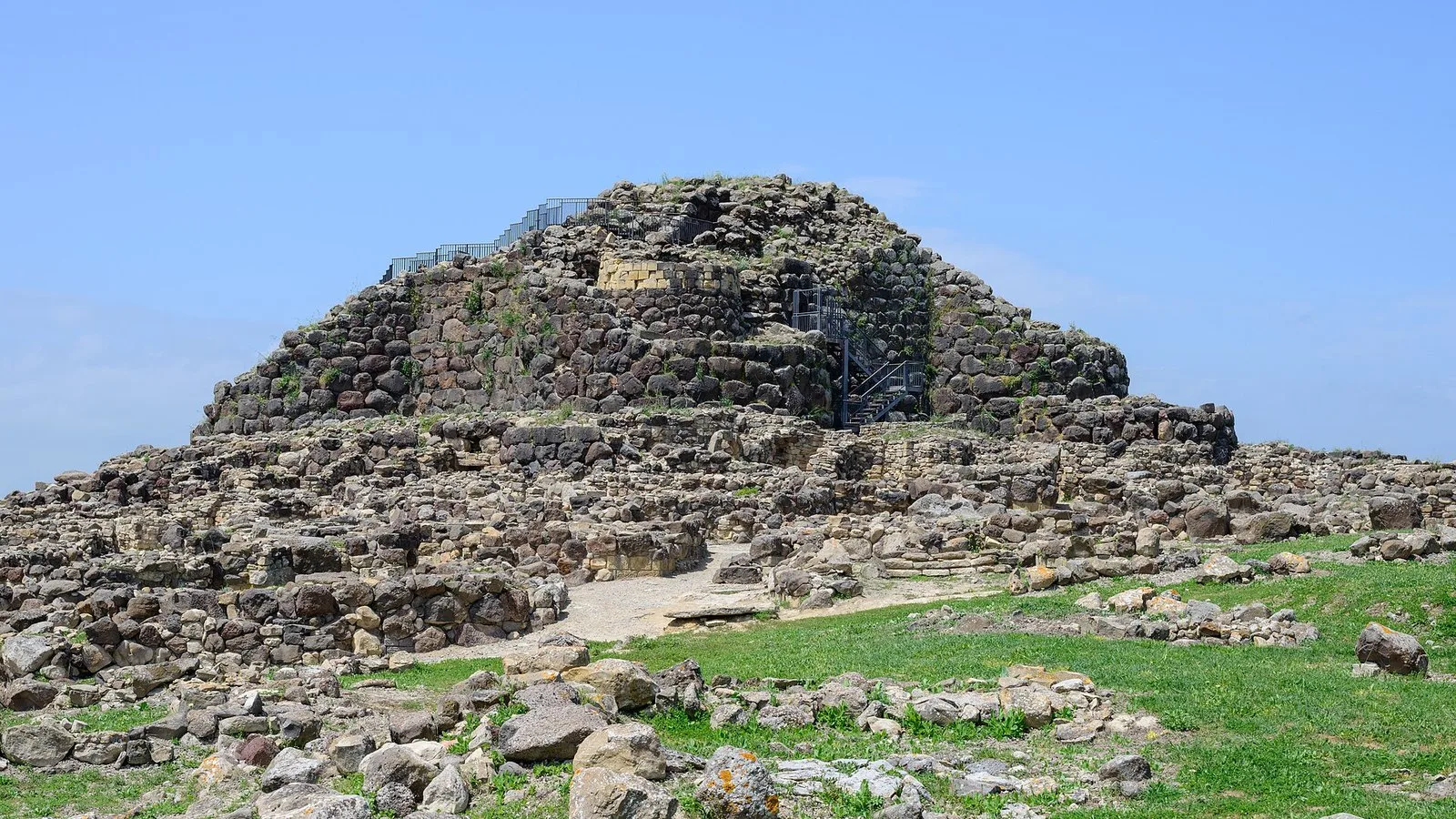
The Region cited Su Nuraxi at Barumini, on the World Heritage List since 1997, and the domus de janas, prehistoric rock-cut tombs listed in 2025, and argued that the rule could expose them to removal from the list. The Court decided the point without assessing that risk; nothing in the judgment puts either site's status in doubt.
What national law still controls
The Court rejected the other five of Sardinia's seven points, which cover these rules:
National categories of suitable land (article 11-bis, paragraphs 1 and 2) stand. The Court noted the list differs little from the 2021 one.
Ministry property (11-bis(1)(g) and (h)): land and buildings used by the defence, interior and justice ministries, including buildings no longer needed for public purposes, count as suitable. The Region argued that it succeeds to state property under its Statute; the Court said the classification applies whoever owns the land.
No blanket bans (11-bis(4)(d)). Regions may not introduce «limitazioni generali e astratte», general and abstract limits, and the Court repeated that general bans and indiscriminate moratoria are unconstitutional. Regions keep the power to add suitable areas and to weigh scenery, farming and heritage case by case.
Farmland caps (11-bis(4)(g) and (h)): the farmland a region classes as suitable must be between 0.8% and 3% of its utilised agricultural area, agrivoltaic plants included, and a different maximum can be set for each municipality.
Sea areas and ports (11-ter): ports count as suitable for wind plants of up to 100 MW, with a change to the port master plan where needed.
Scenic-protection opinions (11-quater): in suitable areas, works in Annexes A and B need no autorizzazione paesaggistica, and the authority that protects scenery gives an opinion that is mandatory but not binding. The Court found this balance not manifestly unreasonable, and noted the 2021 rules worked the same way.
What it means in practice
Under article 136 of the Constitution, the struck provisions stop applying from the day after the judgment is published in the Gazzetta Ufficiale. The ruling creates no ban, suspends no permit and cancels no project. It does not say what happens to works begun or planned in UNESCO zones under the free-activity rule, which needed no filing, and by 13 November we had found no guidance on that from the culture ministry, the Region or the heritage offices. For visitors, nothing changes at the sites themselves. Nor does the judgment map the protection zones around Barumini or the domus de janas: a World Heritage property, its buffer zone and other scenic-protection constraints are separate things, set in separate documents.
Reactions
Alessandra Todde, president of the Region, said: «Su questi punti la Corte ci ha dato ragione» (on these points the Court ruled in our favour). Francesco Spanedda, the regional assessor for local authorities and planning, said: «La sentenza dice chiaramente che l'idoneità di un'area non equivale all'autorizzazione alla realizzazione di un impianto» (the ruling says clearly that an area being suitable does not mean a plant is authorised). By 13 November we had found no comment from the government or the renewable-energy industry.
A note on the ruling
The operative part has seven points: two declarations of unconstitutionality, one partial, and five challenges found unfounded. The judge-rapporteur was Marco D'Alberti. Translations of Italian quotations are ours. The judgment names no specific project in Sardinia.
Su Nuraxi at Barumini, April 2013. Photo: Norbert Nagel, CC BY-SA 3.0, via Wikimedia Commons, cropped.
Sources: Corte costituzionale, judgment 197/2026 · EIUS, full text of judgment 197/2026 · La Nuova Sardegna, 12 November 2026 · Sardinia Post, 12 November 2026 · Algherolive, 12 November 2026 (statement by Alessandra Todde) · Regione Sardegna statement, via Agenzia Opinione, 13 November 2026 · Edotto, 12 November 2026 · UNESCO, Su Nuraxi di Barumini · UNESCO, Funerary Tradition in the Prehistory of Sardinia – The domus de janas
Related reading
Elsewhere on Sardinia Blog: how the same Court struck down Emilia-Romagna's short-term rental law in October; the geomining park's bid to return to UNESCO's network; and ARST's three green hydrogen plants and the Barumini to Bosa cycleway.
Sardinia Blog is published within the Rental12 ecosystem, an owner-operator letting homes it owns in Olbia and Golfo Aranci. It has no interest in this case that we know of. Its press archive holds company statements, not independent evidence.