
Why Terrazza Umberto I is worth your time
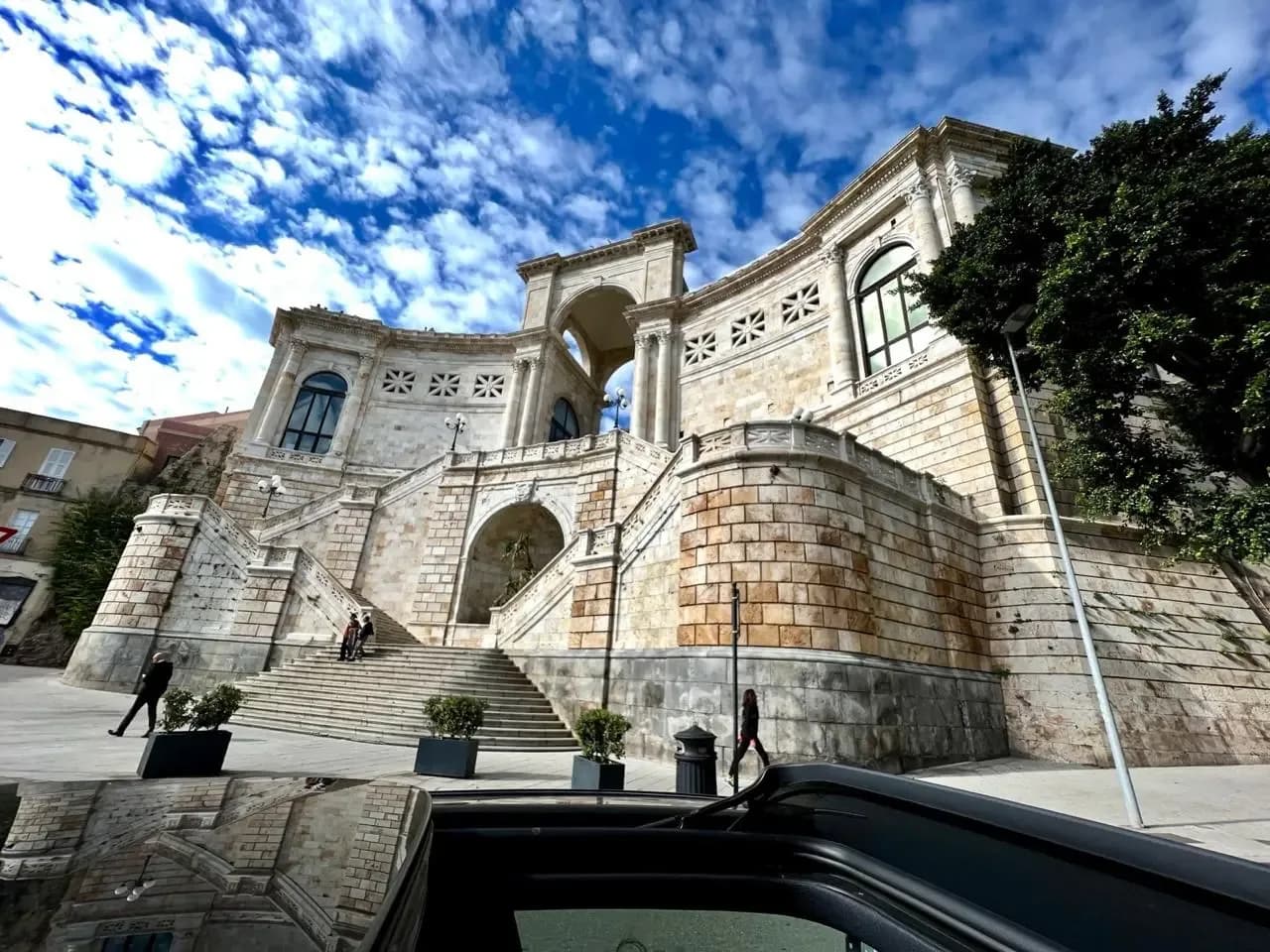
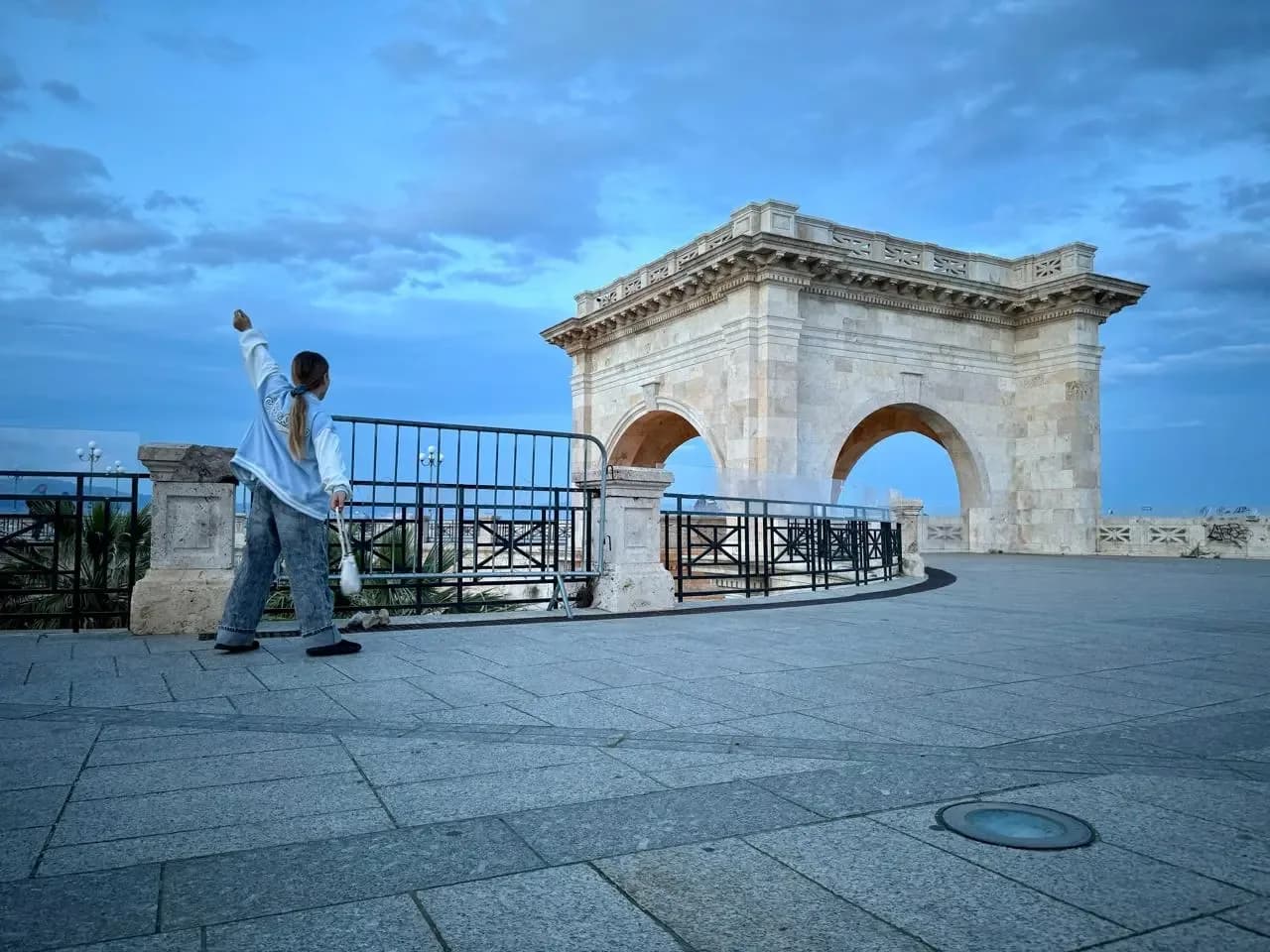
Climbing the grand staircase of the Bastione di Saint Remy brings you to Terrazza Umberto I, one of Cagliari’s most distinctive open spaces. The square opens suddenly to sea, port, and rooftops, with light that shifts throughout the day. It is a simple setting done well: clean lines, pale stone, and a quiet sense of space that invites you to slow down.
The Bastion linking Castello with the lower city dates to the turn of the 20th century, according to Sardegna Turismo (official site). Terrazza Umberto I is the upper viewpoint, set above the monumental staircase and arcades.
What you will see
From the terrace you can frame the port and Gulf of Cagliari, the Marina district, the domes of the historic center, and, on clear days, the headlands stretching toward Capo Sant’Elia. It is easy to step back for wider compositions or move to the balustrade for tighter views.
By day the light is crisp and the sea stands out. After sunset the city glows and the curve of the waterfront reads clearly. It is a good place to pause between visits in Castello or to end the day before dinner below.
How to get there
From Piazza Costituzione
Start at Piazza Costituzione and take the monumental staircase of the Bastion up to the terrace. There is also a public elevator from the square to the Bastion level when in service. Check for any temporary closures or evening events on the official Cagliari Tourism portal here.
From within Castello
Walking down from Castello, follow signs toward the Bastion and Terrazza Umberto I. Streets are narrow and paved in stone, with moderate gradients.
By bus and car
Several city bus lines serve the area around Piazza Costituzione. Driving into Castello is restricted and parking is limited. If you have a car, leave it in the lower districts and walk or ride up.
Best times for light and space
- Early morning: soft light, quiet atmosphere, cooler temperatures.
- Late afternoon to sunset: warm tones on the stone and sea, reliable color for photos.
- Evening: city lights and an easy stop before dinner. It can be livelier in summer.
Shade is limited. In warmer months bring water and a hat. Surfaces are stone and can be slippery after rain.
Photo tips 📷
- Use the balustrades as clean leading lines toward the sea.
- Step to the corners of the terrace for diagonals that include the staircase below.
- For skyline shots, a short telephoto isolates domes and details without crowds.
- Blue hour works well here. Arrive 20 to 30 minutes before sunset to set up.
Nearby sights to combine
- Torre dell’Elefante: a short walk inside Castello, with medieval stonework and city views (Sardegna Turismo).
- Cagliari Cathedral and the arcaded square beside it.
- The Cittadella dei Musei complex at the top of Castello for archaeology and art.
These stops make an easy loop before returning to the terrace or heading down to the Marina for dinner.
Practical essentials
- Access and cost: the terrace is a public space with no ticket required. Sections can close for events, maintenance, or safety checks. See current notices on the official tourism portal Cagliari Turismo.
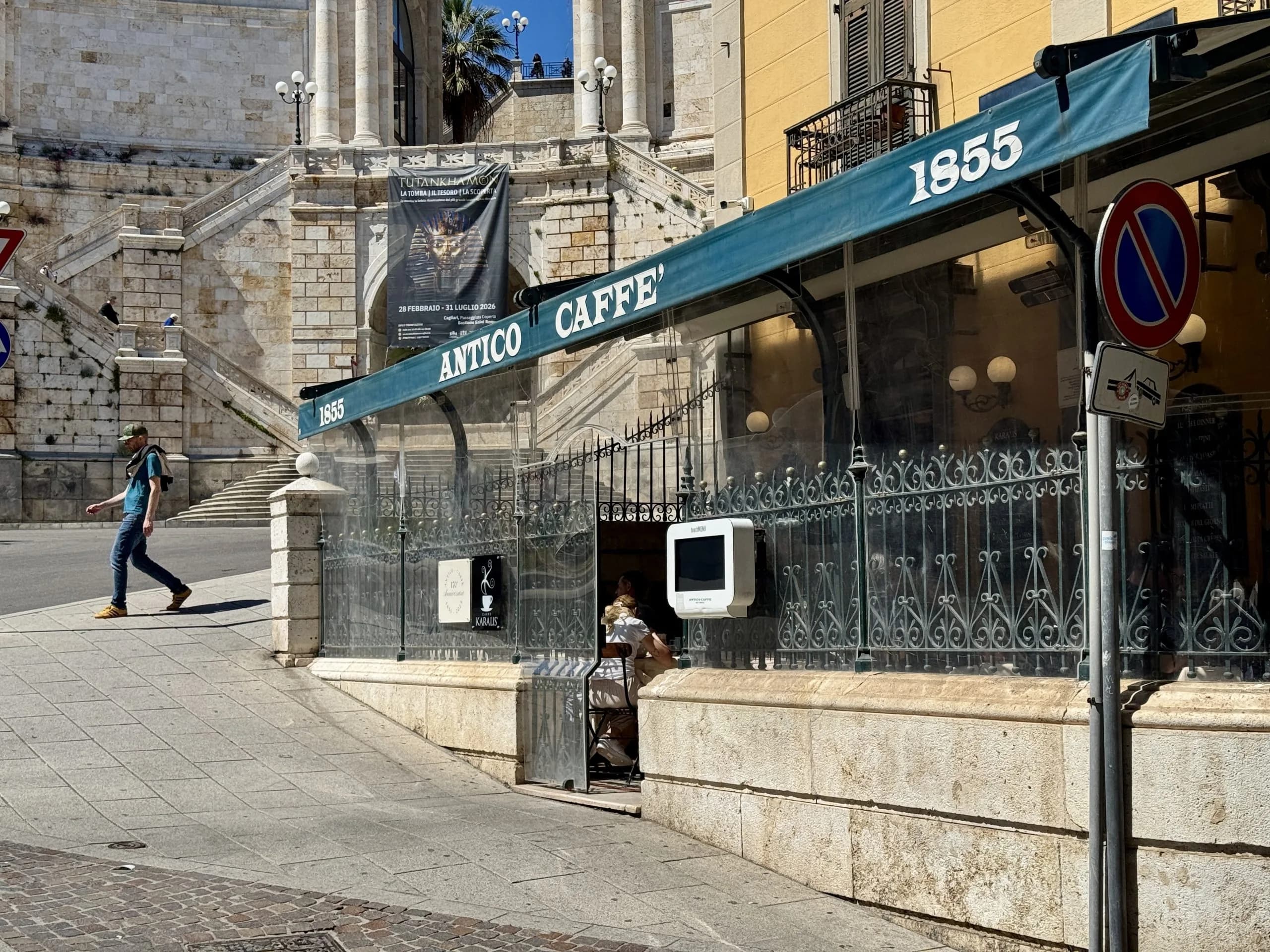
- Facilities: cafés and kiosks sit just below in Piazza Costituzione and along Via Garibaldi. Restrooms are available in nearby bars and restaurants for customers.
- Mobility: the elevator from Piazza Costituzione helps avoid stairs when operational. Paths on the terrace are flat.
- Etiquette: tripods are usually fine in off-peak times. Avoid blocking walkways and the staircase landings.
Plan your visit
Give the terrace 20 to 40 minutes, longer if you are timing sunset. Pair it with a slow wander through Castello and a stop in one of the neighborhood cafés. If you are interested in the Bastion’s architecture and history, the regional tourism board has a concise overview with dates and context here.