
Porta di San Pancrazio at a glance
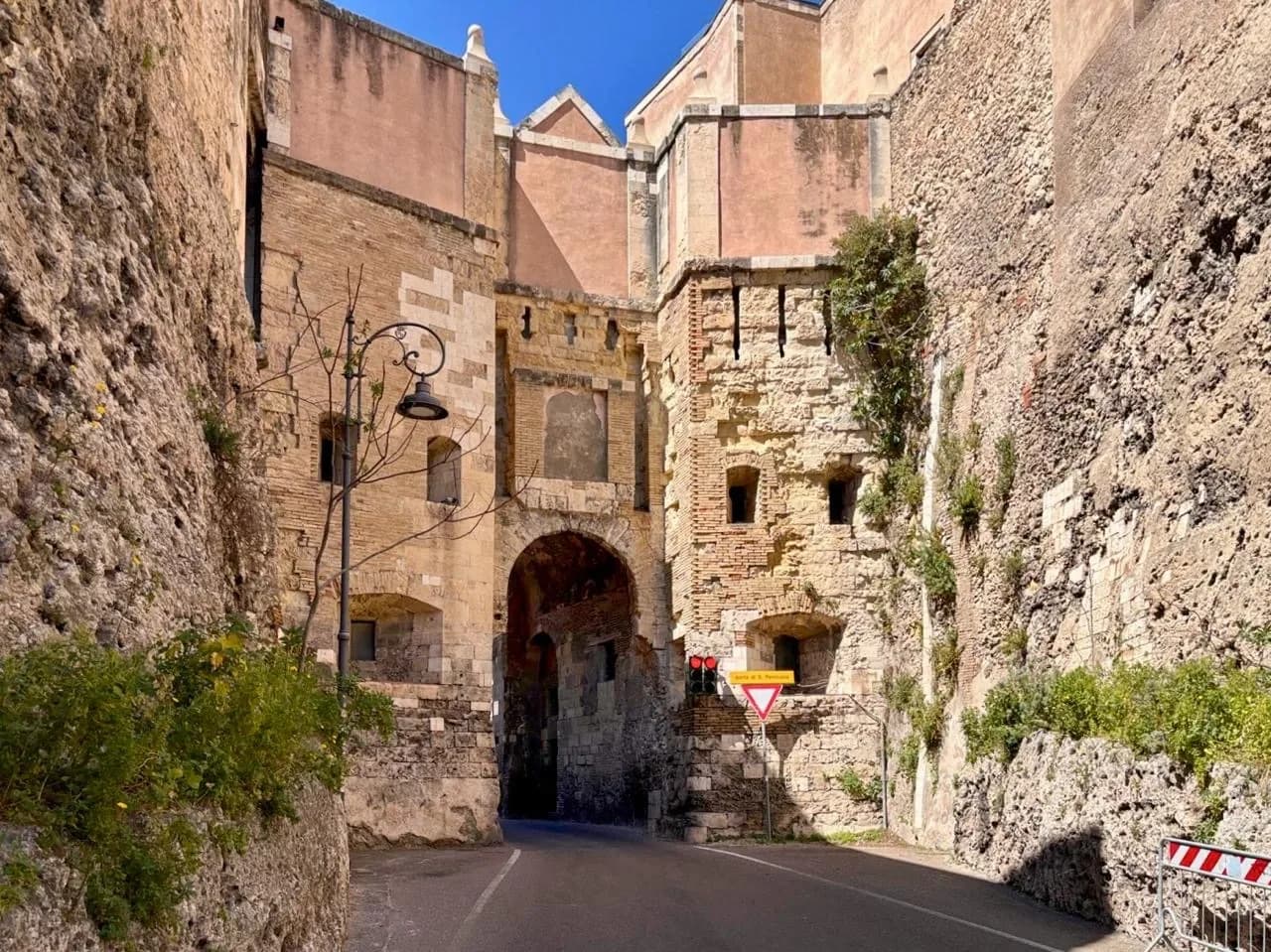
Set on the north side of Castello, Porta di San Pancrazio is one of the most atmospheric entries into Cagliari’s medieval quarter. The white limestone walls and the adjacent tower signal you are stepping into narrow lanes, lookout terraces, and centuries of urban history.
The gate once controlled access to the fortified hill. Today it is an easy landmark for orienting a walk between Piazza Indipendenza, the ramparts, and the museums just uphill.
A short history
The gate dates to the early 1300s, when the Pisans strengthened Cagliari’s defenses with high walls and massive towers in local limestone. The adjacent Torre di San Pancrazio was erected in 1305 by the architect Giovanni Capula, according to Sardegna Turismo (source).
Across Castello, its twin, the Torre dell’Elefante, followed a similar design and was completed in 1307 (Sardegna Turismo). Together with the gate, these works anchored a defensive system that still shapes the district’s skyline.
What to see around the gate
- Porta and ramparts: Walk through the arch, then pause along the walls for views over Stampace and the plain toward the northwest. The stone picks up warm color in late afternoon.
- Torre di San Pancrazio: The tallest of the medieval towers in Cagliari. Even if you do not climb, its open-sided Pisan architecture is striking up close.
- Piazza Indipendenza: A useful waypoint with cafés and access to the upper streets of Castello.
- Cittadella dei Musei: A few minutes uphill. The National Archaeological Museum holds Nuragic bronzes and finds from across Sardinia (Direzione Regionale Musei Sardegna).
- Cathedral of Santa Maria: The Baroque interior and the crypt sit at the heart of Castello’s grid of lanes.
Planning your visit
Location and access
The gate sits by Piazza Indipendenza at the northern edge of Castello, near Viale Buoncammino. It is best reached on foot. Expect short but steady slopes and cobbles. Taxis can drop off close to the square. Some streets in Castello are restricted to resident traffic at set times, and parking is limited.
Timing and light
Mornings are quiet and cooler. Late afternoon into sunset is ideal for photography when the limestone glows and long views open over the city 🌇. Midday can be hot in summer with little shade along the walls.
Tickets and hours
Walking through the gate and along the nearby streets is free. The medieval towers and museums have ticketed entry and fixed schedules. Check posted information on site or the official pages linked above before you go.
Suggested Castello route
Use Porta di San Pancrazio as your starting point for a loop: enter the gate, continue to Piazza Indipendenza, climb to the Cathedral, cross to the Bastione terraces, then finish at Torre dell’Elefante and descend toward the Marina.
- Overview of the district: Castello neighborhood guide
- Medieval towers focus: Torre dell’Elefante visitor tips
- Short city plan: One day in Cagliari
Practical tips
- Footwear: Wear shoes with grip. Surfaces are polished in places.
- Mobility: Elevators and ramps connect parts of Castello, but gradients remain. Allow extra time if stairs are an issue.
- Comfort: Bring water in summer. Shade is limited along the ramparts.
- Etiquette: Castello is residential. Keep noise down at night and avoid blocking narrow lanes.
Key takeaways
Porta di San Pancrazio is a compact, rewarding stop that orients you to Castello’s history and layout. Pair it with a tower visit and a museum hour, then stay for the views as the light softens.