
Meet the Boy with the Seagull
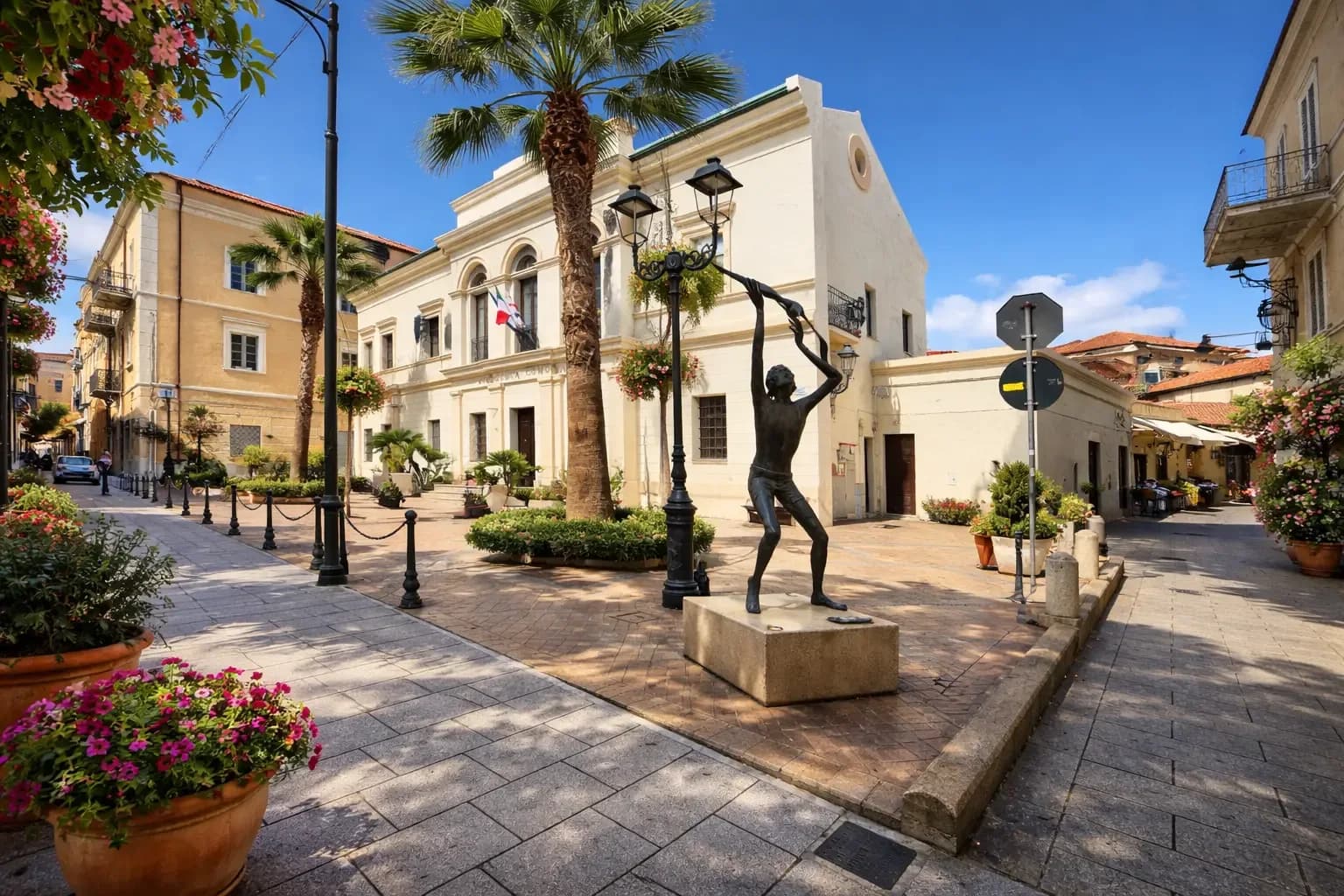
On Olbia’s Corso Umberto I, a slim bronze captures a familiar local gesture: a barefoot boy, arms lifted, offering a gull to the sky. Lucia Balzano’s Il Ragazzo con il Gabbiano was installed on June 12, 1999, and it has blended into daily life ever since. The posture is all movement. Feet grounded, chest forward, hands rising with the bird. It is a pause between earth and air, between staying and setting off 🐦.
The gull is no ornament. In a port city, it stands for the sea’s nearness and the horizon’s pull. The plaque below speaks of listening to the sea and following time’s rhythm. That feels right for Olbia, a place shaped by arrivals and departures.
Where to find it on Corso Umberto I
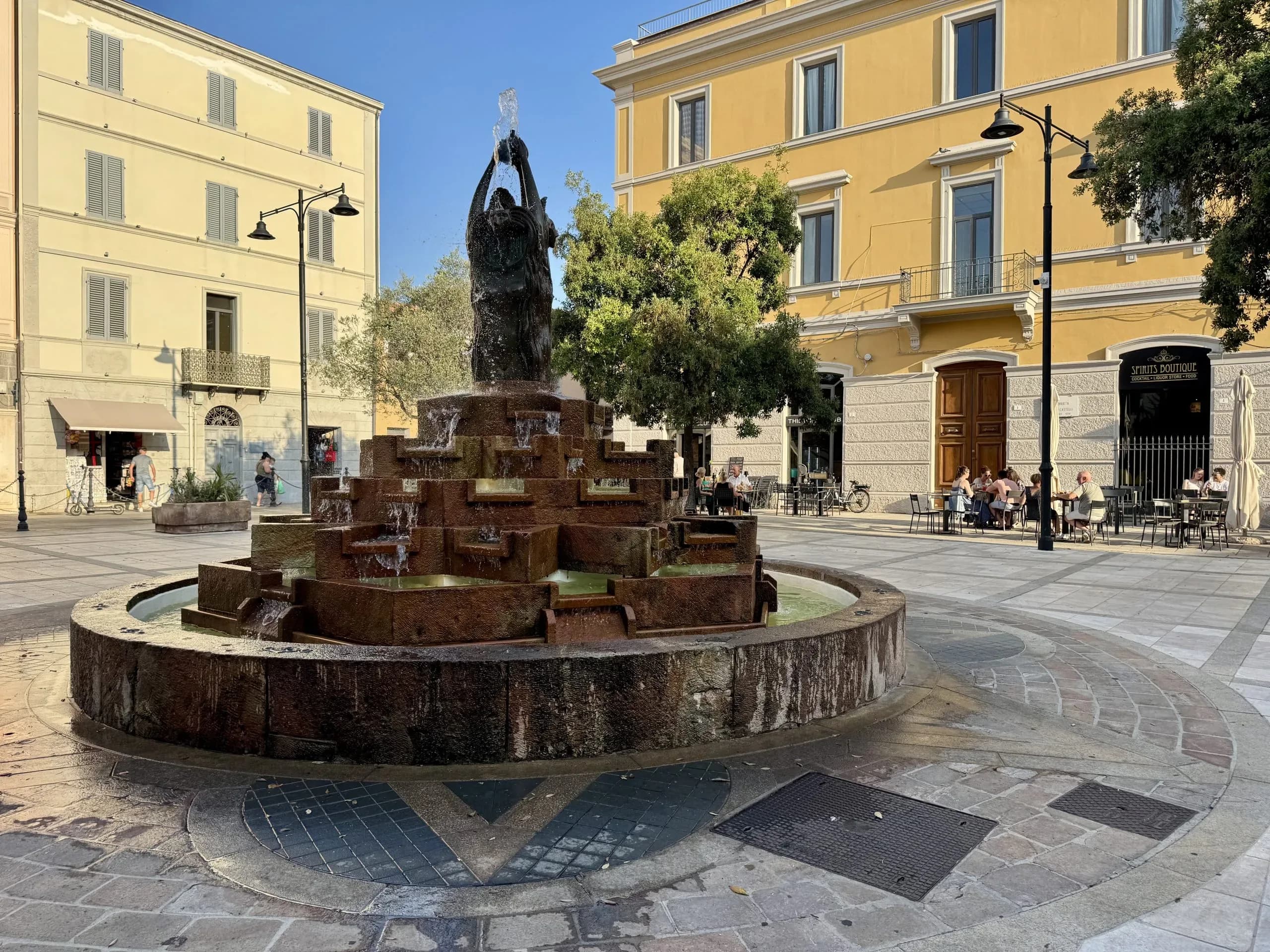
The statue stands mid-street near the Biblioteca Comunale, beneath palm fronds and that clean Gallura light. It does not dominate the square. It shares it. Commuters pass on foot, children point at the boy’s bare feet, and visitors frame photos against pastel façades.
Morning suits it best. When the shops are still preparing for the day, the bronze takes on a soft sheen. By late afternoon, the metal warms and the sculpture throws a longer shadow that pulls your eye up to the gull.
Corso Umberto is Olbia’s spine. It links the waterfront to the station and civic buildings and gives a quick sense of the city’s scale and pace, as described on the official Sardinia tourism portal’s page for Olbia (Sardegna Turismo).
What it says about Olbia
Olbia lives in motion: ancient ships, modern ferries, quick flights, and the steady flow of workers and students. The boy with the gull suggests hope and readiness rather than triumph. No pedestal of power. Just a human scale, hands high, eyes forward.
It is an honest symbol for a city that prefers usefulness to spectacle. The message is simple: stay rooted, and keep looking outward.
A gentle morning loop: 60–90 minutes
Step-by-step
- Start at the statue on Corso Umberto I. Five quiet minutes to walk around it. Look at the fine texture of the feet and the stretch through the ribs.
- Coffee stop: choose a café with outdoor tables nearby. Watch how people use the street. Olbia reveals itself in small habits.
- Walk to Basilica di San Simplicio, about 10–12 minutes from the statue. The granite church is the city’s medieval heart, and its interior rewards a slow look, according to Sardinia’s official tourism site (Sardegna Turismo).
- Loop back through side streets to rejoin Corso Umberto. If you have extra time, continue toward the waterfront for sea air and a view of the ferries easing in and out.
Getting there
- From the train station: it sits at the southern end of Corso Umberto. The statue is a straightforward walk up the pedestrian street.
- From the ferry port: Isola Bianca is about a 15–20 minute walk to Corso Umberto. Taxis are right outside the terminal if you have luggage.
- From the airport: city buses and taxis link Costa Smeralda Airport with the center. For current options and stops, check the airport’s To and From page (Geasar).
Thoughtful shopping nearby
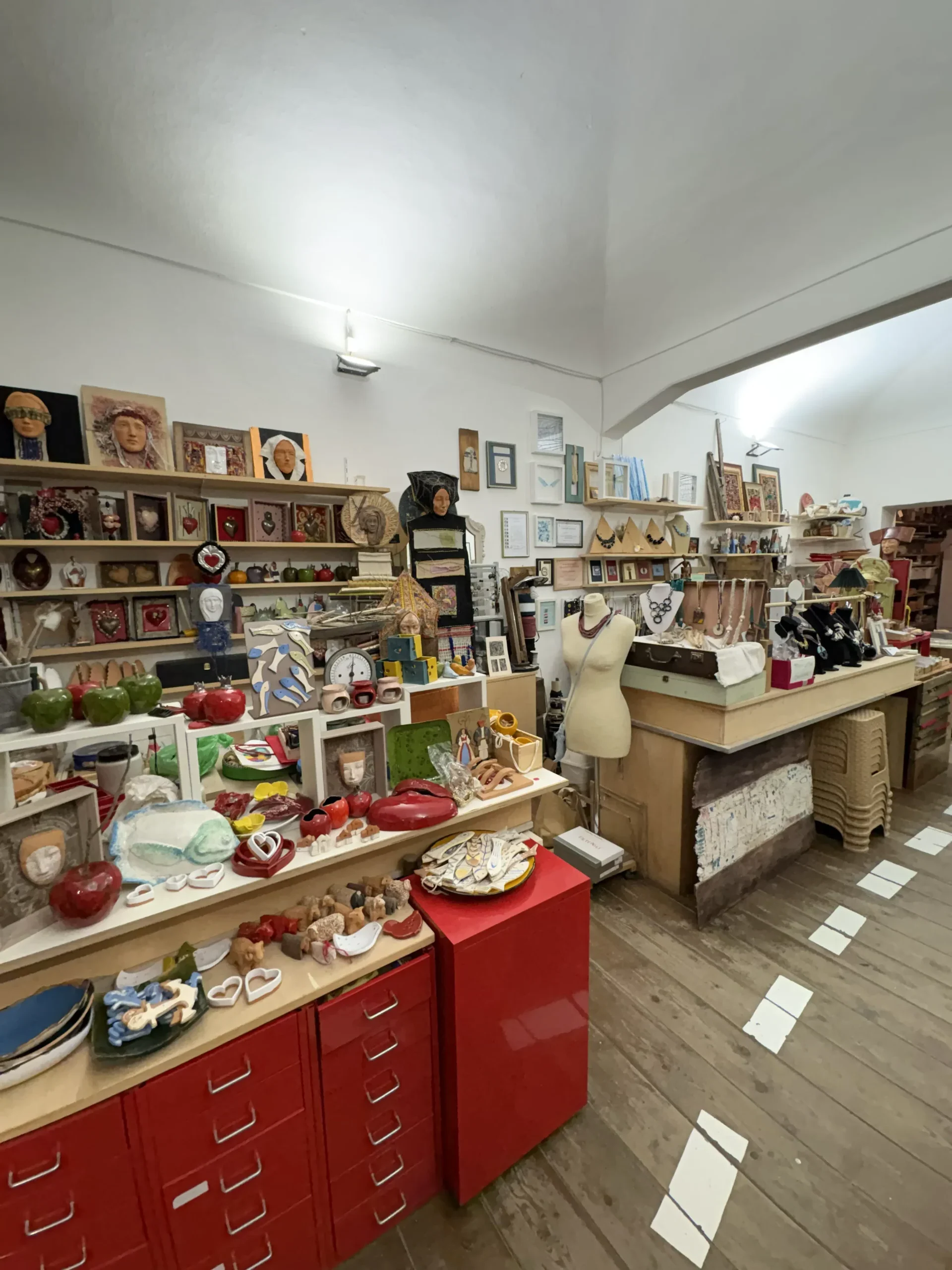
Corso Umberto and its side streets have a mix of everyday shops and small boutiques. If you are looking for pieces that carry Sardinia with them, consider:
- Filigree jewelry: look for 925 silver or 750 gold stamps and ask where the piece was made. Button rings and small pendants with traditional rosettes are classic and easy to wear.
- Cork from Gallura: wallets, coasters, and trays travel well. Hand-finished items have smoother edges and tighter stitching than factory stock.
- Ceramics: Dorgali and Oristano styles are common in the north. Choose simple glazes and signed bases. They age better than souvenir sets.
Avoid coral without clear provenance or hallmarking. Licensed jewelers are upfront about materials and techniques. If a price seems too light, the piece usually is.
When to go and what to notice
- Light: early morning or golden hour show the bronze at its best. Midday is brighter but harsher in summer.
- Angles: circle the pedestal. From the side, the lift through the torso is strongest. From behind, the gull leads your eye into the street.
- Soundtrack: pause long enough to hear what the plaque suggests. Scooter hum, a gull’s call, cups on saucers. It is the city’s daily meter.
Why this small monument stays with you
Public art often tells you how a place sees itself. Here it is humility, a link to the sea, and an easy confidence. No loud gesture needed. Just a boy, a bird, and a street that keeps moving.