
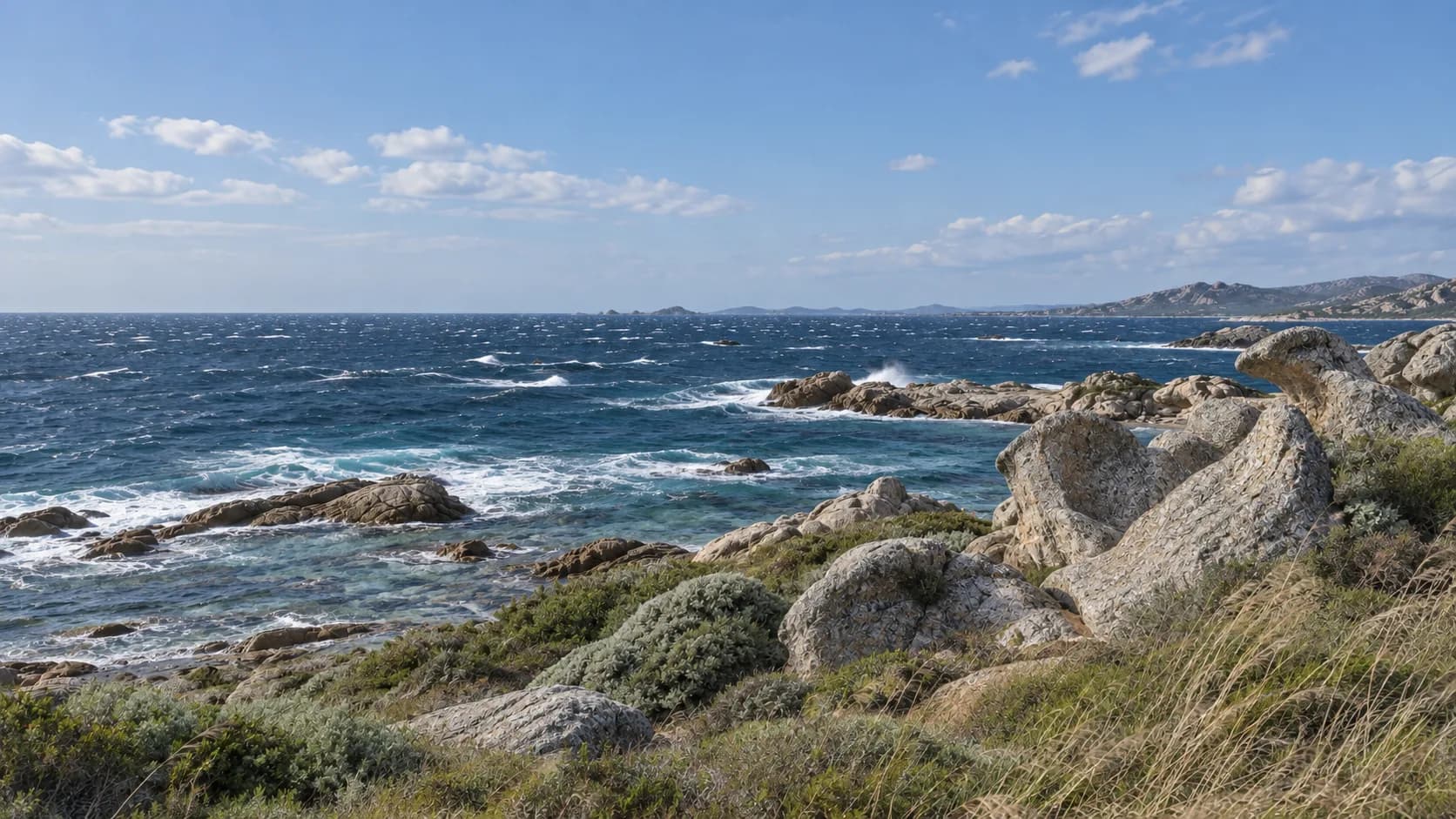

Sardinia's Living Winds
Sardinia is an island of winds in addition to its mountains, beaches, and customs. Sailors, shepherds, and peasants have been living in harmony with these unseen forces for centuries, naming them, honouring them, and adjusting their lives to fit their rhythm. The island is located in the centre of the Mediterranean, where air currents from Africa, Europe, and the open ocean meet to form a symphony of breezes that influence not only the weather but also the land, the water, and even the residents' moods.
The Mistral: Cleansing, Powerful, and Fresh
The Mistral (Maestrale), which originates in the northwest, is arguably the most well-known of Sardinia's winds. It is strong and frequently follows a storm. The sea turns into a work of art with turquoise and emerald hues, the air feels crisp and pure, and the sky clears to a crystal blue as the mistral passes over the island. The mistral, according to locals, "washes the island," clearing away humidity and dust to leave everything fresh and bright.
The beaches are at their most beautiful during these days for tourists. The horizon appears to be infinitely clear as the sunlight bounces off water that appears to be painted in impossible shades. Sailors and windsurfers adore these times because the mistral makes the water both beautiful and challenging.
The Scirocco: Southern Warmth
The Scirocco (Sciroccu), which erupts from the Sahara Desert, comes from the opposite direction. Warmth, humidity, and occasionally even fine desert dust are carried by it. A different kind of embrace, one that is heavy, sensual, and charged, is given to Sardinia by the scirocco. It softens the air, makes the horizon less distinct, and gives the evenings a nearly tropical feel.
Fishermen are aware that the scirocco causes additional restlessness in the sea. Especially on the eastern and southern coasts, waves roll in long, slow swells. This type of wind encourages beachgoers to slow down, seek out shade, and enjoy the heat instead of fighting it. This southern wind presents both a challenge and a benefit to winegrowers in Gallura and Monti: it hydrates the vines, but it also necessitates caution to shield the grapes from too much moisture.
East and West Levante and Ponente
The Tyrrhenian Sea's moods are carried by the Levante, which blows from the east. It is softer, more erratic, bringing calm at times and showers at others. The levante can produce rolling waves that sculpt the coastline and add adventure to boat trips along Sardinia's eastern shores, especially around Ogliastra and the Gulf of Orosei.
The Ponente, its twin, is from the west. It channels the open force of the western Mediterranean and is powerful despite being less well-known than the mistral. Although it lacks the mistral's dazzling brilliance, the ponente's dry edge frequently lowers temperatures and clears the skies.
The Libeccio and the Grecale
Cooler air from central Europe is brought by the northeastern Grecale. It is dry, crisp, and frequently associated with clear, quiet weather. With crisp breezes and expansive, unobstructed views of the island, a Greek day is energising for hikers on Mount Limbara or in the Supramonte area.
The southwestern Libeccio is more erratic. It can create dramatic seas along Sardinia's coasts and is strong and humid. On the southern beaches, close to Chia or Villasimius, surfers and kiteboarders look forward to its arrival. Its force energises the coastline, serving as a reminder of the island's unadulterated strength.
Winds in Everyday Life
Winds are more than just weather patterns in Sardinia. They are ingrained in everyday speech. In order to determine which breeze will determine their day, farmers and fishermen look to the sky and sniff the air. Each wind has its own reputation, and children are raised hearing their names almost like old family friends. The Greek is the cool guest, the Libeccio is the wild one, the Mistral is the cleaner, and the Scirocco is the heavy guest.
Air Shapes Beauty
Knowing Sardinia's winds allows tourists to have a more profound experience of the island. You observe how the air feels warm and silky beneath a scirocco, how the sea sparkles after a mistral and how a southern breeze causes the waves to rise and fall. You come to understand that the island's beauty is dynamic and changes with the wind.
Therefore, follow the winds when you visit Sardinia. Enjoy the warmth of the Scirocco, follow the mistral to the clearest waters, and allow the lesser-known breezes to reveal the hidden moods of this historic island. The winds, which are unseen but unforgettable, contribute to the magic here.
AI Content
Mistral & Scirocco: Discovering Sardinia’s Legendary Winds
Set in the heart of the Mediterranean, Sardinia lives by the rhythm of its winds. From fishing villages to vineyard hillsides, locals have read the sky for centuries, welcoming each breeze like an old friend. Learn how the Mistral and Scirocco shape the island’s colors, seas, and moods—and how to make the most of them on your trip.
Sardinia’s living winds
Sardinia sits where air masses from Europe, North Africa, and the Atlantic converge, creating a symphony of breezes that sculpt cliffs, brighten seas, and carry scents of myrtle and sea salt. The best known are the Mistral and Scirocco, but the island recognizes a full compass of winds—each with its own personality and gifts for travelers. 🌬️
The Mistral: cleansing, powerful, and fresh
Blowing from the northwest, the Mistral (Maestrale) is Sardinia’s great cleaner. It often follows a storm front, sweeping humidity from the air and revealing skies of crystalline blue. According to Encyclopaedia Britannica, the mistral is a strong, cold northwesterly wind that descends toward the Mediterranean, famous for its clarity and force (source).
On mistral days, the sea turns luminous—turquoise and emerald with glassy visibility—especially along the north and northeast coasts. Colors pop, horizons stretch, and the air feels almost alpine. It’s no wonder photographers, sailors, and windsurfers plan around these bursts of brilliance.
Best places when the Mistral blows ⛵
- Seek the leeward side: when winds arrive from the northwest, the east and southeast coasts are calmer and clearer. Think Villasimius, Costa Rei, and the Gulf of Orosei.
- North-coast showstoppers: Porto Pollo (near Palau) is a wind and kite-surf favorite; Capo Testa and La Maddalena sparkle under mistral light.
- West-coast energy: around Capo Mannu (Sinis Peninsula), the mistral can kick up serious surf—spectacular for experts and onlookers alike.
What to expect
- Sea state: choppy to rough on exposed north and west coasts; calmer in sheltered coves and on the lee (east/southeast) side.
- Comfort: cooler, drier air; brilliant visibility for hiking and boat trips.
- Timing: strongest and most frequent in late autumn through spring, though summer pulses happen too.
The Scirocco: southern warmth and desert breath
From the opposite quarter arrives the Scirocco (Sciroccu), a warm, humid wind from the Sahara that can carry fine dust and soften horizons into a dreamy haze. The Copernicus Atmosphere Monitoring Service documents how Saharan dust frequently travels into the central Mediterranean and Italy during Scirocco events, tinting skies and settling on terraces and cars (source).
The Scirocco wraps Sardinia in a languid embrace. Evenings feel tropical, the sea rolls in long, slow swells—especially along the south and east—and the pace naturally eases. Winegrowers welcome its moisture but watch carefully for vine health; beach lovers slow down, seek shade, and trade midday sun for golden-hour swims. ☀️
Best places when the Scirocco arrives 🏖️
- Head northwest for shelter: Stintino and Asinara, Alghero’s coves, and parts of Gallura can be better protected from southerly and southeasterly breezes.
- Eastern drama: Ogliastra and the Gulf of Orosei may see long swells—great for boat excursions on calmer mornings, with a watchful eye on conditions.
- City and culture: Scirocco days are perfect for museums, long lunches, and slow strolls through Cagliari’s Castello or Alghero’s historic bastions.
What to expect
- Sea state: rolling swells on south and east exposures; calmer pockets on north and northwest coasts.
- Comfort: warmer, more humid air; softer light and hazier horizons.
- Timing: common in spring and autumn, often ahead of low-pressure systems.
East and west: Levante and Ponente
The Levante (from the east) carries the moods of the Tyrrhenian Sea. It’s often gentler and changeable—sometimes glassy calm, sometimes sprinkled with showers. Along Sardinia’s eastern flank, from Ogliastra to the Gulf of Orosei, the Levante can carve rolling waves that add a touch of adventure to boat days.
The Ponente (from the west) channels the open force of the western Mediterranean. It’s drier and can cool temperatures, clearing the sky without the icy bite of a full mistral. On the Sinis Peninsula and Costa Verde, Ponente can mean handsome surf and bronzed light for sunset walks.
The Grecale and the Libeccio
The Grecale (northeast) brings crisp, dry air from central Europe—invigorating for hikers in the Supramonte or on Mount Limbara. Expect refreshing temperatures and long-range views that stretch from headland to headland.
The Libeccio (southwest) is more capricious: strong and humid, capable of whipping up dramatic seas along southern shores. Around Chia and Villasimius, surfers and kiteboarders often get excited when the Libeccio stirs; swimmers should favor sheltered coves and heed local advice. 🏄♂️
Local seafarers also name Tramontana (north) and Ostro (south). Together with the Mistral and Scirocco, these eight traditional winds form the island’s rose of winds—an ancient compass you’ll still hear discussed every morning at the bar.
Winds in everyday Sardinian life
Here, winds are more than meteorology; they’re part of daily conversation and decision-making. Farmers sniff the air before setting irrigation schedules; fishers time departures to the first ruffle on the bay. Children grow up learning the nicknames: the Mistral the cleaner, the Scirocco the heavy guest, the Grecale the cool visitor, the Libeccio the wild one. Understanding the Mistral and Scirocco adds a deeper layer to how you’ll see (and feel) Sardinia.
Planning your trip around the winds
Quick strategies
- Check reliable forecasts: for marine and wind updates, the Italian Air Force Weather Service publishes detailed charts and bulletins (official forecast).
- Choose your coast: run from the wind, not into it. With a Mistral, favor east and southeast beaches; with a Scirocco, head north and northwest.
- Boat days: ask your skipper to tailor routes to the lee side; you’ll find calmer waters and often the best clarity.
- Hike smart: after a mistral, visibility is exceptional—perfect for ridge walks. During a Scirocco, aim for shaded canyon hikes or earlier starts.
- Pack for flexibility: a light windbreaker for mistral snaps; breathable fabrics and electrolytes for Scirocco warmth; a lens cloth for Sahara dust days.
When to visit for wind-driven adventures
- Windsurf and kitesurf: spring and autumn deliver frequent Mistral pulses; Porto Pollo, Chia, and Capo Mannu are classic choices.
- Sailing: year-round is possible; shoulder seasons bring lively yet manageable conditions, with abundant anchorages to hide from whichever wind is up.
- Photography: immediately after a Mistral, the colors are electric and horizons razor-sharp—ideal for coastal panoramas and boat-to-beach shots.
For travelers who love authenticity, the Mistral and Scirocco become part of the itinerary—nudging you toward new coves, changing the menu (think rich stews on a breezy day, crudo and chilled Vermentino on a warm Scirocco evening), and inviting you to experience the island’s many moods.
Follow the winds
Let the breezes guide your days. Swim in waters polished by the Mistral, savor sultry evenings under the Scirocco, and look to the Levante, Ponente, Grecale, and Libeccio for the textures in between. The Mistral and Scirocco may be unseen, but once you’ve felt them, you’ll never forget how they color Sardinia’s light, seas, and soul. 🌊