
What Ryanair announced
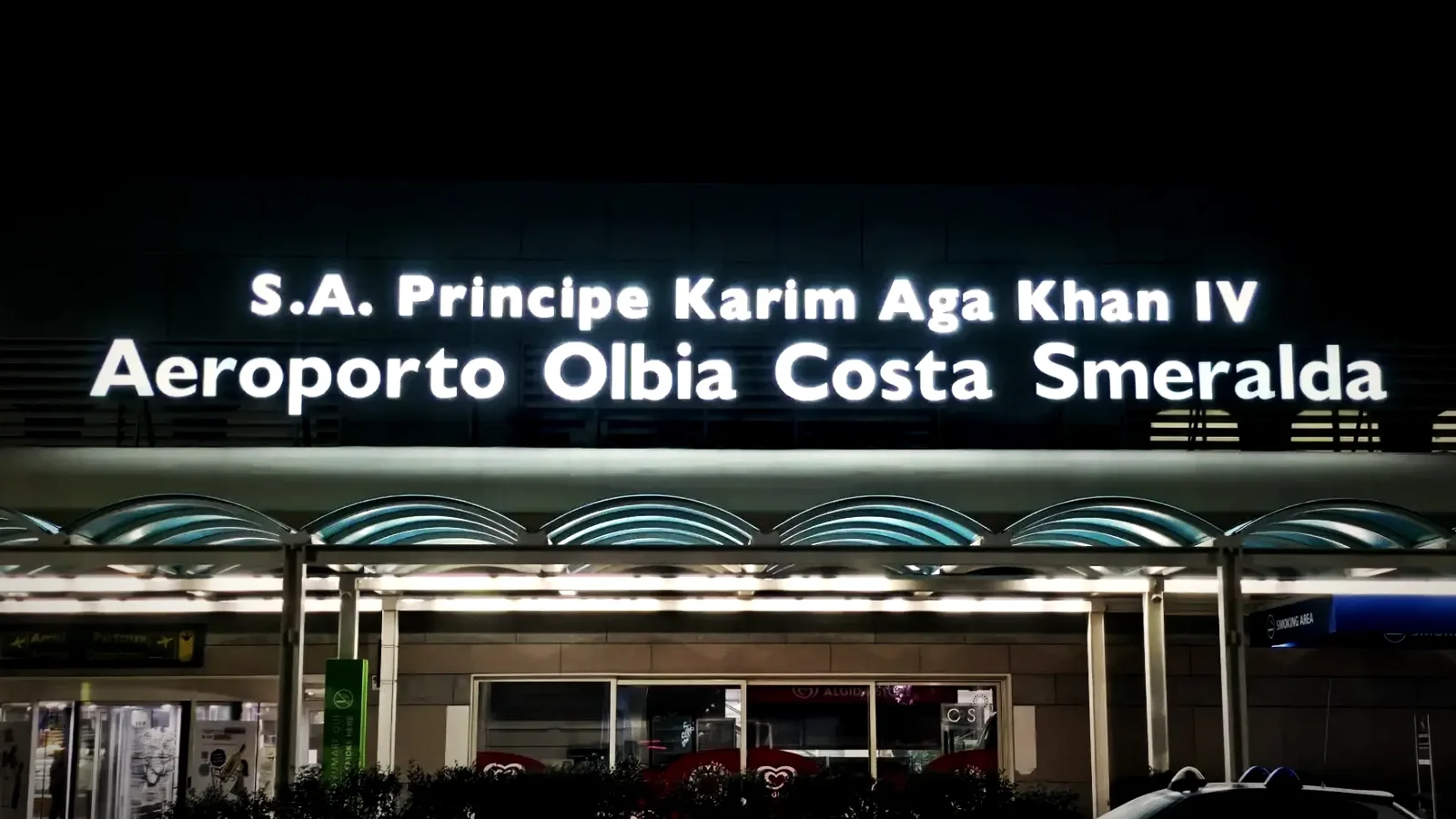
Ryanair's release of 21 October lists «Riduzioni ad Alghero (-15%) e Olbia (-50%), inclusa la perdita di -1 rotta», alongside growth at Cagliari with a new route to Forlì and more flights to Milan Malpensa and Venice. It says the airline carries more than 4.5 million passengers a year in Sardinia and supports more than 3,500 local jobs. It gives no frequencies, seat counts, start dates or aircraft numbers. Olbia.it reports that the cuts start at the end of October, with the beginning of the winter season, and that the public-service routes from Olbia to Rome and Milan are not affected. An earlier Ryanair release in August put Cagliari to Malpensa at two flights a day, up from one, and Cagliari to Venice at 14 a week, up from eight; La Nuova Sardegna gives ten a week for Venice, so that figure is disputed.
Ryanair did not name the route it is dropping. Radio Sintony reported on 22 October that Alghero to Bologna would go. The Region says otherwise: transport councillor Barbara Manca told Alguer.it that «ad Alghero si registra una diminuzione della capacità del 15%, ma vengono mantenute tutte le rotte attualmente operate» and that «a Olbia viene soppressa una sola tratta». Alghero's mayor, Raimondo Cacciotto, told Sassari Oggi that «su Alghero si parla in ogni caso di una riduzione di frequenze e non di rotte». This article follows the Region's version, which matches Ryanair's single lost route.
McGuinness, speaking in Cagliari, welcomed the Region's winter suspension of the surcharge but said «la misura è arrivata troppo tardi per incidere sull'operativo dell'inverno 2026», the measure came too late to affect the winter 2026 schedule, and was «ben lontana dall'abolizione per tutto l'anno necessaria a ripristinare la competitività della Sardegna», far from the year-round abolition needed to restore Sardinia's competitiveness, particularly at Alghero and Olbia, which he said suffer from chronic seasonality. «Costi di accesso più bassi si traducono in più traffico, più turismo, più posti di lavoro e tariffe più basse», lower access costs translate into more traffic, more tourism, more jobs and lower fares. The release also attacks the territorial continuity scheme, saying the Region «continua a destinare quasi 50 milioni di euro all'anno di risorse pubbliche a un sistema fallimentare di oneri di servizio pubblico», keeps putting almost 50 million euro a year of public money into a failing public service obligation system.
The offer is conditional. If Sardinia follows Sicily, Calabria, Abruzzo, Friuli-Venezia Giulia and Emilia-Romagna in abolishing the surcharge all year, Ryanair says it will immediately guarantee 2 million extra passengers a year, four more aircraft worth 400 million dollars, a new base in northern Sardinia and more than 900 jobs over five years. These are the airline's own commitments, and none has been independently assessed. The Italian quotations above are from Ryanair's release and the outlets named; the English is our translation.
The surcharge at the centre of it
The addizionale comunale adds 6.50 euro to every departing passenger's ticket, and Manca points out that «soltanto una quota limitata è destinata ai Comuni aeroportuali», only a limited share goes to the airport municipalities. On 10 August the regional council, in a budget variation, suspended it from November to March at Cagliari, Olbia and Alghero, with April and May added at Alghero only. The cost is 18.2 million euro over 2026, 2027 and 2028, split 3.3 million, 9.1 million and 5.8 million, plus about 500,000 euro a year to compensate the airport municipalities. Abolishing it all year would cost far more: L'Unione Sarda put the figure at roughly 32 to 35 million euro a year.
How the Region and the parties responded
Manca's reply was measured but firm. «Rispettiamo le legittime scelte commerciali di Ryanair, ma è necessario riportare il confronto sui numeri reali», we respect Ryanair's legitimate commercial choices, but the debate has to go back to the real numbers. She described the cuts as «una rimodulazione dell'operativo della compagnia», a reorganisation of the airline's schedule, and set out the Region's priority: «la Sardegna non ha bisogno di utilizzare denaro pubblico per incentivare ulteriormente i voli nei mesi estivi. Abbiamo invece bisogno di più collegamenti durante l'inverno e nei mesi di spalla», Sardinia does not need to use public money to further encourage summer flights; it needs more connections in winter and the shoulder months. She also called for «una strategia nazionale, capace di evitare una rincorsa tra Regioni e aeroporti», a national strategy to stop regions and airports outbidding each other. In Sardiniapost she added: «Ryanair fa legittimamente gli interessi della propria azienda, noi abbiamo il dovere di fare quelli della Sardegna», Ryanair legitimately looks after its company's interests; we have a duty to look after Sardinia's.
Roberto Li Gioi, who chairs the council's transport committee for the governing majority, said «la Sardegna non ha bisogno di ulteriori collegamenti durante l'estate». The opposition saw it differently. Paolo Truzzu, who leads the Fratelli d'Italia group, told Il Tamburino Sardo: «Altro che destagionalizzare, qui si corre il rischio di un disastro per il futuro del turismo in Sardegna», so much for extending the season; this risks a disaster for the future of tourism in Sardinia. Antonio Moro of the Partito Sardo d'Azione, Manca's predecessor, made a different point in L'Unione Sarda: the cuts fall on the two privately managed airports, so «la variabile, allora, è un'altra: la gestione», the variable is management. Olbia's mayor, Settimo Nizzi, was reported by Radio Sintony to be worried about the effect on residents, but no direct quote from him had been published by 22 October. We found no statements from the airport operators or from hotel and restaurant associations.
How much of Olbia's winter this actually is
Olbia is Sardinia's most seasonal airport. It handled 4,009,563 commercial passengers in 2025, according to the Region, and Geasar says June to September carry 68% of the year's traffic. In August 2026 it handled 930,540 passengers, 9.2% more than a year earlier, on Assaeroporti figures. L'Unione Sarda reported on 18 October that flights to Olbia drop by 89.5% as the season closes, against 80% at Alghero and 65.1% at Cagliari, without stating the comparison period.
Ryanair is a small part of that picture. Excluding territorial continuity routes, it operates 12% of flights at Olbia, 43% at Alghero and 80% at Cagliari. Over Christmas 2025, Geasar's winter programme listed Ryanair from Olbia to only two cities, Bergamo and Bologna, both offered alongside Volotea. Halving a two-route programme and losing one route is consistent with one of those two ending, though no source has yet said which.
Other carriers are moving the other way. Volotea is putting 75% more winter seats on sale at Olbia than a year ago, with Paris Orly, Barcelona, Venice, Verona and Turin, a first winter to Madrid, Bologna returning and Naples over Christmas. Its published list does not include Bergamo. Aeroitalia flies the public-service routes to Rome Fiumicino and Milan Linate, easyJet flies to Milan Malpensa, and Aeroitalia has added Christmas flights from Trieste. In the south, Sogaer says Cagliari will offer more than 2.1 million seats this winter, 17% more than last year, on 38 routes.
What happened where regions paid, and where Ryanair left
The regions Ryanair cites did get growth. Calabria abolished the surcharge from August 2024; Ryanair opened a four-aircraft base and 15 routes, and the Bank of Italy reports regional airport passengers up about 20% in 2025 and nights in accommodation up 11.6%. Ryanair had claimed 50% growth. Friuli-Venezia Giulia pays about 2.5 million euro a year; Trieste carried 1.65 million passengers in 2025, up 25%, while regional nights rose 6.5%. In each case passengers grew faster than overnight stays.
Trapani, which McGuinness held up as a success, shows the other side. Local councils paid Ryanair about 2.7 million euro a year in co-marketing from 2014. When the deal lapsed in 2017, three based aircraft and 18 routes left, and passengers fell from 1,493,519 in 2016 to 480,524 in 2018, down 62.8%. Growth returned in 2026 only after a new base and fresh regional money: Sicily now covers about 6.6 million euro a year of surcharge and has committed 19 million euro to route incentives.
Spain is the nearest test of what happens when Ryanair walks away. It cut about a million winter seats at regional Aena airports in 2025. The first year hurt: seven affected airports lost 428,000 passengers between April and September 2025, and Valladolid fell 68%. By 2026, where other airlines could step in, they did. Tenerife Norte, which Ryanair left entirely, was up 2.5% in the first half, Asturias up 10.5% and Jerez up 13.5%, as Vueling, Binter and Volotea expanded. Galicia did not recover: Santiago was still down 10.7% and Vigo 9.5% in August 2026.
The surcharge is also not the only thing driving Ryanair's winter map. It is cutting about 700,000 seats in Germany this winter and closing its Berlin base, and is trimming around 10,000 winter flights across its network, citing fuel costs.
A note on the numbers
Ryanair's percentages have no published baseline, so they cannot be converted into seats or passengers, and nobody has published such an estimate. Olbia's 2025 total appears as 4.01 million (Region), 4.13 million (Geasar's service charter) and 4.16 million in other tables, which reflects different scopes. The 12% share is a share of flights, not passengers, excludes public-service routes and has no stated period. Reports disagree on whether the surcharge suspension covers two winters or three; the budget lines run to 2028. The Cagliari to Venice frequency is reported as both ten and fourteen a week. Il Sole 24 Ore's and L'Unione Sarda's English editions are machine translations; quotations here come from Italian originals where we could find them. The spending figures used in the opinion section below are, in one case, a trade association's estimate, and the official card-payment data does not yet break 2026 spending down by category.
Opinion: the north does not need to buy volume
This section is opinion, written by the editors of Sardinia Blog. Sardinia Blog is published within the Rental12 ecosystem, an owner-operator letting homes it owns in Olbia and Golfo Aranci rather than a property manager, so it has a direct interest in the kind of visitor northern Sardinia attracts. Read it with that in mind.
Losing half of a two-route winter operation at Olbia is not a crisis, and spending 32 to 35 million euro of public money a year to reverse it would be a poor bargain. Ryanair runs about one flight in eight at Olbia. Summer demand is not northern Sardinia's problem: August traffic at Olbia was up 9.2%, and two thirds of the airport's year already happens between June and September. The Region is right that public money belongs in winter and the shoulder months, and wrong only if it ends up spending that money on the airline that is threatening it.
The deeper point is that volume is not value. Researchers working on Bank of Italy survey data, Porta and Pantelaki in Tourism Economics, found that tourists flying low-cost spend significantly less than those on full-service airlines, even at similar fares. In the Canary Islands, low-cost carriers brought 50.8% of tourists but 43.6% of their spending. A Turespaña study of 2004 to 2010 found low-cost flights raised tourist numbers in Spain with no positive effect on total spending. Closer to home, the Bank of Italy reports that foreign tourist spending in Sardinia rose in 2025 mainly because more people came, while spending per head slipped.
That is what this summer felt like from Gallura. Planes, ferries and beaches were full. Tables were not. Confesercenti's regional director, Gian Battista Piana, estimated restaurant and tourist-service spending down 20 to 25%, with peaks of 40% in some areas, and added that "the signal also comes from supermarkets, where spending is increasing". Our view is that the businesses that gained most from the cheapest end of the market this summer were the supermarkets, not the restaurants, bars, hotels or short-let operators that make a destination worth the trip. We should be straight about the limits of that. Piana called his figures estimates awaiting official data. Card-payment data the Region cited this month shows total tourist spending up about 10% to September, with no category split yet, and in 2025 restaurants took a larger share of tourist card spending than supermarkets did. We will report the 2026 breakdown when it appears, whichever way it falls.
There is a real cost here, and it falls on residents more than tourists. A winter flight to Bergamo or Bologna is used by students, workers and families as much as by visitors, and losing one is a genuine inconvenience. The answer is the continuity scheme and carriers like Volotea that are adding winter seats on their own account, not a year-round tax holiday for one airline. Trapani is the warning: traffic bought with public money left the moment the money stopped, and came back only when the money did. Spain is the encouragement: where other airlines could step in, they did within a year, and Olbia already has those airlines.
If Cagliari wants to grow on the high-volume model, it is welcome to it. It has the base, the routes and an airline that runs four flights in five there. The north should compete on what it already does well: longer stays, higher spending per visitor, and guests who eat in its restaurants rather than from its supermarket shelves. We doubt many restaurateurs, hoteliers or short-let operators in Gallura will lose sleep over this winter's timetable.
Sources: Ryanair, 21 October 2026 · Il Sole 24 Ore, 21 October 2026 · ANSA, 21 October 2026 · Alguer.it, 21 October 2026 · Sardiniapost, 21 October 2026 · L'Unione Sarda, 21 October 2026 · Il Tamburino Sardo, 21 October 2026 · Olbia.it, 21 October 2026 · Sassari Oggi, 22 October 2026 · Radio Sintony, 22 October 2026 · Sardiniapost, 11 August 2026 · L'Unione Sarda, May 2026 · Regione Sardegna, 26 February 2026 · Geasar service charter 2026 · Assaeroporti · L'Unione Sarda, 18 October 2026 · L'Unione Sarda, October 2025 · Geasar, December 2025 · Geasar, August 2026 · Sbircia la Notizia, 21 October 2026 · Bank of Italy, Calabria, June 2026 · Bank of Italy, Sardinia, June 2026 · InTrieste, February 2026 · BlogSicilia, September 2018 · La Sicilia, March 2026 · Que.es, October 2025 · El Español, August 2026 · Aena, September 2026 · Travel Trade Journal, October 2026 · BusinessMobility, September 2026 · Porta and Pantelaki, Tourism Economics · Promotur, Canary Islands 2017 · SINC on the Turespaña study · L'Unione Sarda, 28 August 2026 · L'Unione Sarda, 15 October 2026 · L'Unione Sarda, 28 July 2026
Related reading
Elsewhere on Sardinia Blog: the winter seats other airlines are adding at Olbia; how overnight stays tracked to August 2026; and the American search demand building for Olbia.
Sardinia Blog is published within the Rental12 ecosystem, an owner-operator letting homes it owns in Olbia and Golfo Aranci rather than a property manager acting for other owners. Its own view of the Ryanair standoff in February and its press archive are company statements, not independent evidence.