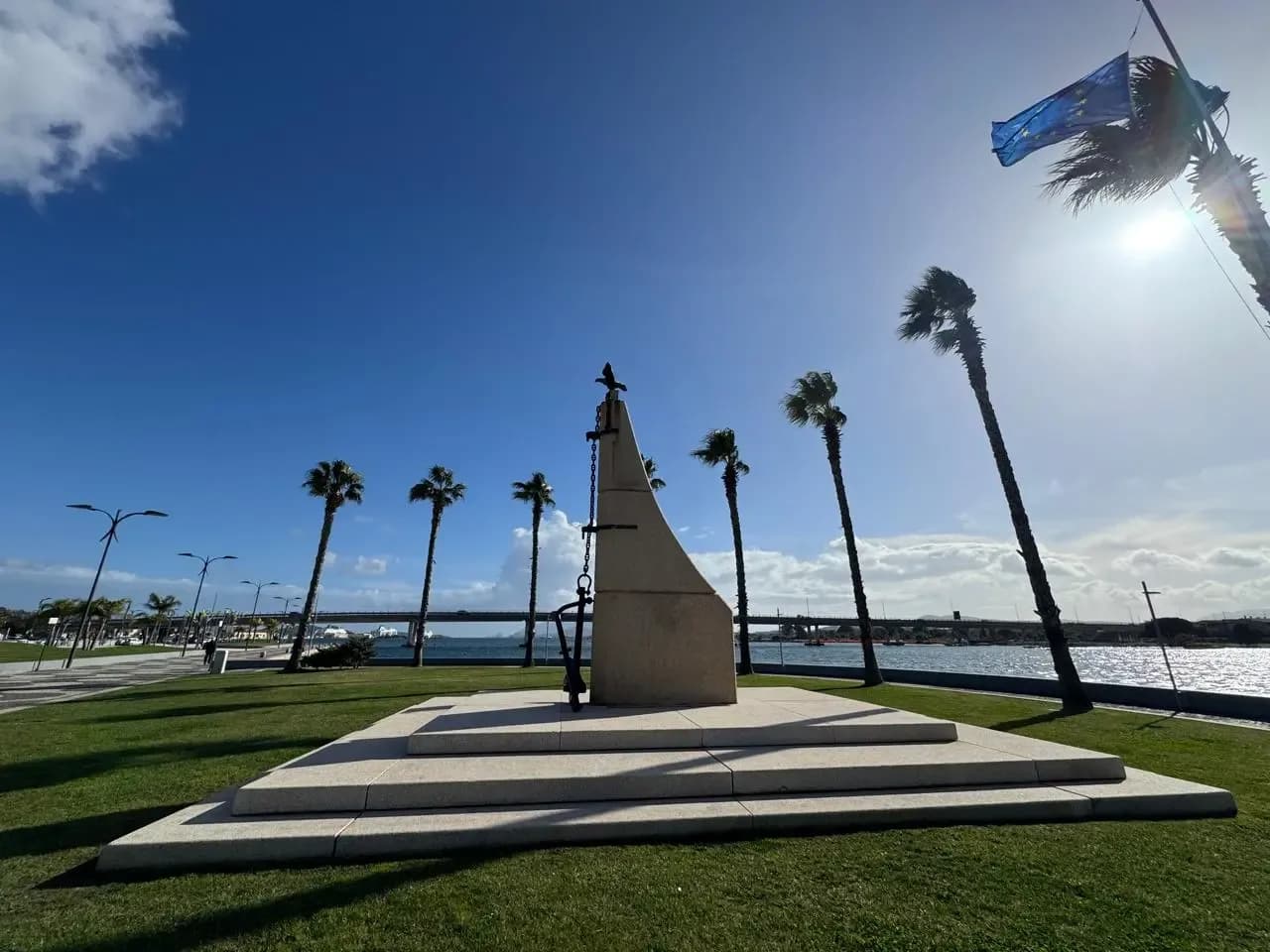

Olbia’s waterfront that makes you slow down
Some walks are about getting from A to B. The Olbia waterfront is about feeling the sea’s rhythm. The breeze carries the smell of salt, boats trace quiet paths in the gulf, and a couple of thoughtful sculptures invite you to pause. It is an easy, level promenade with benches, shade, and long views across the water. Come with time to spare and let it unfold.
The sails that never depart
Midway along the promenade you meet two stylized white sails known locally as the Lions Club Sails. They are not moored to any boat, yet the wind seems to fill them. They capture something essential about Olbia: people arriving, leaving, and setting their course. Ferries in and out. Crews who know every quirk of the gulf. Stand beside the sails, listen to the rigging from nearby masts, and you can almost hear a hull cutting water. Fixed in place, they still speak of movement.
A small planet called “Ocean”
Keep strolling and you will find “Ocean,” a sphere by artist Emanuela Giacco, woven from ropes and nautical lines. From a distance it feels like a planet held between sky and water; up close you see a tangle of sea-borne materials turned into a world. Its message is practical and clear: the sea links ports, people, and decisions that shape our shared environment. Watch it as the light shifts. At sunset, the piece holds the day’s last color like a lantern.
An easy half-day route by the water
This loop keeps things simple and unhurried. Adjust times to your pace.
10:00 – Waterfront stroll and the two sculptures
Start at the ferry terminal side and walk the lungomare toward town. Pause at the white sails, then at “Ocean.” Sit for five minutes without your phone. It helps.
11:00 – Museo Archeologico di Olbia
Cross the pedestrian bridge to the small museum island for shipwrecks, Roman finds, and a clear snapshot of Olbia’s port history. It is compact, well-signed, and a natural follow-up to the waterfront. Check local listings for opening times on site.
12:15 – Corso Umberto I for lunch and a browse
Wander up Corso Umberto I. Choose a trattoria for a simple plate of seafood pasta or a Gallura-style zuppa gallurese. Skip the souvenir stands near the port and look for small boutiques that describe how and where items were made.
14:00 – Basilica di San Simplicio
End with a quiet visit to the Romanesque basilica. The stone is warm in the afternoon light, and the interior has a plain, steady beauty that suits the day’s slow tempo.
Getting there and around
- On foot: Olbia train station to the waterfront is about 10–15 minutes on level streets.
- By train: Check current schedules and connections to Olbia on Trenitalia. Trenitalia
- By bus: Regional buses link Olbia with nearby towns and beaches. See routes and times on the regional operator’s website. ARST
- Parking: Look for signed public lots near the port and along the outer edges of the center. In summer, arrive early evening for better chances.
- Best light: Golden hour on clear days. If you come at midday in summer, bring water and a hat.
Local, not generic: how to shop well
- Filigree jewelry: Seek pieces labeled in 750 gold or 925 sterling silver, and ask the maker about their design. Genuine work has crisp, even threads and a story behind the motif.
- Cork goods: Gallura is Sardinia’s cork heartland. Look for well-finished edges and tight grain; avoid items with flaking bark or a chemical smell.
- Ceramics: Favor small studios that fire on site and can explain their glazes. Consistent weight and clean foot rings are signs of quality.
- Where to browse: Walk Corso Umberto I for independent boutiques. On Thursdays, the market in San Pantaleo, a village in Olbia’s hinterland, draws skilled artisans and is an easy half-day by car.
Easy extensions if you have a full day
- La Maddalena Archipelago: Drive or bus to Palau, then ferry to La Maddalena town. The national park protects clear waters and granitic islets, and visitor information is managed by the park authority. La Maddalena National Park
- Tavolara Marine Reserve: Boats run seasonally from Porto San Paolo to Tavolara. The protected area covers reefs, seagrass meadows, and calm coves suited to an unhurried swim. AMP Tavolara - Punta Coda Cavallo
Small moments that make the walk
Morning runners trace the quay while the harbor is quiet. Afternoon brings gelato and ferry horns. At sunset, the sails color softly and “Ocean” holds the last light. Somewhere between those moments, the sea does what it does best: it slows you. Bring comfortable shoes, a curious eye, and the will to sit for five unplanned minutes. The rest takes care of itself ⛵