Last updated: November 17, 2026.
Piazza Darsena is a public square on the Cagliari waterfront, at the end of Via Roma beside the old Dogana pier. It has a round fountain, a wide harbour promenade with shaded pergolas and a memorial anchor to those lost at sea. It is free, open day and night, and a few steps from the city centre.
Piazza Darsena at a glance
- Where: on the waterfront at the end of Via Roma, next to the Dogana pier, Cagliari (the address supplied for the square is Piazza Vittime del Moby Prince, Calata Via Roma, named after the victims of the Moby Prince disaster of 1991)
- Cost: free; the square, the promenade and the monuments are open at all times
- Best time: early morning or late afternoon
- What to see: the fountain by Palazzo Tirso, the pergolas and promenade, the anchor memorial
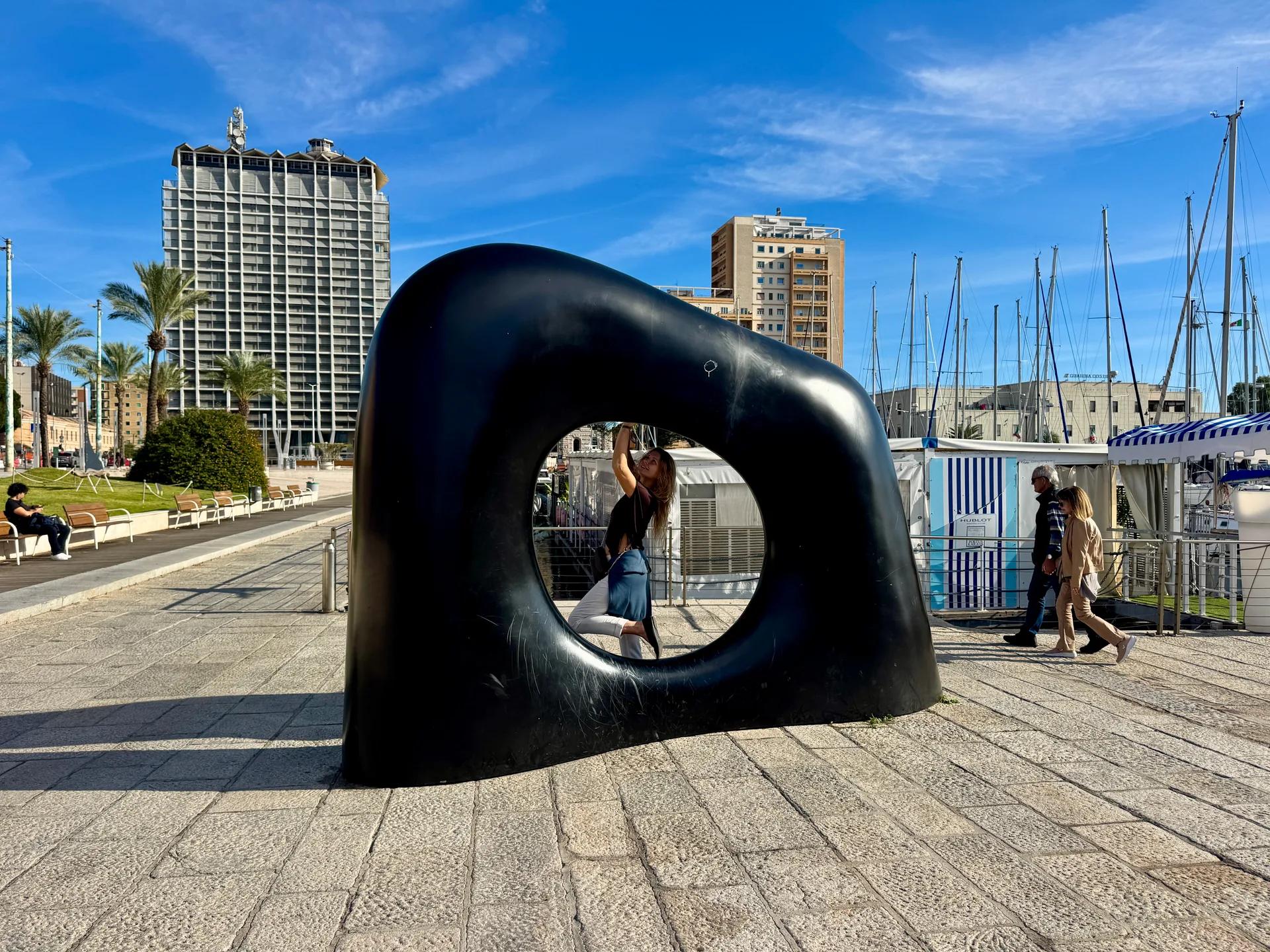
- Also on view: the Kan Yasuda sculptures, until 25 November 2026
What is a “darsena”?
In Italian, a darsena is the sheltered inner basin of a harbour, where boats can moor safely away from the open sea. The square looks over this basin, next to the Dogana pier, the former customs quay of the port of Cagliari.
A metal plaque on the wall records that the square was created by the Port Authority of Cagliari and completed in 2007. Since then it has become one of the places where the city and its port meet most naturally, with locals and visitors sharing the waterfront with fishermen, sailors and yachts.
A city that rediscovered its sea
For many years the centre of Cagliari was cut off from its port by a wall. That barrier is gone. Part of the quay along Via Roma is now named Lungomare Mariano Delogu, after the former mayor credited with removing the wall and bringing the city back to its waterfront. Piazza Darsena is one of the easiest places to feel the change: step away from the traffic of Via Roma and you are beside the water, with nothing between you and the boats.
What to see in the square
The fountain
At the entrance to the square, in front of the historic Palazzo Tirso, a round fountain sends jets of water high into the air. The water falls into a shallow basin set almost level with the paving, so the fountain feels open and part of the square rather than closed behind a wall. On a sunny day the spray catches the light against the dark green crown of the large pine behind it. It is a natural meeting point, a favourite spot for photos and a good place to begin a walk along the harbour.
The promenade and pergolas
From the fountain, a wide pedestrian promenade runs along the water. The paving is made of large pale stone slabs, with tall black lamp posts, palm trees and a long wooden boardwalk right beside the moored boats.
White pergolas with wooden benches offer shade and a place to rest. In the afternoon they fill with friends chatting, couples watching the boats, families on an easy stroll and older locals reading the newspaper. From here you can see the masts of the marina, the pastel buildings of Via Roma, the towers of the modern city and, on clear days, the mountains across the gulf.
The anchor: Monument to the Victims of the Sea
On a patch of lawn near the Dogana pier, a huge black anchor rests on a white stone base, its heavy chain still wrapped around the shank. The inscription reads Ai caduti del mare, “To those who fell at sea”. This is Cagliari’s Monument to the Victims of the Sea, honouring everyone who lost their life on the water in a city that has long depended on fishermen, sailors and seafarers.
Surrounded by grass and palm trees, with the marina masts behind it, the anchor is a quiet place, very different from the street a few metres away. Every year in June, on Italian Navy Day, a laurel wreath is laid at its foot. The date recalls the Action of Premuda in June 1918, when two small Italian torpedo motorboats led by Luigi Rizzo attacked the Austro-Hungarian fleet in the Adriatic during the First World War.
Kan Yasuda sculptures on the waterfront
Until 25 November 2026, the waterfront around the square also hosts an open-air exhibition by the Japanese artist Kan Yasuda. Seven monumental sculptures in white Carrara marble and bronze stand between the Via Roma quay, the Delogu quay and the Dogana pier. Their smooth, rounded shapes stand out against the masts and the sea, and you can walk around them to see the harbour framed in a new way.
The exhibition is free. It is part of the ArtiJanus project, organised with the Municipality of Cagliari and the Port System Authority of the Sea of Sardinia, with the support of the Fondazione di Sardegna. As with any temporary display, check the dates before you plan around it.
When to go
The best moments are early morning, when the square is quiet and the light is soft, and late afternoon, when the sun turns the stone golden and the pergolas cast striped shadows. Because the square is open at all times, it fits easily around a meal or a walk along Via Roma.
Nearby
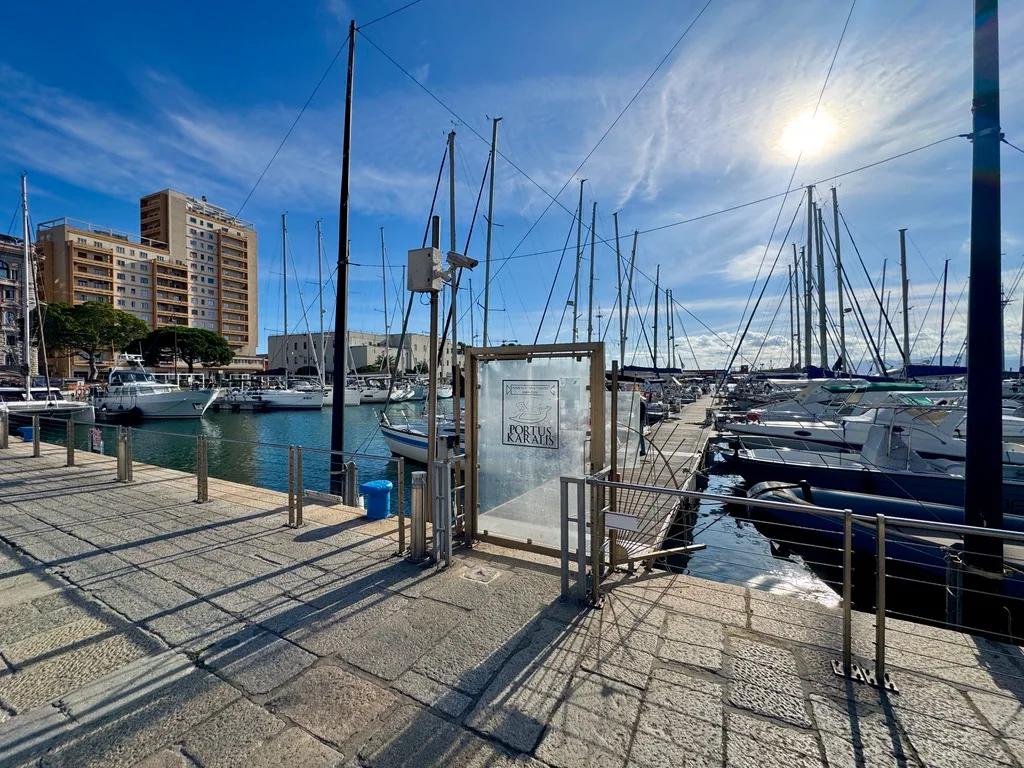
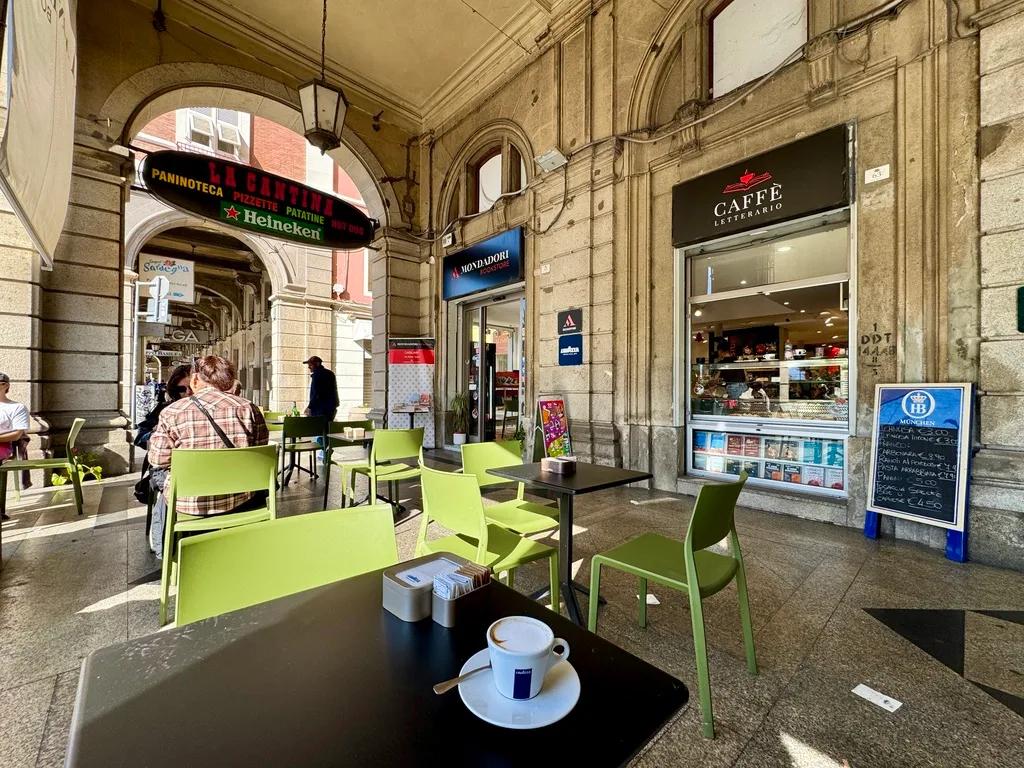
Two other waterfront sights sit close by: the Marina di Portus Karalis with Andrea Mura’s sail, and Costantino Nivola’s sculptures at the Regional Council on Via Roma. Under the arcades of Via Roma, the Mondadori bookstore and café is a good stop for a coffee before or after your walk, and our guide to what to see in Cagliari in one to three days takes you from the harbour up to Castello and out to Poetto beach. If you are building a longer stay around the city, our Rental12 ecosystem is a useful place to start planning.
In short
Piazza Darsena is where Cagliari steps out of its busy streets and onto the water. Start at the fountain, walk under the pergolas along the harbour, and pause at the anchor that remembers those lost at sea. It is a simple square, but it shows a city that has always lived with the sea and now lives right beside it again.