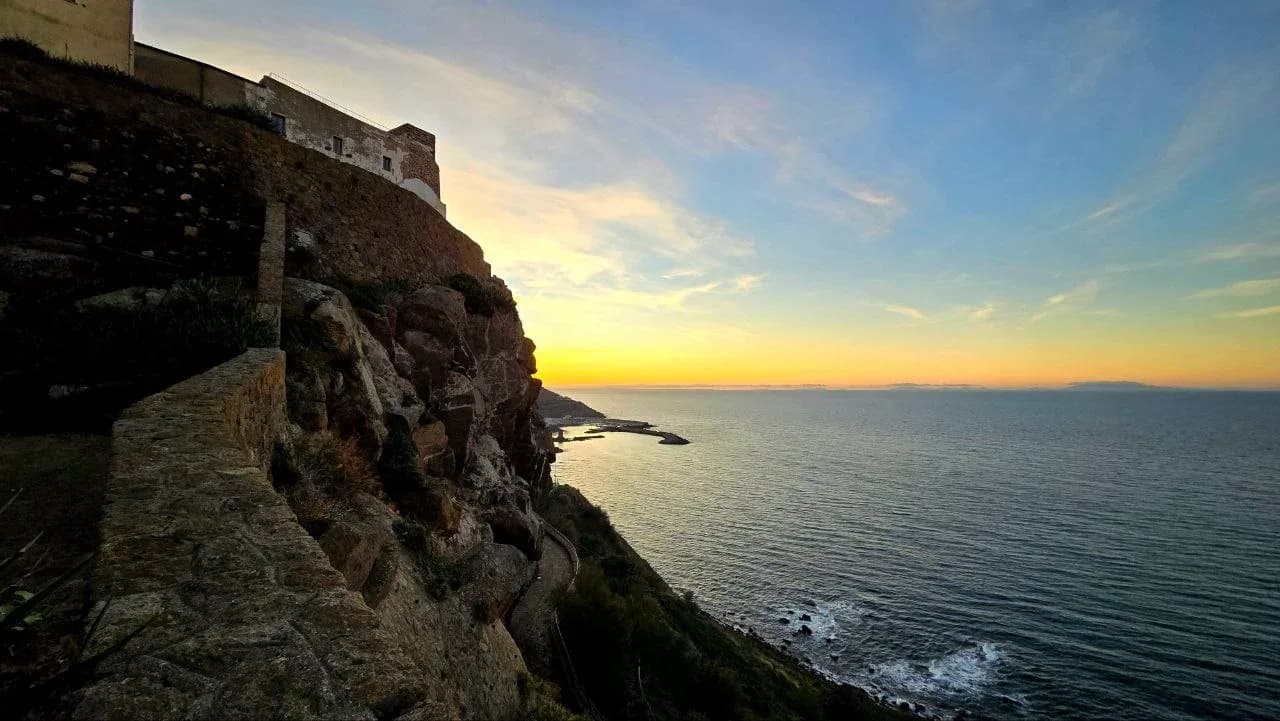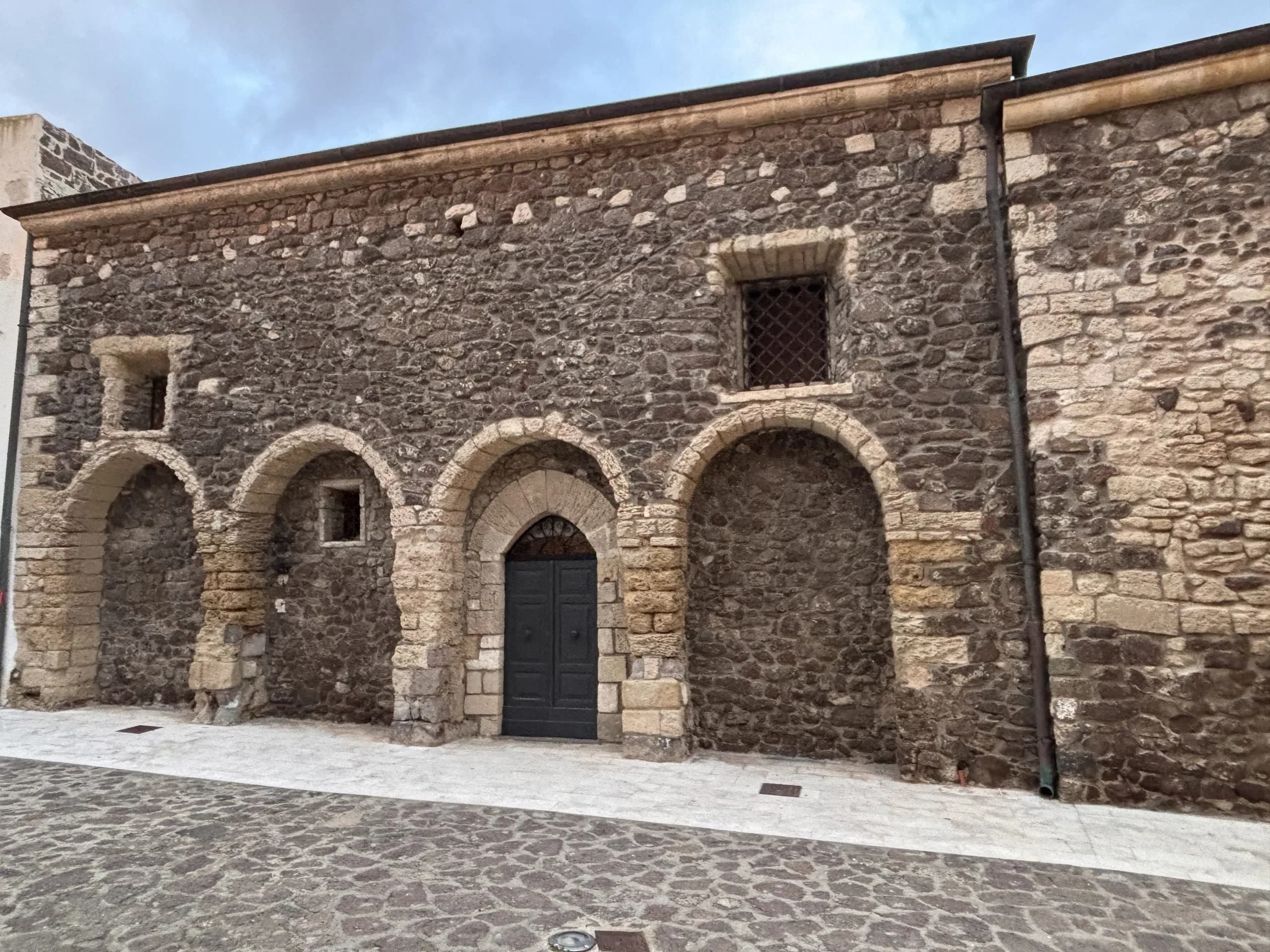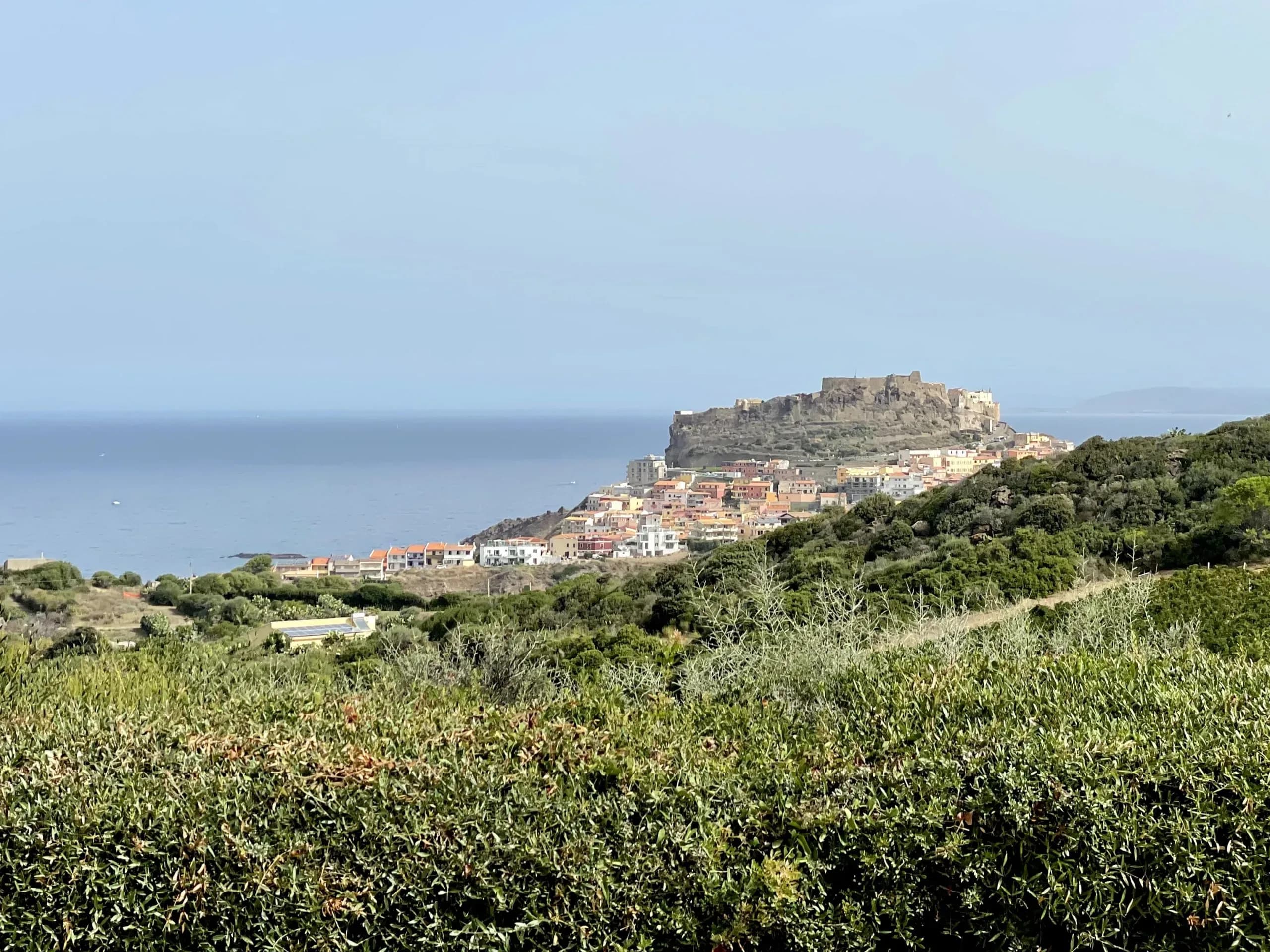
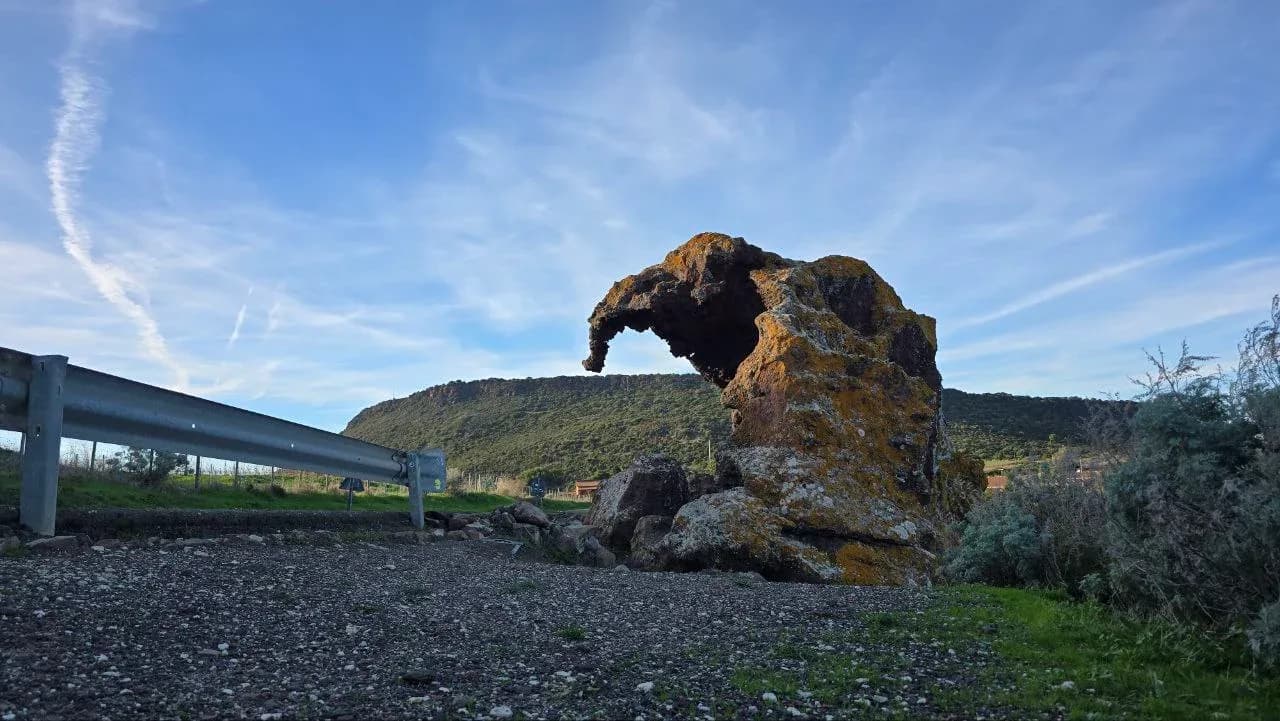

You might not plan to stop, yet this stone has a way of slowing you down. Roccia dell’Elefante sits quietly by the road, its volcanic skin warm in the sun, the Mistral pushing the scent of wild herbs across the lay-by. Look once and you see a rock. Look twice and the elephant appears, trunk lowered as if mid-step. 🐘
What you’re looking at
This is a natural sculpture in trachyte, shaped over millennia by wind and rain. No chisel, no plaque needed. The form is striking from the roadside, but the real surprise is inside: the rock holds prehistoric burial chambers known as domus de janas. According to Sardegna Turismo, the site sits along the SS134 near Castelsardo and preserves two small tombs cut into the stone (Sardegna Turismo).
Why it’s worth a pause
Roccia dell’Elefante is a threshold rather than a destination. A short stop here resets the pace before you roll into Castelsardo’s citadel and sea views. The rock’s profile feels alive against the sky; inside, the dim openings remind you that people shaped and honored this land long before the road existed.
How to visit without stress
- Location: SS134 between Sedini and Castelsardo. The pull-off is obvious when the “elephant” appears on your right or left, depending on direction.
- Time needed: 10 to 20 minutes for a look and a few photos.
- Best light: early morning for soft side light, or last hour of the day when the trachyte glows and traffic is lighter.
- Effort and accessibility: easy. You can view the rock from the lay-by. Uneven ground around the base means closed shoes are safer than sandals.
Safety and respect
- Park only in the marked lay-bys and keep well off the carriageway. Traffic on the SS134 moves fast.
- Stay behind barriers and avoid climbing onto the rock or inside fragile openings. The domus de janas are archaeological features, not viewing platforms.
- Windy days: the Mistral can be strong; secure hats and keep cameras strapped.
- Summer heat: a quick stop can still be punishing at midday. Bring water and plan shade breaks.
- Emergency: dial 112 for any incident.
Pair it with nearby highlights
Make this a graceful prelude to Castelsardo. The medieval fortress, narrow lanes, and sea views reward a slow wander, and the town is an easy 10-minute drive away (Sardegna Turismo).
If you’re coming from the inland side, Sedini is a quiet stop with its own rock-cut heritage and an ethnographic museum housed in a remarkable stone dwelling. It offers a different look at how people adapted to this geology.
Simple photo tips
- Walk a few steps up and around the roadside verge to line up the trunk silhouette cleanly against the sky.
- A 24–70 mm lens (or your phone’s main lens) is enough. A polarizer helps pull detail from the trachyte.
- Golden hour is best. If you arrive at noon, step back and use the shadow side to avoid harsh glare.
Quick essentials
- Open: all day, year-round.
- Cost: free.
- Time of year: quieter from October to May; in July and August, stop early or late to avoid traffic and crowds.
- What to bring: water, hat, closed shoes, and patience with passing vehicles. Leave no trace.
A small stop that sets the mood
Take a minute, breathe, and let the landscape do the talking. The elephant faces the road as if it knows where you are headed and gives a quiet nod. Then carry that calm into the coast ahead.