
Saint Turtles of Sardinia
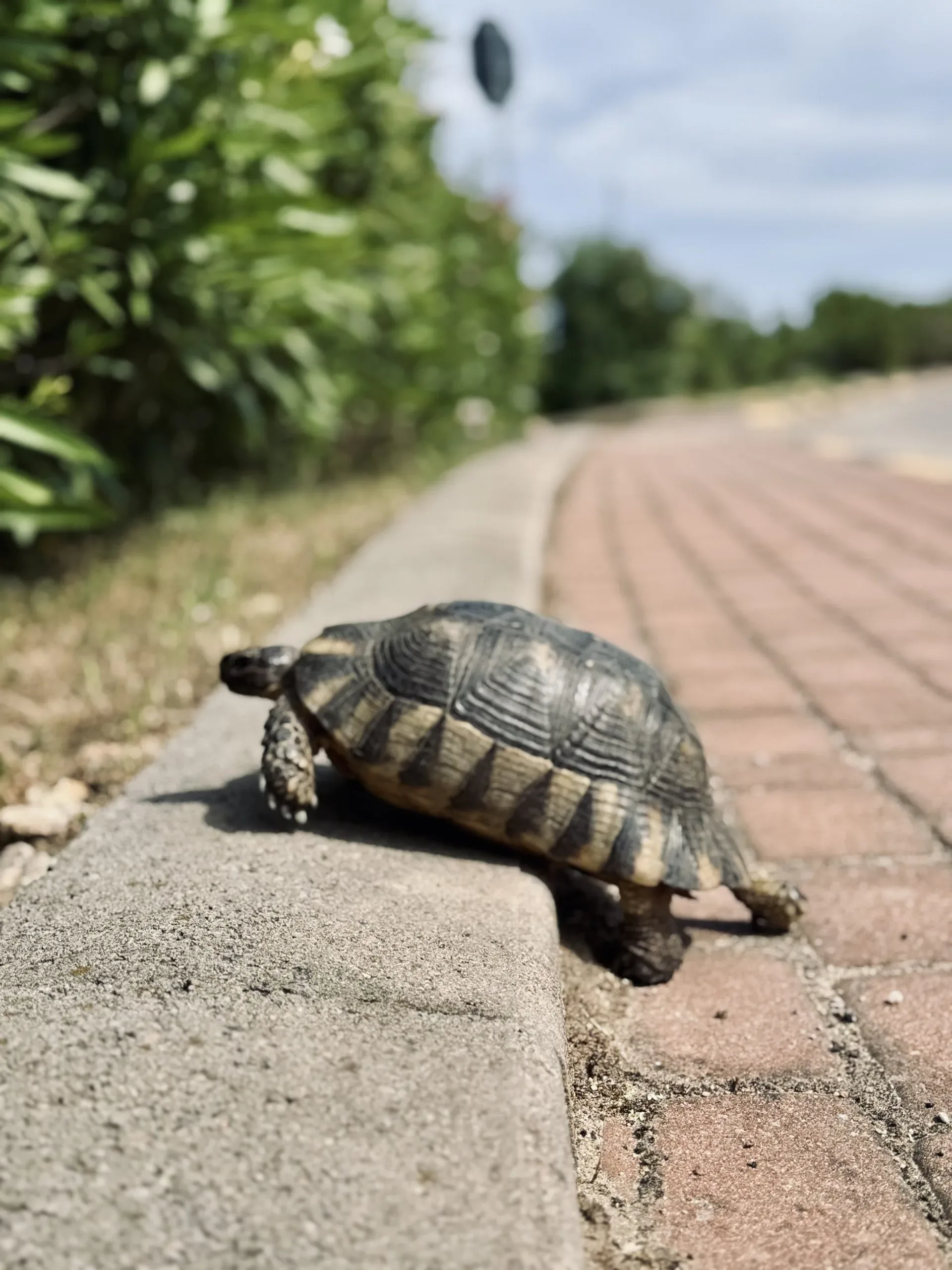
Somewhere between the scent of the sea and the whisper of pine trees, the Saint Turtles of Sardinia make their quiet way through Porto Rotondo. On warm days, these small, sun-loving wanderers emerge from the maquis and garden edges, crossing paths and sometimes even the road, blissfully unaware of how adored they are by everyone who meets them.
Locals call them the saints of the road. Cars slow. Drivers wait. Tourists smile. It is not unusual to see a brief, patient queue while a turtle takes its dignified journey across the asphalt. Someone might step out, gently guide it to safety, then return to their day with a lighter heart. The ritual feels deeply Sardinian: respectful, unhurried, kind.
Meet the Saint Turtles of Sardinia 🐢
In Porto Rotondo and the Gallura countryside, the turtles you are likely to see are land tortoises. Two species are associated with Sardinia: the Western Hermann’s tortoise (Testudo hermanni) and the marginated tortoise, represented on the island by the Sardinian form often referred to as Testudo marginata sarda. Both thrive in Mediterranean scrub and open woodland with plenty of sun and shelter among cistus, rosemary, lentisk, and juniper.
Hermann’s tortoise is a protected Mediterranean species with a beautifully patterned shell and a preference for warm, dry habitats, according to the IUCN Red List (source). The marginated tortoise is larger and elongated at the rear of the shell; Sardinia is a stronghold for this iconic reptile of the Mediterranean, as described by Sardegna Ambiente, the region’s official environmental portal (source).
These gentle reptiles can live for several decades, often inhabiting the same home range year after year. That is part of the charm behind the Saint Turtles of Sardinia: you are glimpsing an ancient rhythm of life that has played out here long before resorts and yachts dotted the Costa Smeralda.
Why locals adore them
There is a small superstition in Porto Rotondo that if a turtle crosses your path, your day will unfold calmly and everything will go smoothly. Whether you believe it or not, the effect is unmistakable. Life pauses. Strangers share a smile. Children tiptoe closer to watch. For many visitors, this moment embodies the spirit of the Saint Turtles of Sardinia: a gentle reminder to slow down and savor the island’s natural pace.
When and where you might see them 🌿
Season: Most active from spring to early autumn, especially on warm days after light rain.
Time of day: Mornings and late afternoons, when the sun is kind and the ground still holds the night’s cool.
Habitats: Edges of gardens, quiet lanes, scrubby hillsides, and the fringes of pine groves around Porto Rotondo.
If you are staying in a villa with landscaped grounds, do a quick look before driving out. The Saint Turtles of Sardinia have a knack for appearing right where you least expect them.
How to help a turtle cross the road
Road crossings are when turtles are most vulnerable. If you encounter one, a few simple steps make all the difference:
Stay safe first. Park fully off the road, use hazard lights, and check for traffic.
Move it in the direction it was going. Never return it to where it started or relocate it elsewhere.
Handle gently by the sides of the shell. Do not lift by legs or tail. Keep movements calm and low to the ground.
Place it a few meters off the roadway, ideally in shade or shelter, then let it continue on its own.
Wash hands afterward and avoid touching your face.
These common-sense tips align with wildlife guidance shared by conservation organizations worldwide. A small assist keeps the Saint Turtles of Sardinia safe without disrupting their natural behavior.
Protection, laws, and good manners
Tortoises in Italy are strictly protected. It is illegal to collect, trade, or keep wild tortoises, and they are listed under CITES regulations overseen nationally by the Carabinieri CITES unit (source). On Sardinia, any wildlife emergency or suspected illegal activity can be reported to the regional forest service, Corpo Forestale, via the 1515 number (source).
Respect is simple:
Look, do not handle, unless helping one cross a road.
Never pick up a tortoise to “save” it by taking it elsewhere.
Keep dogs on a lead in scrubby areas where tortoises bask and feed.
Do not feed them. Wild diets are seasonal and specific.
These small choices help ensure the Saint Turtles of Sardinia continue to thrive for generations.
For families and photographers 📷
Children adore these encounters. A few ideas to make it special:
Carry a small, soft brush to gently sweep sand or pine needles from the path in front of a crossing tortoise rather than touching the animal.
Turn the moment into a mini nature lesson. Count scutes on the shell, spot nearby herbs like thyme or lavender, and talk about why the Saint Turtles of Sardinia need quiet places to live.
For photos, stay low, use a longer focal length if you have one, and avoid blocking the tortoise’s route.
Turtles vs tortoises: a quick note
On Sardinia you may also hear about sea turtles, particularly the loggerhead (Caretta caretta), which increasingly nests on the island’s beaches in summer, according to ISPRA, Italy’s national environmental institute (source). In Porto Rotondo, however, the animals you meet on paths and roads are terrestrial tortoises. Both deserve care, but their habitats and needs are different.
A gentle ritual worth keeping
In a world that moves fast, the Saint Turtles of Sardinia bring life to a pause. They turn a school run into a teachable moment, a beach day into a brush with the wild, a luxury holiday into a story you will tell for years. If you find yourself driving through Porto Rotondo and see a turtle on the road, do what locals do. Slow. Smile. Help it on its way. The Saint Turtles of Sardinia are not just good luck. They are the island’s way of reminding us that the finest things in life rarely need to hurry.