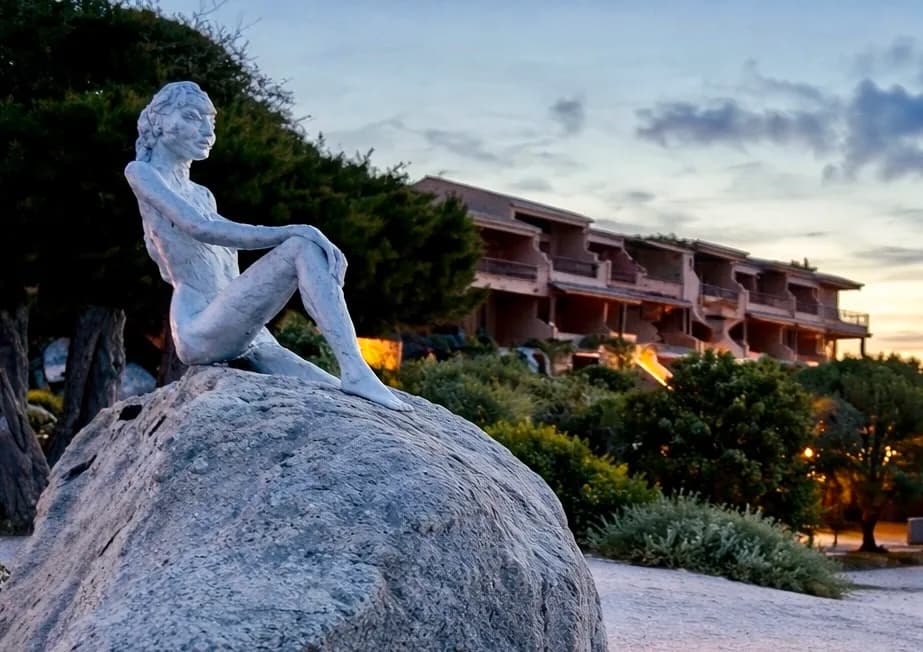

Why this quiet lookout is worth your time
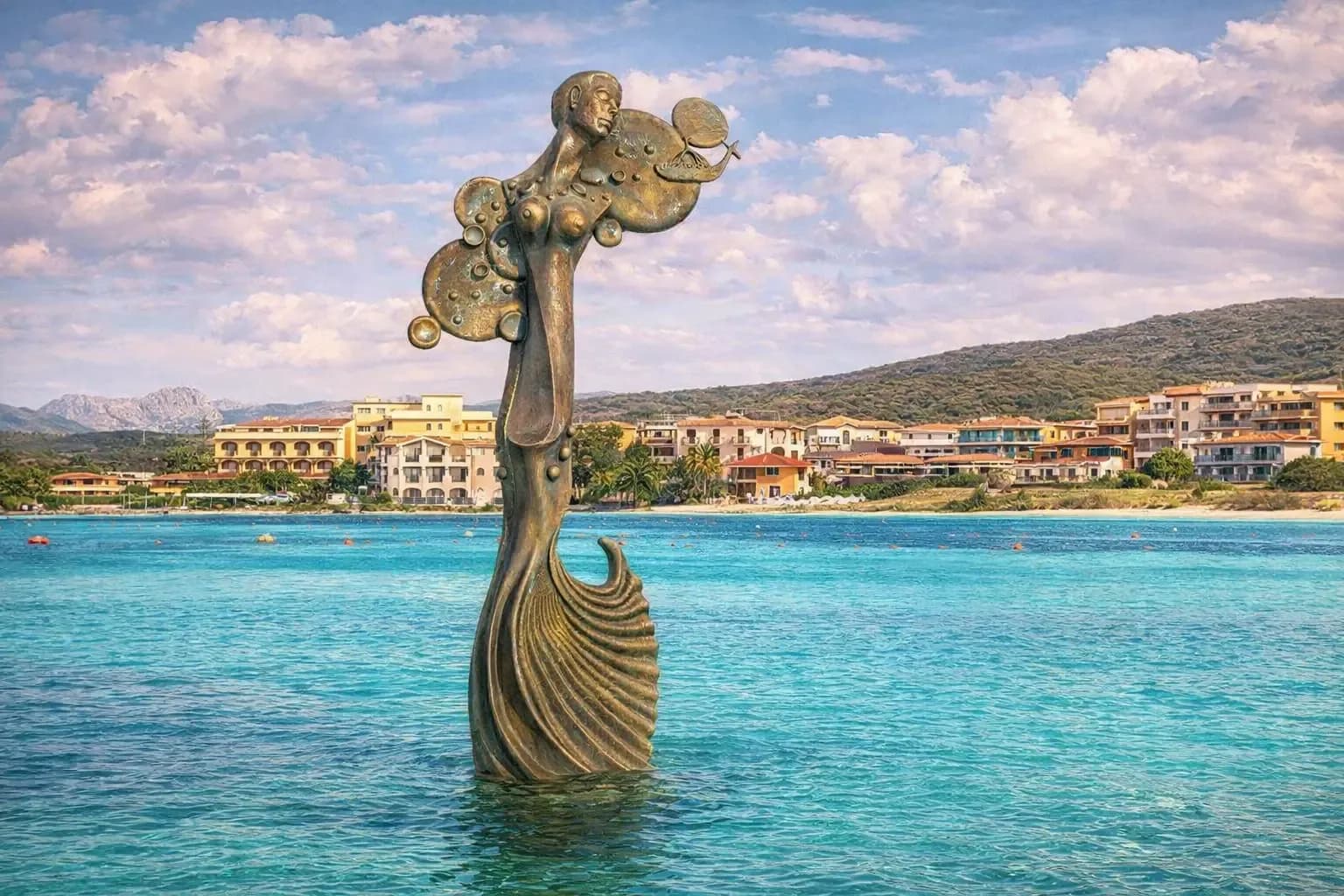
Just above the waterline at Baia de Bahas, the Sirena Della Marinella sits on a smooth granite perch, watching over Marinella’s bright shallows. In the late afternoon the sea flips from pale jade to deep blue, rooftops glow peach, and the scent of juniper and pine drifts off the path. It is a small moment of calm that feels rare in summer, and it asks you to slow down. Bring patience, not a checklist.
Where it is and how to get there
Baia de Bahas sits on the southern edge of the Golfo di Marinella, a short drive from Olbia and Porto Rotondo. Marinella belongs to the municipality of Golfo Aranci, a coastline well known for clear, shallow water and easy beach access, according to Sardegna Turismo Sardegna Turismo.
By car from Olbia, allow about 20 minutes. Park near Spiaggia di Marinella’s main car park or in signed bays closer to Baia de Bahas, then follow the coastal footpath toward the small headland. Look for a short spur heading to the granite outcrop with the siren statue. In July and August, parking is often pay-and-display and can fill by mid-morning.
Marinella Beach has a broad, sandy curve with an easy entry and generally calm water, as described by the regional tourism board Sardegna Turismo.
Short walks and swims: choose your pace
1) Viewpoint stroll
Difficulty: Easy. 10–20 minutes round trip. Follow the coastal path from Baia de Bahas or the Marinella side to the Sirena Della Marinella. Footing is mostly smooth with a few rocky steps. Sandals with grip are fine.
2) Coastal wander and cove dips
Difficulty: Easy to moderate. 2–5 km out-and-back. Trace the shoreline between Baia de Bahas and the main arc of Spiaggia di Marinella. You will pass small granite slabs and pocket coves that are lovely for a quick swim. Sturdy water shoes help on the rocks.
3) Paddleboard along the bay
Difficulty: Intermediate in wind. Launch on the Marinella side for a sheltered start, then glide toward Baia de Bahas and the viewpoint. Go early for glassy conditions. Strong afternoon Mistral can kick up chop; turn back before whitecaps build.
Best time of day and conditions
- Light: Sunrise is soft and quiet; sunset paints the bay amber. Photographers will like the 45–60 minutes before dusk.
- Wind: The Mistral often builds after lunch. Mornings are calmer for paddling or snorkeling, afternoons are fresher for a breezy walk.
- Heat: In July and August, plan the viewpoint before 10 am or after 5 pm. The rock reflects heat at midday.
What to bring
- Low-light or polarizing sunglasses to cut glare on the water
- Water, hat, and sunscreen; there is limited natural shade
- Light layers; the breeze can feel cool after a swim
- Sturdy water shoes for rocky entries and sea urchin-prone slabs
- Mask and snorkel for the coves; you will often spot bream and damselfish near the rocks
Practical tips that make it better
- Start early in peak summer to find parking and enjoy quieter paths.
- If the wind is strong at Marinella, try the coves tucked below Baia de Bahas, which can be slightly more sheltered.
- Tide is minimal, but swell can wrap around the headlands. If you see foam lines or sand swirling, keep swims short and close.
- After windy days, check for jellyfish near the surface before committing to a long swim.
Safety and respect
Check local forecasts and wind before committing to paddling or long swims. Regional alerts are published by the Civil Protection service Allerta Meteo Sardegna. For sea emergencies call 1530 for the Coast Guard or 112 for general emergency services; more on maritime assistance is available via the Italian Coast Guard Guardia Costiera.
Stay on signed paths, respect private property around residential complexes, and pack out everything you bring. Rocks can be slick with salt spray; test each step and keep hands free. If you are paddling, use a leash and a PFD, and set a clear turnaround time if the wind freshens.
Why linger
The reward here is simple: big sky, sea shifting through impossible blues, and the quiet company of a granite siren. Sit, breathe, and let the evening lights appear along the curve of Marinella. Then take one last look before you wander back along the path, salt on your skin and the breeze still in your ears 🌊