
Meet Sardinia’s wild neighbors 🐗
There are beaches with water so clear it looks painted. There are granite cliffs, pink at sunset. And there are the wild boars, moving like they own the car park. If you stay on the island long enough, you will see them.
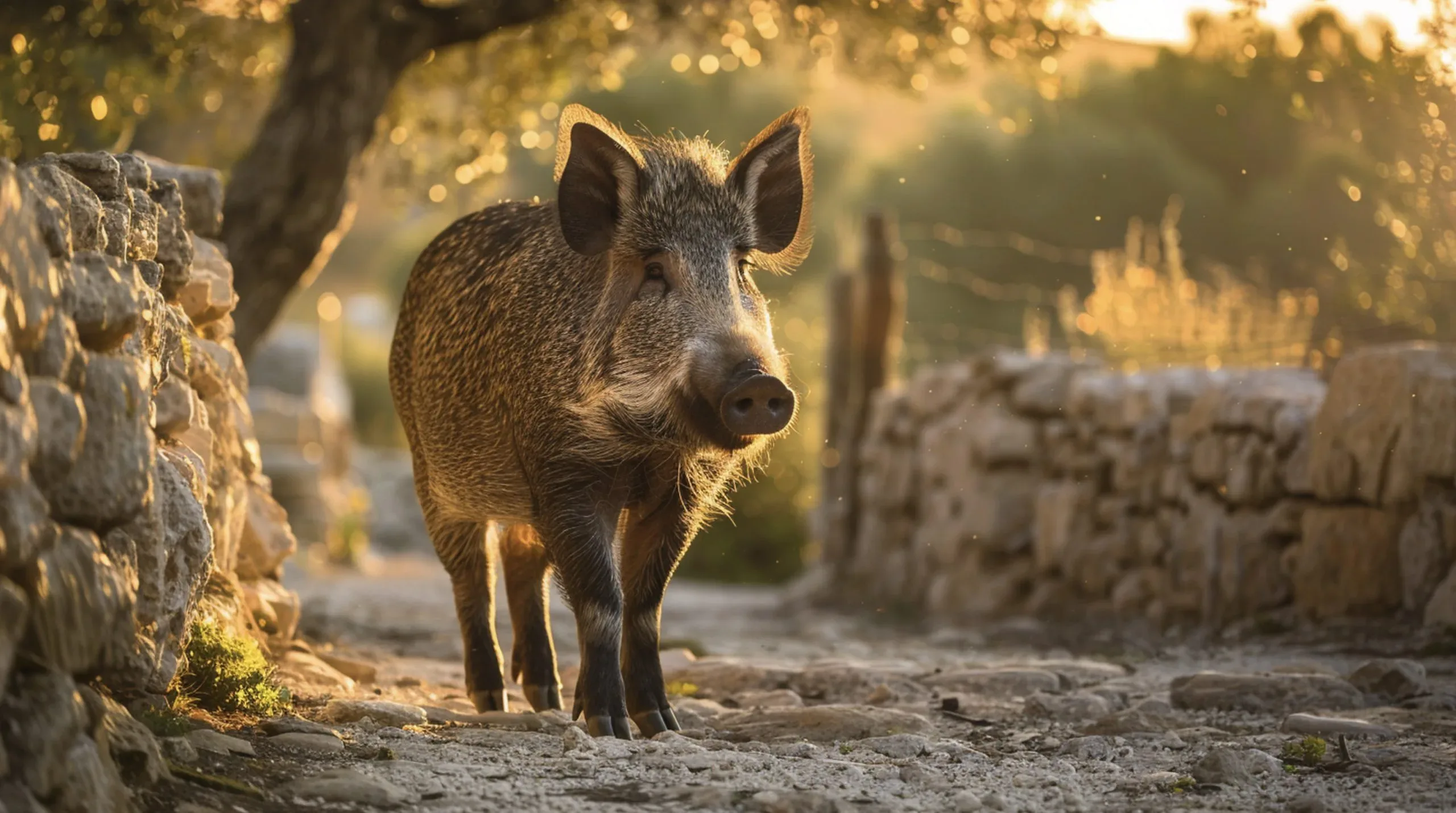
The Sardinian wild boar is compact, muscular, and fast. They live in forests and hills but often wander near towns, beaches, and picnic spots. They are not out to pick a fight. They are skilled opportunists and your open trunk is a buffet line.
Local forest management and wildlife guidance are handled by FoReSTAS, the regional agency, which provides resources on Sardinia’s habitats and fauna (sardegnaforeste.it).
Where you might meet them
- Beach car parks and picnic areas: The rustle of a snack bag carries. If your trunk is open, they will inspect.
- Forest trails at dawn and dusk: The scent of pine hangs in the air and you hear a soft grunt before you see them.
- Rural and mountain roads: Families cross in a calm line, unfazed by traffic.
Many regional parks also remind visitors not to feed wildlife and to keep a respectful distance, a rule you will find across protected areas such as the Porto Conte Regional Park near Alghero (parcodiportoconte.it).
How to behave around boars
- Keep your distance: Stay at least 10 to 15 meters away. Never get between a sow and her piglets.
- Hands off the snacks: Do not feed them. Ever.
- Stay calm if one approaches: Step back slowly. Put a solid object between you and the animal, like a car door, fence, or tree. Avoid sudden moves.
- Dog owners: Keep dogs leashed. A boar will defend itself if chased.
- Small groups are better: Stand together, speak firmly, and give them space to leave.
Driving and road crossings
The classic Sardinian scene: mountains ahead, Mistral wind on the windshield, then a boar family takes the crosswalk you did not know existed. Here is how to handle it:
- Slow down in rural zones, especially at dawn and dusk.
- Scan the verges: If one crosses, more may follow.
- Use high beams when safe on unlit roads to spot eye shine.
- Do not swerve hard: Brake in a straight line. Swerving can cause a worse crash.
For emergencies in Italy, call the single European number 112 (european-union.europa.eu).
Hikes, beaches, and your picnic: practical tips
- Close the trunk first: Then sort your gear. Boars learn fast when food is accessible.
- Use hard-sided or odor-resistant containers for snacks and keep them out of sight.
- Pack out all waste: If bins are overflowing, carry rubbish back. Loose bags invite visits.
- Choose your lunch spot: Eat away from car parks and obvious feeding areas.
- Make a gentle exit: If a boar appears while you picnic, gather calmly and step away, leaving nothing edible behind.
If something goes wrong
- Road incident or injury: Switch on hazard lights, keep a safe position, and call 112. Share your exact location.
- Wildlife concern in a park or forest: Contact the Sardinian Forest Service (CFVA) via the regional environment portal.
- Minor scrapes: Clean and dress wounds; seek medical care for any bite or serious fall.
Reading the moment: what their behavior means
- Curious and sniffing: They have associated people with food. Remove the reward and they usually move on.
- Stiff-legged, ears forward, grunting: Back away slowly. Give them space to leave.
- Piglets present: Increase distance immediately. Mothers are protective.
Quick do’s and don’ts
- Do enjoy a photo from a safe distance with a zoom lens.
- Do secure food, close your car, and keep dogs leashed.
- Do drive cautiously on rural roads and expect crossings.
- Don’t feed, pet, corner, or chase a boar.
- Don’t leave bags, fruit peels, or bottles unattended.
Part of Sardinia’s charm is how wild moments thread into daily life. Pine resin on a warm trail, a flash of turquoise surf, the soft clatter of hooves across gravel. Smile, keep your distance, and let the locals with tusks pass. You are a guest here, and the hosts have hooves.