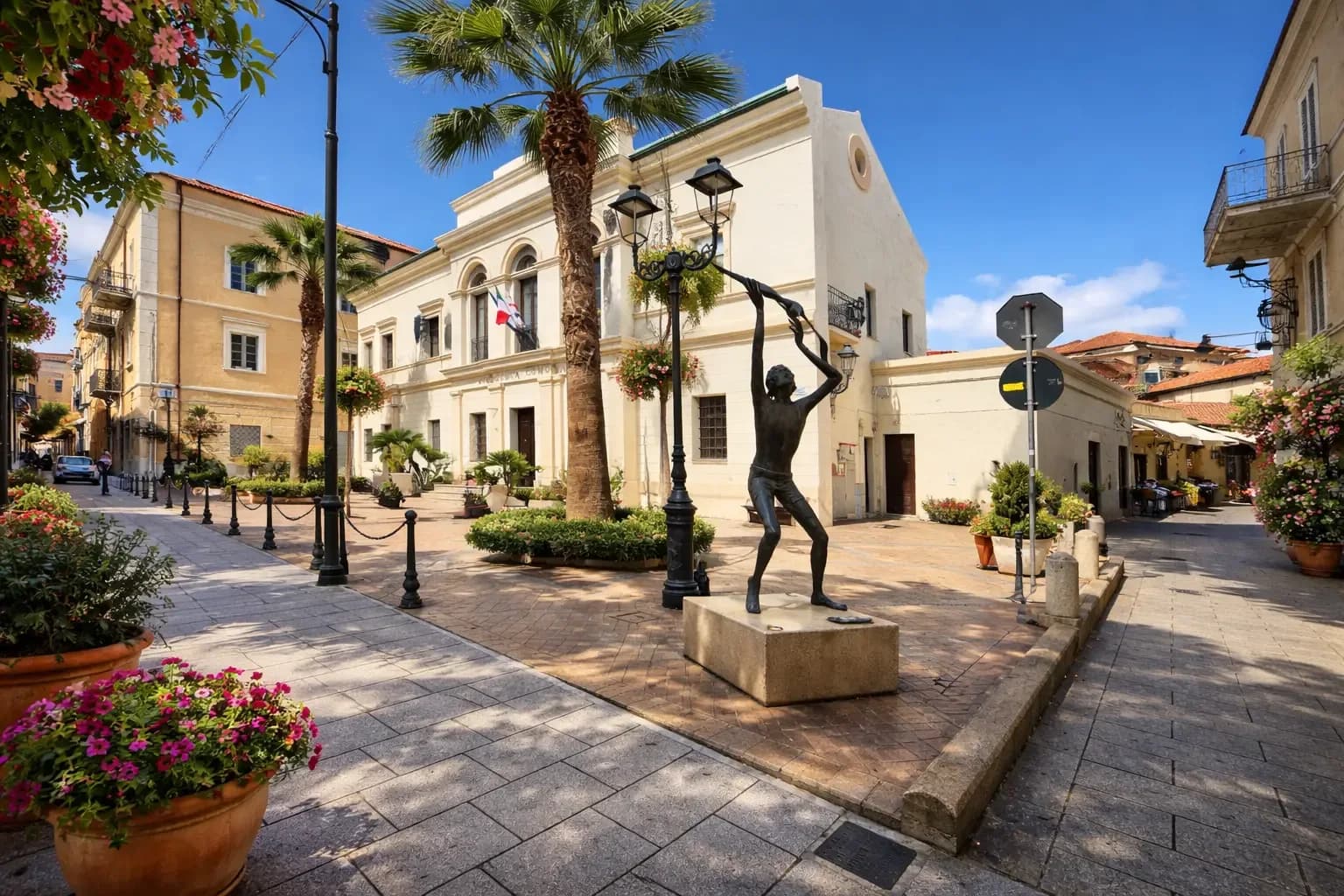

Via la Marmora runs through the heart of Olbia's centro storico with the quiet confidence of a street that has nothing to prove. No postcard vistas. No restaurant touts working the sidewalk. Just the pleasant mundanity of residential life in a working Sardinian port city—laundry drying on wrought-iron balconies, elderly women comparing vegetables outside the local alimentari, the occasional Vespa navigating cobblestones worn smooth by centuries of foot traffic.
This is where Olbia keeps its actual character, away from the yacht-lined marina and the tourist-facing Corso Umberto. The buildings here date from the 18th and 19th centuries, their facades painted in faded ochres and weathered creams. Some house longtime residents. Others have been quietly converted into short-term rentals for travelers who understand that location means more than proximity to monuments—it means landing in a neighborhood where life still operates on local rhythms.
La Marmora 45 occupies one of these renovated townhouses, its exterior blending seamlessly into the streetscape while its interior tells a different story entirely. Step through the entrance and the contrast is deliberate: exposed stone walls meet minimalist Italian design, historic bones dressed in contemporary finishes. Someone spent real money here, but the effect reads as restraint rather than excess.
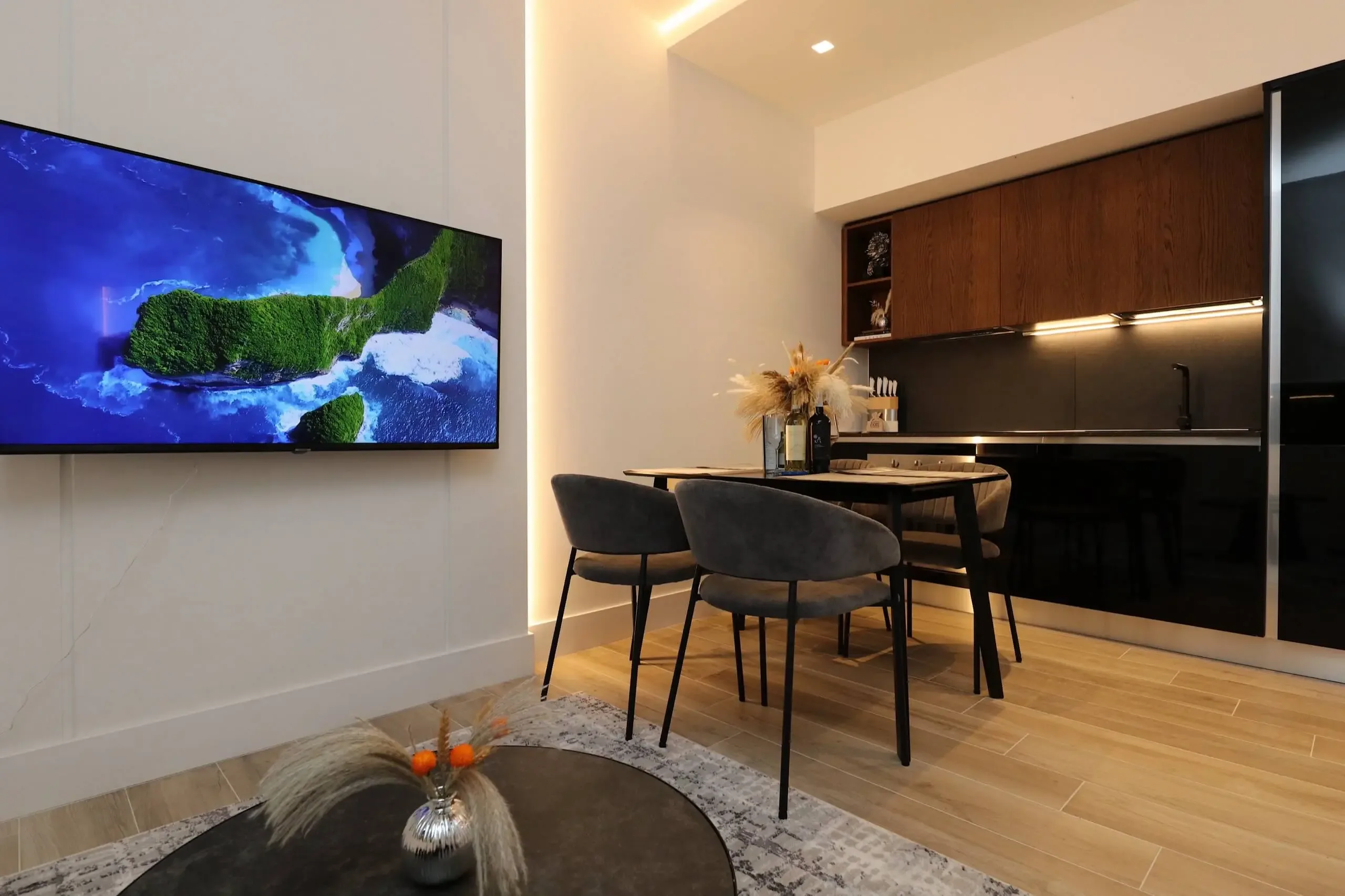
The ground floor operates as a unified living space—kitchen flowing into dining area flowing into lounge—with floor-to-ceiling windows that flood the room with Mediterranean light. The kitchen centers around a custom CREO installation, all clean lines and matte surfaces, equipped for actual cooking rather than just reheating takeaway. Appliances include the expected dishwasher and the less-expected wine cooler, suggesting the designers anticipated guests who might return from Gallura's vineyards with more than one bottle.
A king-size bed occupies the bedroom upstairs, dressed in the kind of linens that signal someone understands thread count matters. The bathroom delivers walk-in rainfall shower, heated towel racks, and enough storage that you won't spend the week living out of a suitcase on the floor. Air conditioning handles both levels—not a small detail in Sardinian summers when temperatures regularly push past 30 degrees.
The space accommodates four guests, technically, via a pull-out sofa bed in the living area that includes a proper mattress topper. This isn't the usual thin foam pad over metal bars. Someone actually considered whether a second couple might need to sleep comfortably, then engineered a solution that works.
Technology threads through without dominating: two large smart TVs for different moods, a JBL sound system for evening aperitivi on the small balcony, fiber broadband that handles video calls without buffering. The setup suggests the property targets professionals who might need to check in with the office, not just holidaymakers on complete digital detox.
What the townhouse offers, fundamentally, is Olbia's old town as your immediate surroundings. Walk two minutes north and you'll hit Piazza Regina Margherita, the city's main square, where locals gather for evening passeggiata. Walk three minutes south and you'll reach the Basilica di San Simplicio, an 11th-century Romanesque church built from local granite that has survived eight centuries of Sardinian weather. Walk five minutes east and the modern marina appears, its boardwalk lined with restaurants serving crudo di mare and chilled Vermentino.
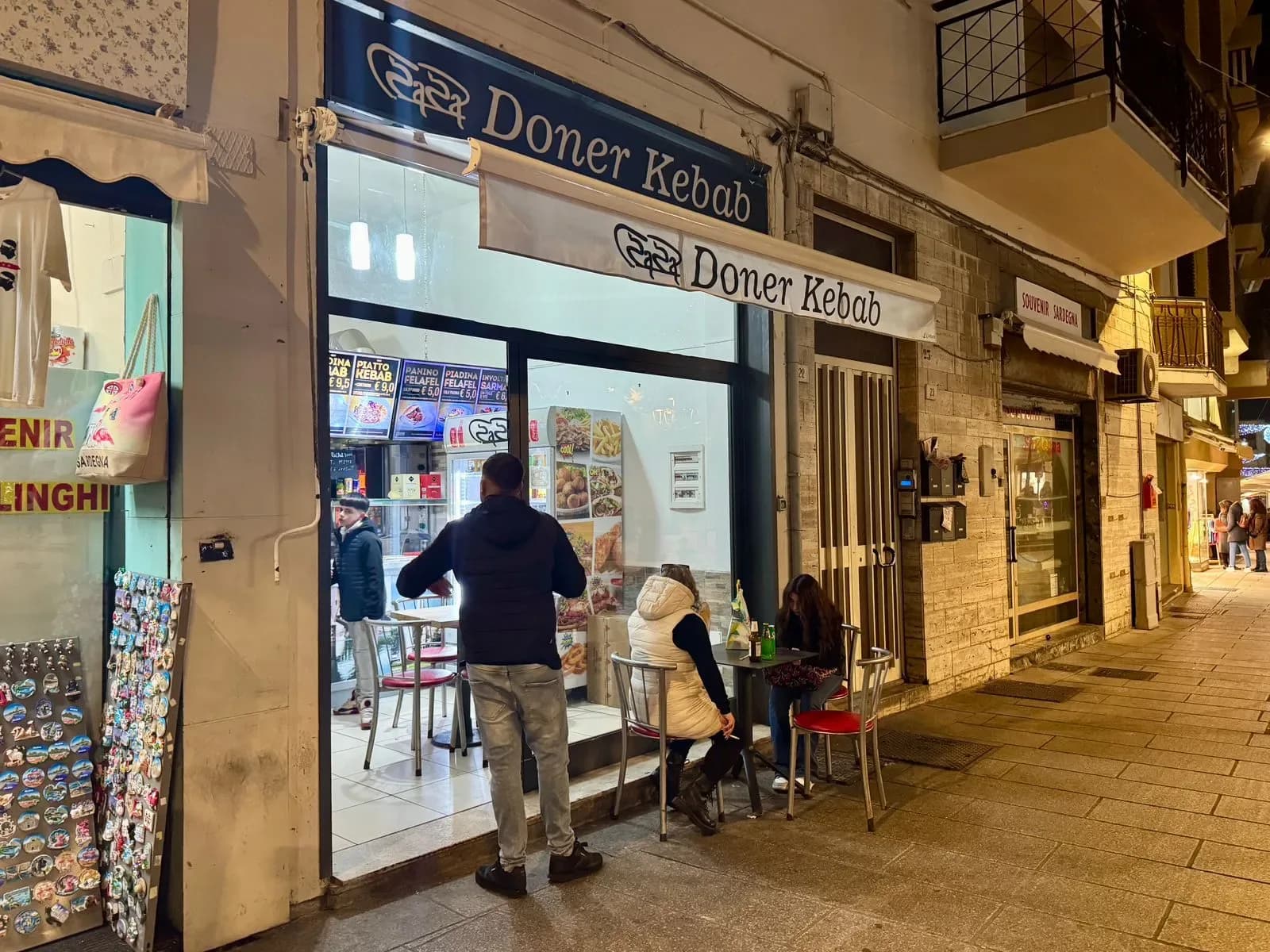
The neighborhood itself splits the difference between authentic and accessible. It's residential enough that you'll hear Italian, not English, as the dominant language on your street. But it's also equipped with the infrastructure tourists need—nearby parking garages, reliable restaurants, shops that stock more than just souvenirs. You can live like a temporary local here without struggling through the logistics that sometimes make "authentic" experiences more hassle than they're worth.
From this central position, Sardinia's northern coast arranges itself in manageable day trips. The Costa Smeralda's famous beaches—Capriccioli, Romazzino, Liscia Ruja—all sit within a forty-minute drive. The Porto Rotondo marina, quieter and somehow more Italian than its flashier neighbor Porto Cervo, makes for an easy afternoon excursion. Head inland instead and you'll find cork forests, granite peaks, and family-run agriturismi serving porceddu roasted over open flame.
The island's wine country starts practically at Olbia's doorstep. Gallura's Vermentino producers cluster within thirty minutes of the city, many offering tastings by appointment. These aren't manicured Tuscan estates with gift shops and tour buses. They're working vineyards where someone's grandfather still argues about harvest timing, and the tasting room might double as the family's actual dining room. The wine is excellent. The setting is real. You'll need to drive yourself because public transportation doesn't really exist, but that's precisely why it remains undiscovered by coach tours.
La Marmora 45 operates under Rental12, an Olbia-based company managing a portfolio of renovated properties across the city. Check-in runs through an automated system—codes delivered to your phone, keyless entry, no waiting around for someone to hand over keys. When issues arise, response times measure in minutes based on guest reviews. The 4.9 rating across 58 reviews suggests consistent execution rather than occasional excellence.
Booking directly with Rental12 rather than through aggregator platforms delivers tangible advantages: fifteen percent lower rates on average, early check-in and late checkout, payment flexibility that lets you split the cost between reservation and arrival. Discount codes (BOOKDIRECT for five percent off) stack on top of these benefits. The math adds up quickly over a week-long stay.
But the property's real value isn't found in discount codes or smart home features. It's the freedom to experience Sardinia on your own terms, without the forced choice between isolated luxury resort or basic apartment in a generic beach town. You can spend your day hiking Gallura's granite peaks, swimming at beaches that require no expedition to reach, exploring archaeological sites that predate Roman occupation. Then you return to a neighborhood where dinner options mean choosing between the excellent seafood place around the corner or the family-run trattoria two streets over, not scanning hotel restaurant menus.
Olbia works because it never became a resort town. It remained a city—a real one, with shipping traffic and commuters and schools and all the infrastructure of actual Italian life. La Marmora 45 works for the same reason. It offers quality without pretense, comfort without resort-style coddling. Sometimes what luxury really means is being able to stop performing vacation and simply live well for a week.