

The first time I saw a whole baffa of bottarga, sealed in its amber wax, I thought of a gold bar. Which, as it turns out, is exactly how the people of Cabras think of it too. They call it l'oro, the gold, except this particular gold gets grated over spaghetti rather than locked in a vault.
Behind the price tag sits a story far richer than the label suggests, one tied to a lagoon, a centuries-old harvest, and a growing problem with who gets to use the name.
Where Bottarga di Cabras Comes From
The Stagno di Cabras and Its Mullet
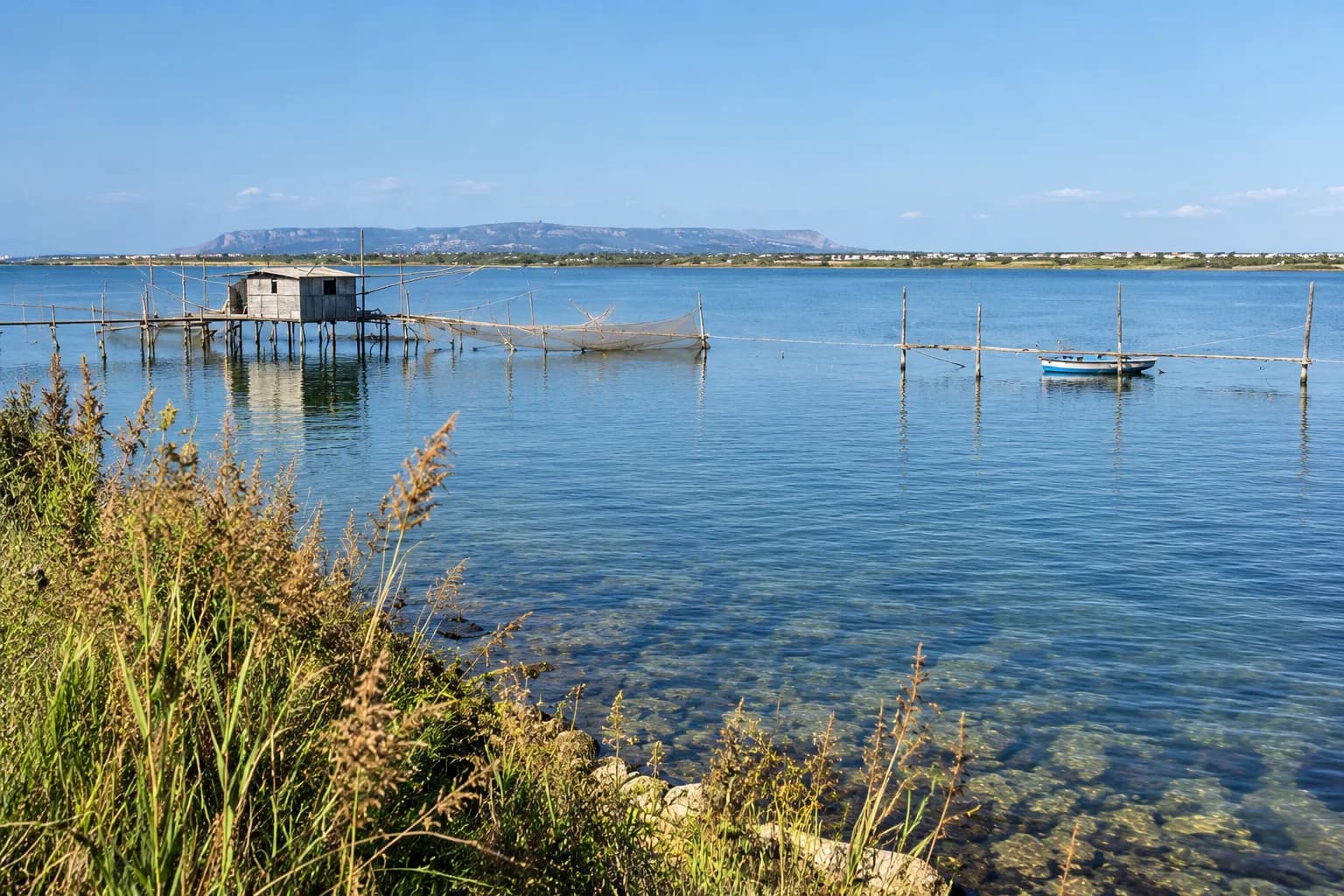
Bottarga di Cabras is made from the muggine, the grey mullet that much of Italy treats as an afterthought but which, in this corner of the Oristanese, is treated like royalty. The fish live in the Stagno di Cabras, a lagoon of more than two thousand hectares near Oristano, one of the largest in Europe. Flamingos and fishermen have shared it for centuries, with an understanding that puts most human relationships to shame.
How It Is Made
Bottarga is formed from the egg sacs of the female mullet. They are salted, pressed, and left to air-dry with a patience that modern food production rarely allows. What results is a concentrated, salty taste of the sea with a faint bitter edge at the finish, the kind that makes you reach for one more sliver, and then another, five or six times in a row.
The Hand Harvest: Ammanuncadura
The part of the process that won me over is the fishing itself. Between June and September, in the peschiera of Cabras, the mullet are gathered into collection tanks and caught by hand, a technique called ammanuncadura. The method exists to protect the precious egg sacs: no nets that tear and drag, no rushing. Just experienced hands repeating a gesture passed down through generations.
A craftsman's rhythm
“The real gold doesn't shine, it smells of the sea.”
The Uncomfortable Truth: Not All "Bottarga di Cabras" Is From Cabras
Here comes the twist that no label prints in bold letters. Most bottarga sold under the name "di Cabras" is processed in Cabras, but the mullet itself is often imported. Local producers estimate that only a small share of what is sold under the name genuinely comes from the lagoon itself.
That doesn't make the imported version bad. It simply isn't the same thing, and the distinction matters if you're paying for provenance rather than just flavour.
Reading the Label Properly
To protect the authentic product, the bottarga and traditional fishing of the Stagno di Cabras became a Slow Food Presidio in 2025. My advice, as someone who has been caught out before, is to read the label closely. "Lavorata a Cabras" (processed in Cabras) and "muggine pescato nello Stagno di Cabras" (mullet caught in the Cabras lagoon) sound like cousins, but they don't even speak at Christmas.
How to Eat Bottarga di Cabras Without Embarrassing Yourself
The golden rule is simple: bottarga is never cooked, only accompanied.
Spaghetti alla Bottarga
Garlic, good olive oil, and bottarga grated in off the heat, never while the pan is still on the flame. Cook it and it turns bitter, losing the very character you paid for.
Thin Slices with Oil and Celery
A few paper-thin slices, a drizzle of extra virgin olive oil, and a few leaves of celery make what I consider one of the most elegant starters on the island, ready in two minutes.
With Raw Artichokes
Finely sliced raw artichoke and bottarga is a Sardinian pairing that outperforms plenty of more celebrated combinations.
On Warm Bread with Butter
I know how this sounds, but try it once before arguing.
A small secret worth knowing: buy the whole baffa and grate it fresh at the table. The pre-grated jars sold in delis (€€) are convenient, but the aroma of fresh-cut bottarga is in another league entirely.
Beyond Bottarga: Merca and Su Pisci Affumau
In Cabras, nothing from the mullet goes to waste. There is merca, mullet boiled and wrapped in a marsh grass called sa zibba, an ancient preservation technique. And there is su pisci affumau, smoked mullet fillets. Ask for either and you'll likely get a respectful look from whoever is serving.
When to Visit Cabras
September is the month to come. The fishing season closes and Cabras celebrates its bottarga with a festival across its piazzas, kitchens, and the peschiera itself. While you're there, the Museo Marongiu holds the Giants of Mont'e Prama, watching over visitors with the quiet authority of figures that have stood for three thousand years.
If you're planning a self-drive loop around the Sinis peninsula to take in the lagoon, the festival, and Oristano's other sights, arranging a car through our Rental12 ecosystem makes the logistics far easier than relying on local buses alone.
I came home with a baffa of bottarga in my bag, handled with the kind of care usually reserved for family jewellery. The people of Cabras have known it for centuries: real gold doesn't shine. It smells of the sea.