
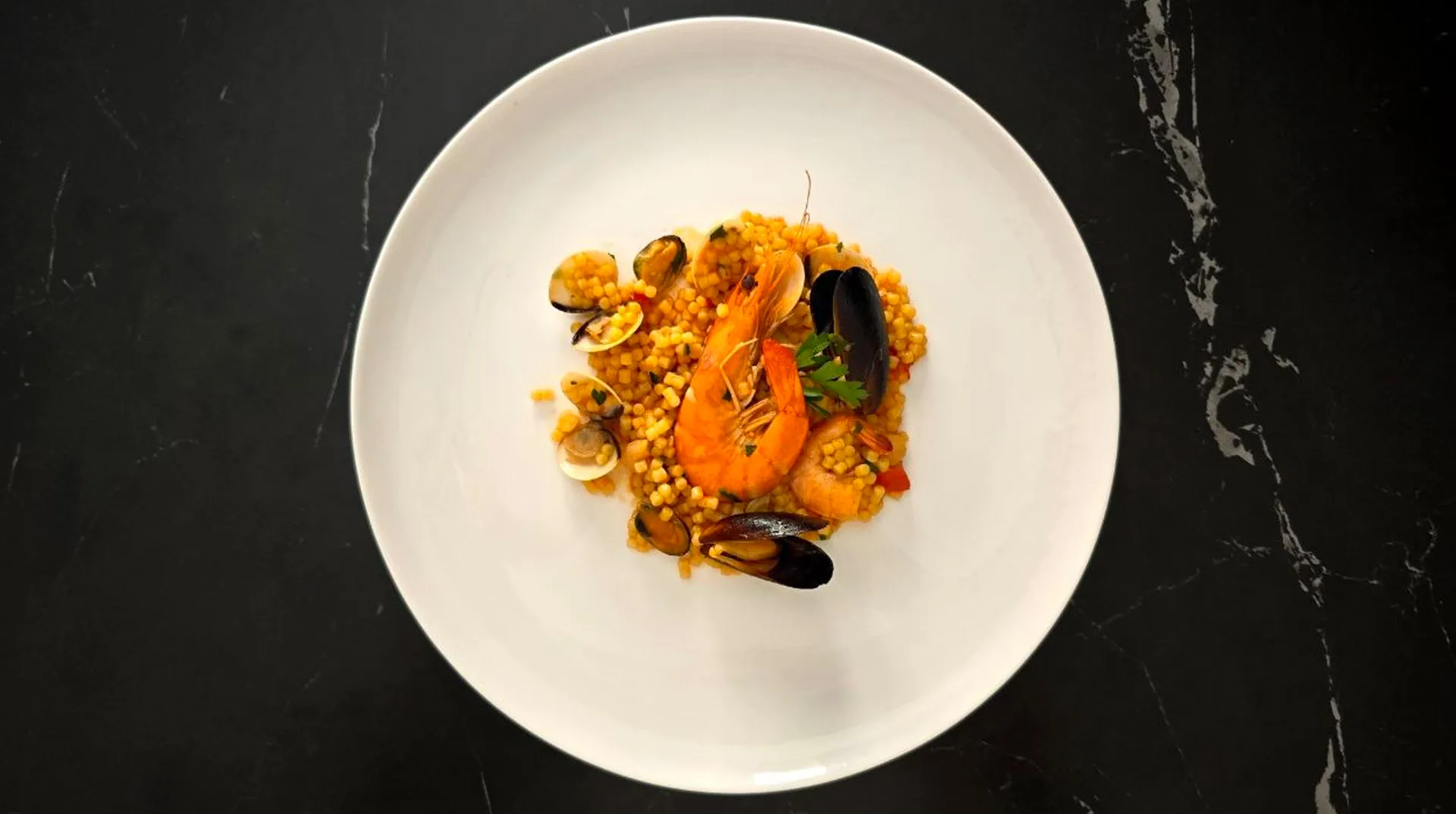

Long before Sardinia's restaurants started putting it on tasting menus, fregola sarda was a kitchen staple: small, irregular pellets of durum-wheat semolina and water, rolled by hand, dried in the sun, then lightly toasted until they turn a deep golden colour. That toasting step is what separates fregola from its North African cousin, couscous. Where couscous is steamed and soft, fregola is baked and chewy, with a delicate nutty flavour that holds its own against bold sauces rather than disappearing into them.
What Is Fregola Sarda?
Fregola belongs to the same family of hand-rolled Sardinian pastas as malloreddus, though the two could hardly look more different on the plate. Malloreddus are small ridged shells, usually paired with tomato and sausage ragù; fregola is granular, almost like a coarse grain, and its firmer, pleasantly chewy bite makes it especially good at soaking up broths and shellfish liquor without turning mushy.
From Semolina to Golden Grains
The traditional method is simple in theory and skilled in practice: water is worked gradually into semolina flour by hand, rolling it in a wide terracotta bowl until small, uneven granules form. These are left to dry, then toasted in an oven, which gives fregola its characteristic amber colour and the faint hint of roasted wheat that no amount of sauce can fully mask, nor should it.
Classic Ways to Serve Fregola
Sa Fregula Cun Cocciula
One of the most traditional preparations is sa fregula cun cocciula, fregola cooked with clams in their own briny liquid, usually finished with little more than garlic, parsley and good olive oil. It is a dish built on restraint: the clams and the toasted pasta are the point, and anything else is there to support them rather than compete.
Fregola ai Frutti di Mare
A more generous relative is fregola ai frutti di mare, where the clams share the pan with mussels, prawns and sometimes squid. It is the version you are more likely to find on a seafood restaurant menu along the Gallura coast, and it is also the one I set out to recreate at home.
Cooking Fregola ai Frutti di Mare at Home
Travelling through Sardinia's restaurants is one way to understand its food, but I wanted to try something more direct: buying the ingredients myself in Olbia and cooking the dish from scratch. If you are staying somewhere self-catered, perhaps a villa or apartment booked through our Rental12 ecosystem, this is a genuinely satisfying way to spend an evening, and it costs a fraction of what the same plate would run to in a restaurant.
Ingredients (Serves 2)
180g fregola sarda
250g fresh clams (vongole)
250g fresh mussels (cozze)
4–6 fresh prawns (gamberi)
125g cherry tomatoes
1 garlic clove
Approximately 350–450ml hot fish or vegetable broth, including the filtered shellfish cooking liquid
2 tablespoons extra-virgin olive oil
Fresh parsley
Salt and freshly ground black pepper
Method
Clean the mussels and purge the clams according to food-safety guidance, discarding any with damaged shells or that remain closed after cooking.
Heat the olive oil with the garlic in a large pan. Add the clams and mussels, cover, and cook until they open. Remove the shellfish and carefully filter their cooking liquid to remove any sand.
Cook the prawns briefly and separately, so they stay tender rather than turning rubbery in the main pan.
In the same pan, soften the halved cherry tomatoes. Add the fregola and gradually incorporate the hot broth and the filtered shellfish liquid, almost as you would when making a risotto.
Cook according to the packet instructions, usually around 10–15 minutes depending on grain size, adding more hot liquid as needed.
Return the shellfish and prawns to the pan towards the end, then finish with chopped parsley, freshly ground black pepper and a final drizzle of olive oil.
Getting the Texture Right
The whole dish lives or dies on consistency. Fregola should stay creamy and juicy, with each grain still distinct, never drying out into clumps and never drowning into a soup. It is closer in spirit to risotto than to a standard pasta dish, which is exactly why adding the broth gradually, rather than all at once, makes such a difference.
A Personal Reflection
Why This Dish Says So Much About Sardinian Cooking
Making this at home, with ingredients bought that morning and nothing more elaborate than a wide pan and a bit of patience, reinforced something I keep coming back to on this island.
For me, this is what Sardinian cuisine does particularly well: a handful of simple ingredients becomes something memorable when treated with care.
Preparing the dish yourself makes the experience even more satisfying, and sometimes the best way to understand a place is not simply to visit its restaurants, but to bring a little of its culinary tradition into your own kitchen.
Where to Find Fregola on Sardinian Menus
If cooking isn't on the agenda, fregola ai frutti di mare and its clam-only cousin turn up on seafood-leaning menus across Gallura. The Trattoria del Porto in Golfo Aranci is a reliable place to order it close to the water, and for a broader taste of Sardinian pasta culture, the malloreddus at Nord Est in Olbia is worth seeking out on the same trip.