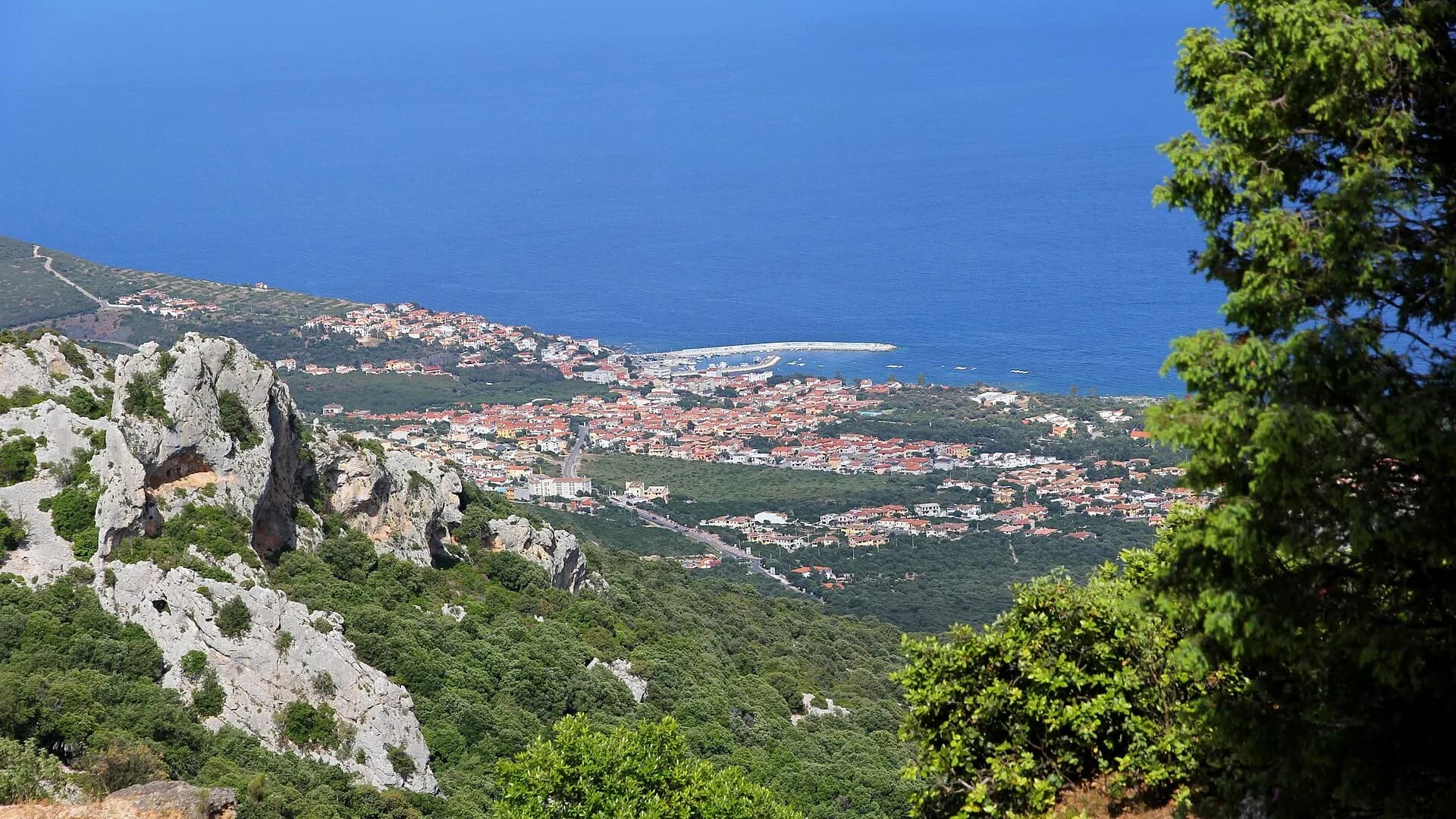

Cala Gonone is the seaside hamlet of Dorgali, in the province of Nuoro, and the main boat harbour for the central Gulf of Orosei. From its port, boats reach Cala Luna, where the comune capped visitors at 900 at a time in 2026, and the Grotta del Bue Marino sea cave. Go for the coves you cannot drive to, then come back to a small hillside town above the sea.
Where: east coast, about 10 km by road from Dorgali, through a short tunnel and down a winding road.
Main boat trips: Cala Luna, Grotta del Bue Marino, and the Baunei coves (Cala Mariolu, Cala dei Gabbiani, Cala Biriola, Cala Sisine).
Caps in 2026: Cala Luna 900 at a time by boat; Cala Mariolu 700 sea places; Cala Goloritzé closed to boat landings.
Baunei sea fee 2026: 2 euros for one cove, 3 euros for two or more, 1 May to 20 October.
Sea temperature: about 22 degrees on average in October, 19 in November (ten-year satellite means).
Is Cala Gonone worth it?
Yes, if the sea is your reason to travel. The coast south of town is a wall of limestone cliffs broken by small coves, and the best-known ones, such as Cala Luna and Cala Mariolu, have no road to them. SardegnaTurismo, the regional tourism site, describes Cala Gonone as a frazione of Dorgali reached through a short tunnel and a winding descent to the sea. North of the harbour are the sandy beaches of Cala Cartoe, Ziu Martine and Cala Osalla. South are Cala Fuili, Cala Luna and the Grotta del Bue Marino.
The town itself is small. Palmasera, its longest stretch of shore, is mostly reddish gravel mixed with fine sand and shelves gently, and there is an aquarium in the village. It suits people who want to spend days on boats or trails and evenings somewhere quiet. If you want nightlife or long sandy beaches next to your bed, the Gulf of Orosei is not the best fit. Our guide to the beaches around Cala Gonone covers the ones you can reach without a boat.
How boat trips from Cala Gonone work
Almost everything leaves from the small port. You have three choices.
Scheduled motorboats. Larger boats run fixed departures to Cala Luna and the Bue Marino cave, often combined. La Nuova Sardegna reported in August 2026 that a seat to Cala Luna cost 35 euros per person, about 30 minutes from the port.
Skippered RIBs and small group tours. These go further south to the Baunei coves. With a guided trip the Baunei landing fee is often included, and you follow the operator's instructions.
Self-drive rental boats. You pick the coves. For Baunei you book the landing yourself on the official platform and enter any code the rental firm gives you.
Boats also leave for the same coast from Arbatax, Santa Maria Navarrese, La Caletta and Orosei, so Cala Luna gets traffic from several harbours at once.
Which coves can you reach, at what cost and cap
The rules change at the border between Dorgali and Baunei, roughly at Cala Luna.
Cala Luna (Dorgali, on the Baunei border)
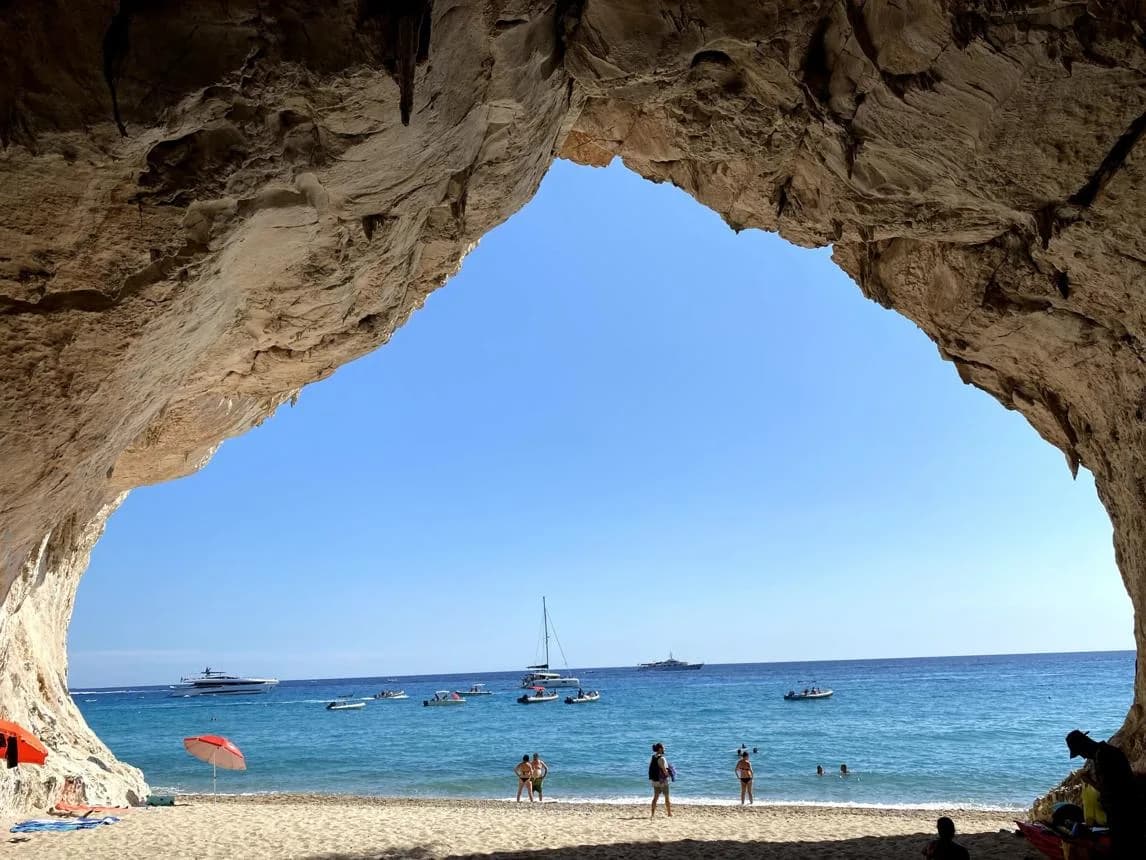
Cala Luna sits at the mouth of a gorge, the Codula di Luna, near the border with Baunei. The two comuni have argued over the beach and its pontoon for years. In 2026 the Comune di Dorgali set a cap of 900 people at a time for boat arrivals, with one QR code per boat. The mayor told La Nuova Sardegna that private dinghies were outside the system, and walkers were not counted either. Read our Cala Luna beach guide for the sand, caves and oleanders.
Cala Mariolu, Cala dei Gabbiani, Cala Biriola, Cala Sisine (Baunei)
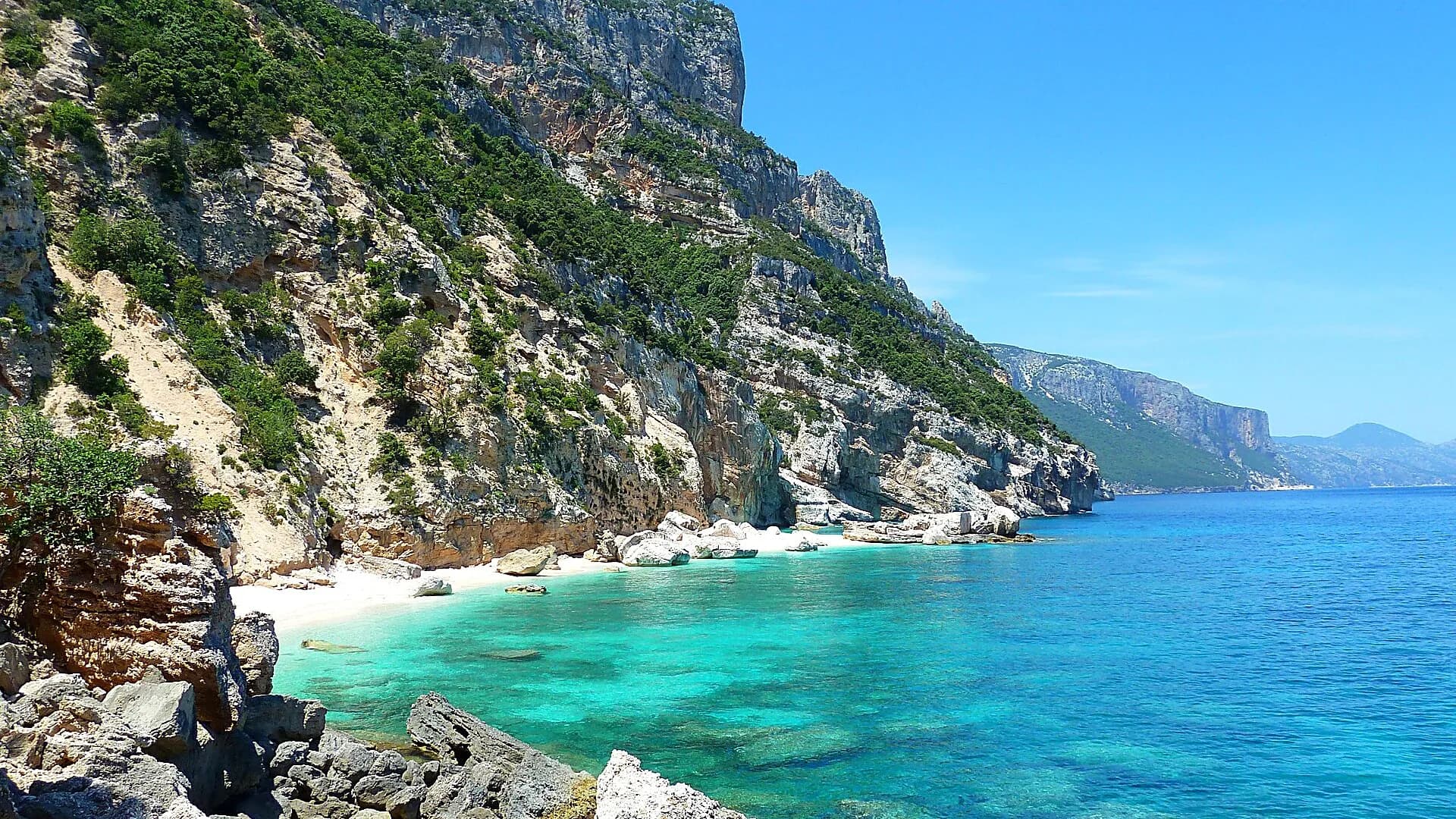
These four coves are in the Comune di Baunei. Landing by sea in 2026 cost 2 euros for one cove or 3 euros for two or more, with Baunei residents free. The fee ran from 1 May to 20 October 2026, and Cala Mariolu had 700 sea places. From 12 October booking was no longer required. Our guide to reaching Cala Mariolu by boat explains the booking steps for next season.
Cala Goloritzé (Baunei, on foot only)
Boats cannot land at Cala Goloritzé. The official booking page says no one may land on the beach from the sea. Walkers pay 7 euros for a 3.6 km path with about 500 metres of descent, and the beach takes 250 people at a time. See our Cala Goloritzé booking and trail guide if you want to walk it.
Grotta del Bue Marino: the sea cave
The Grotta del Bue Marino is named after the Mediterranean monk seal, the "sea ox", which once used it. SardegnaTurismo notes stalactites, an underground salt lake and a yearly jazz concert inside. The boat operator's official site gives these practical details:
Departures from Cala Gonone port; the ticket includes the boat and cave entry, and the price varies by period.
Regular tour about 50 minutes, maximum 140 people; special tour about 1 hour 15 minutes, maximum 67.
Guided in Italian and English; about 17 degrees inside all year.
About 1 km of the cave is open, almost all on a steel walkway with no stairs.
Shoes are compulsory; beach sandals are fine.
Children up to 4 go free; ages 5 to 10 get up to 60 per cent off.
The site says the cave is open every day except in bad weather. We could not confirm winter departure dates, so ask at the ticket office at Viale Colombo 32 before planning a November visit around it.
Walking to Cala Fuili and Cala Luna
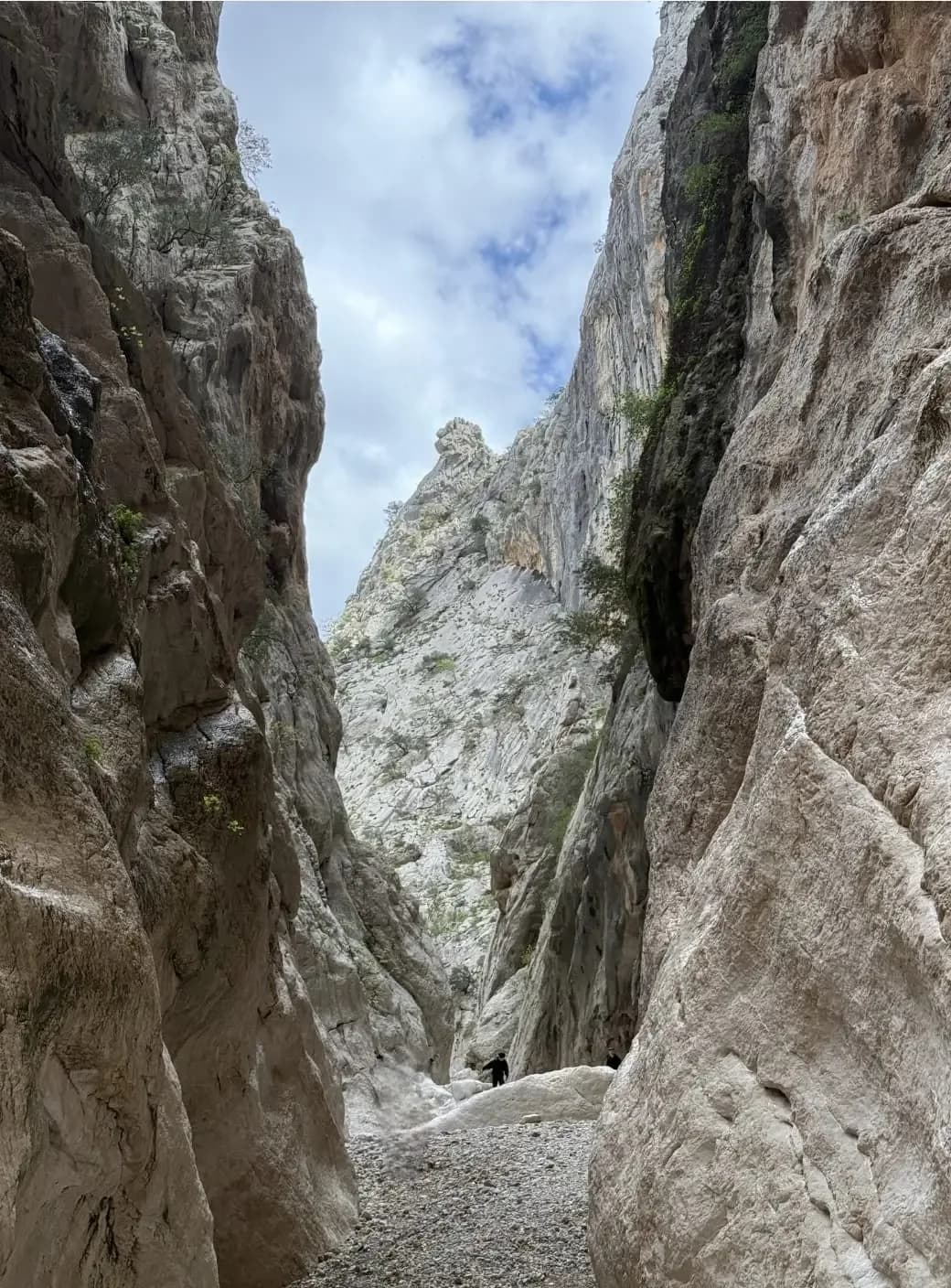
You can reach Cala Luna without a boat. The classic coastal path starts at the Cala Fuili viewpoint, at the end of the road south of town. A CAI Oristano route sheet gives about 6 km to Cala Luna, a highest point of 140 metres and about 207 metres of climbing. It rates the path E, a standard hiking grade, and warns that worn rock can be slippery even when dry. Trekking shoes, water and sun protection are needed. Many walkers take a boat back to Cala Gonone; CAI paid 15 euros per adult for that leg in October 2025.
Renting a boat without a licence
Italian law lets you drive a small boat without a licence within six miles of the coast. Under article 39 of the boating code (D.Lgs. 171/2005), you need a licence beyond six miles, on a jet ski, or when the engine exceeds 30 kW (40.8 hp). Minimum ages are 18 for imbarcazioni and 16 for natanti, the smaller class. With 40.8 hp at most, plan short hops and keep an eye on the wind.
Local tips and what most guides get wrong
Cala Luna is not in Orosei. The beach lies on the Dorgali and Baunei border; Orosei is a separate comune.
The national park is mostly on paper. The Parco Nazionale del Golfo di Orosei e del Gennargentu was created in 1998, but the environment ministry's list of national parks marks it "non attivo, organi non costituiti": not active, with no governing bodies. SardegnaTurismo says each comune looks after its own stretch.
Leave the sand. Under regional law 16/2017, article 40, taking even small amounts of sand, pebbles or shells from the coast can cost 500 to 3,000 euros.
Book at 07:00. In 2026 same-day Baunei sea places opened at 07:00, and unused operator quotas could free up later in the morning.
When to go and what applies in winter
The sea stays warm late. Ten-year satellite averages give about 26.5 degrees in August, 22.3 in October and 19.2 in November, falling to about 14 in February.
The 2026 boat season has largely ended. The Baunei sea fee stopped on 20 October 2026, and no 2027 rules for Baunei or Cala Luna had been published by 28 October. Boat departures after October depend on demand and weather, so confirm with operators at the port. The Cala Goloritzé booking page still showed dates up to 1 November. The Cala Fuili path to Cala Luna is free and open to walkers all year, and winter is the coolest time to do it.
How to get to Cala Gonone
From Dorgali: about 10 km, around 15 minutes, through the tunnel and down to the sea.
From Nuoro: about 40 km, roughly 45 minutes.
From Olbia airport: about 105 km, roughly 1 hour 45 minutes.
A car is the simplest way to reach the port and the Cala Fuili trailhead. Allow time to park near the harbour if you have a morning boat.
Planning where Cala Gonone fits in a longer trip? Rental12, a holiday-rental company in Olbia that shares an owner with Sardinia Blog, lists the town and the Gulf of Orosei among its picks in Best Places in Sardinia: 20 Must-Visit Destinations 2026. It is a company guide, not independent research.
Sources: SardegnaTurismo, Dorgali and Cala Gonone · La Nuova Sardegna, Cala Luna, 8 Aug 2026 · Heart of Sardinia, Costa di Baunei by sea · Heart of Sardinia, Cala Mariolu · Heart of Sardinia, Cala Goloritzé · Grotte del Bue Marino, official booking site · CAI Oristano, Cala Fuili to Cala Luna · Normattiva, D.Lgs. 171/2005 art. 39 · L.R. 16/2017 (Regione Sardegna) · Ministero dell'Ambiente, list of national parks · Road distances: OpenStreetMap routing (OSRM) · Sea temperature: seatemperature.info ten-year means
Photo credits: Cala Gonone and its harbour seen from the limestone slopes above the town, with the Gulf of Orosei beyond (Gianni Careddu, CC BY-SA 4.0, via Wikimedia Commons); A tour boat at Cala Luna, with the beach and the Codula di Luna gorge behind (Giorgio Galeotti, CC BY 4.0, via Wikimedia Commons); The sea entrance to the Grotta del Bue Marino, with the landing walkway under the cliff (Salvatore, CC BY-SA 4.0, via Wikimedia Commons); Cala Fuili, the pebble cove at the end of the road south of Cala Gonone, where the coastal path to Cala Luna starts (Giorgio Galeotti, CC BY 4.0, via Wikimedia Commons); Clear water and white limestone boulders at Cala Mariolu, on the Baunei coast (Daniela M., CC BY-SA 4.0, via Wikimedia Commons). Fact sheet and chart: Sardinia Blog, from the sources listed above.