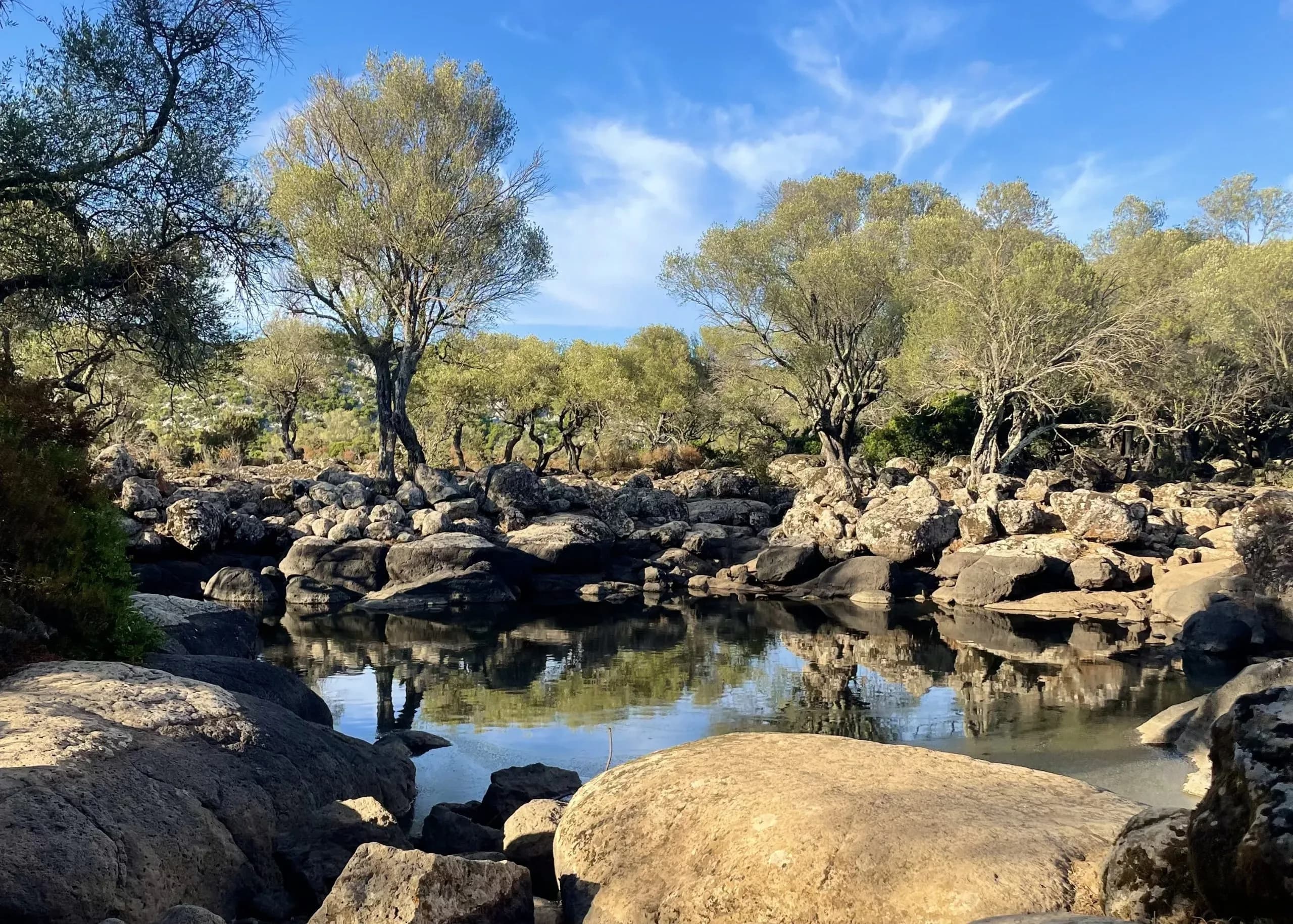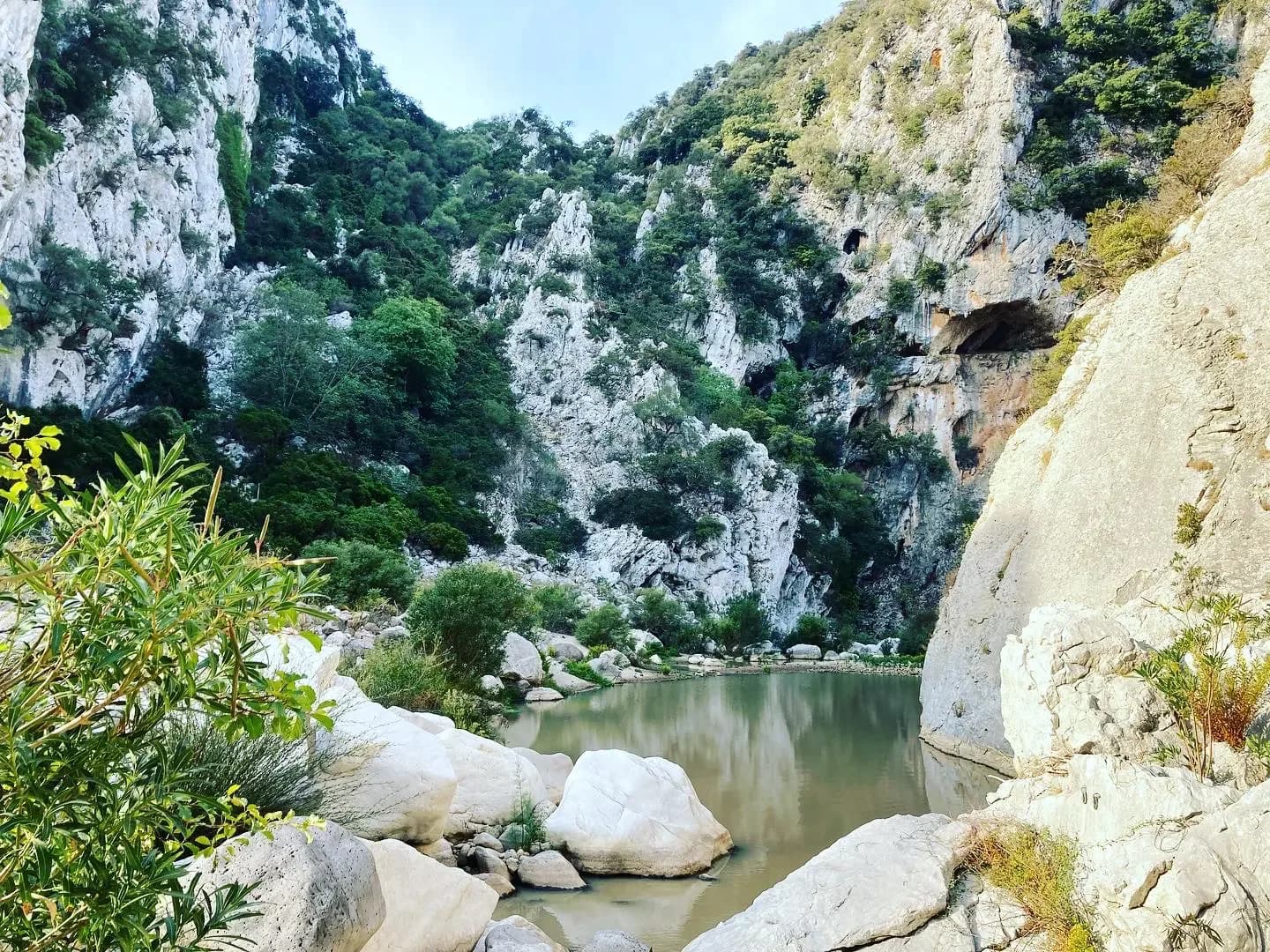
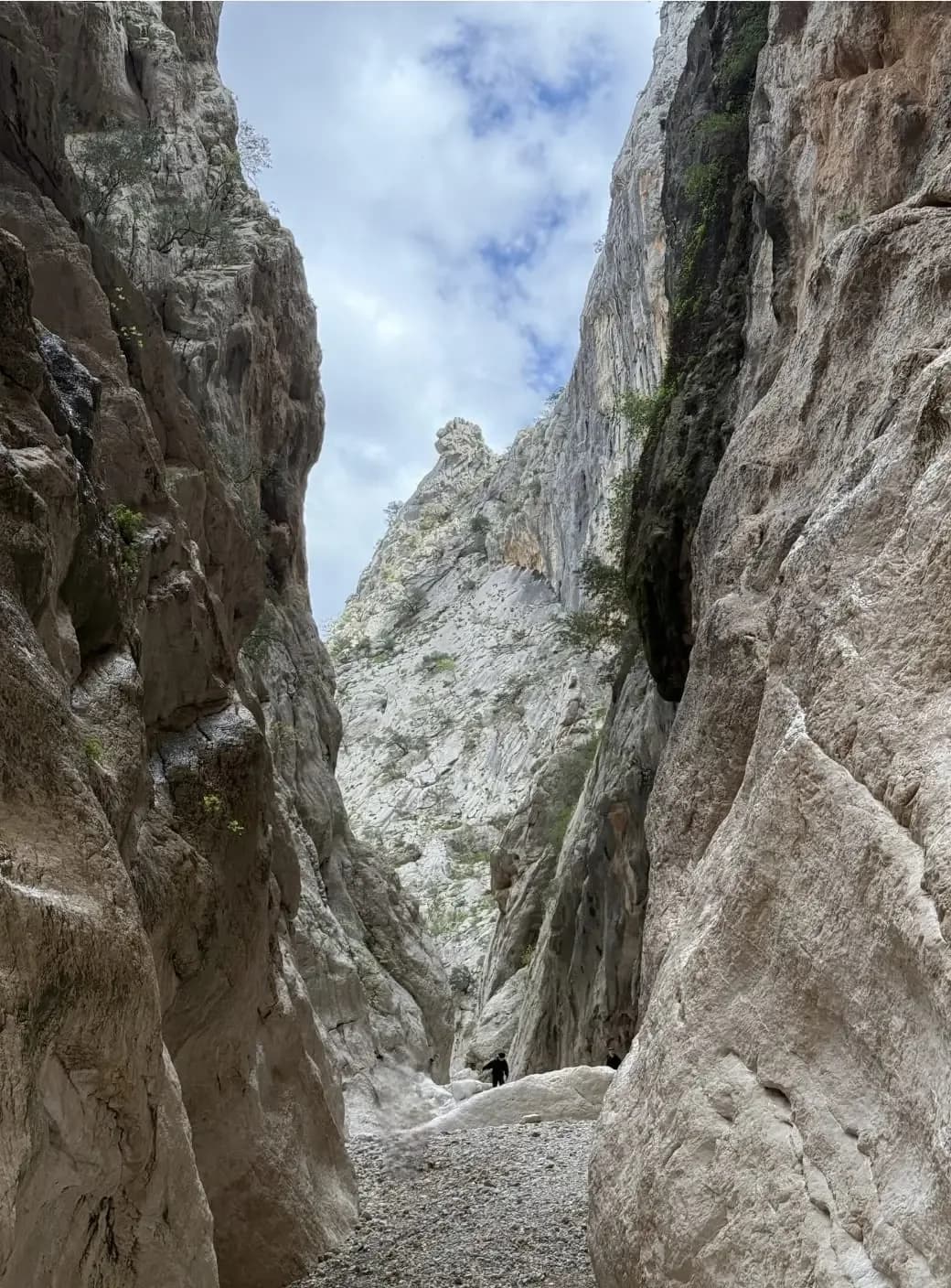

This spring, I set off with friends for a day I won’t forget: a hike into Su Gorropu, the legendary gorge carved into the Supramonte mountains. Wild, unspoiled, and humbling in scale, Su Gorropu is often described as the deepest canyon in Italy and among the deepest in Europe, with limestone walls soaring up to 500 meters high, according to Sardegna Turismo. From the moment we arrived, the silence, light, and sheer stone made everything else feel far away.
Where is Su Gorropu and why it’s special
Su Gorropu (also known as Gola di Gorropu or Gorropu Gorge) lies between the territories of Dorgali, Orgosolo, and Urzulei, right in the heart of the Supramonte. The Flumineddu river chiselled this dramatic canyon over millennia, leaving a labyrinth of giant pale boulders, narrow passages, and a cool microclimate even on hot days. You’re in one of Sardinia’s wildest corners—home to endemic plants, birds of prey circling high above, and crystal-clear springs that trickle through the stones. 🌿
What struck me most was the scale: towering rock walls closing in as you move deeper, light filtering down in ribbons, and that rare feeling of true remoteness. There’s little to no mobile signal inside Su Gorropu, which only heightens the sense of escape.
How we experienced Su Gorropu
We met our guide at a higher-altitude rendezvous point and chose the medium-difficulty option. A jeep took us down roughly 700 metres in elevation, an exciting descent with sweeping views, before we continued on foot for about 50 minutes along a scenic path. Spring painted the Supramonte in green and wildflowers, with tiny streams and perfectly clear water weaving through the landscape. By the time the canyon’s mouth opened before us, we were fully in hiking mode and ready to explore.
Inside Su Gorropu, routes are clearly divided by difficulty. There are easier stretches suitable for most visitors with good footwear, plus sections that require confident scrambling, and finally technical parts where a guide is strongly recommended. It means you can tailor the experience—push a little outside your comfort zone, or simply wander and soak up the atmosphere safely.
The soundscape of silence
One of the unexpected luxuries here is the quiet. No messages, no notifications—just birdsong, wind in the holm oaks, and water running somewhere under the stones. The canyon seems to amplify natural sounds and hush everything else. It’s an effortless digital detox. ☺️
Planning your visit to Su Gorropu
Best time of year
- Spring (March–June) and autumn (September–November) are ideal: mild temperatures, flowers in bloom, and lovely light.
- Summer can be very hot on the approach, though the canyon itself stays cooler; start early if visiting in July or August.
- In winter or after heavy rain, access may be restricted for safety.
Main access routes
- Genna Silana Pass (SS125): A classic trail starting around 1,013 meters above sea level with a steep descent into the gorge and a strenuous return ascent. Expect superb views and a real mountain feel.
- Flumineddu Valley (Oddoene, near Dorgali): A gentler approach along the riverbed, typically longer but with less elevation change.
- Jeep-assisted options: Local operators can shorten approach times and reduce the uphill slog—perfect if you prefer to conserve energy for the canyon itself. 🚙
Driving times
- From Olbia: around 2 hours
- From Cala Gonone/Dorgali: 40–60 minutes
- From Cagliari: roughly 2.5–3 hours
Tickets and guides
Access to Su Gorropu is managed locally and a modest entrance fee is collected at the gate (cash is useful). For current information on access, opening times, and guided experiences, check Coop Ghivine di Dorgali (official operators). A private guide adds fascinating context—geology, flora, fauna—and ensures you choose the best route for your group.
What to expect inside Su Gorropu
- Terrain: Large rounded boulders, smooth limestone, and narrow corridors. Expect some easy scrambling.
- Marked zones: Easier sections (often signed green), moderate parts (yellow), and advanced passages (red) where a guide and technical skills may be necessary.
- Microclimate: Cooler than the approach; bring a light layer even on warm days.
- Photography: The contrast of white limestone and sky is striking—mornings and late afternoons offer softer light.
- Wildlife and botany: Look for endemic plants tucked into the rock and listen for raptors overhead. Please avoid stepping on vegetation between boulders.
What to pack for Su Gorropu
- Sturdy hiking shoes or boots with good grip (no sandals)
- 1.5–2 liters of water per person (more in summer)
- Sun protection: hat, sunscreen, sunglasses
- Light layers—a breathable top plus a spare
- Snacks or a packed lunch; a small sit pad is handy for breaks
- Basic first-aid supplies and any personal medication
- Cash for entrance, parking, and optional jeep transfers
Comfort and safety tips
- Start early to beat the heat and enjoy a quieter canyon.
- Watch your footing on polished limestone; take your time on the boulders.
- Weather awareness matters: after heavy rain, water levels and rocks can be hazardous.
- No mobile coverage: tell someone your plan before you go and consider a guide if in doubt.
- Respect the environment: leave no trace and avoid loud noises—the stillness is part of Su Gorropu’s magic. 🌟
Luxury touches to elevate the day
- Private guide: Tailored pacing, photographic stops, and deeper storytelling on geology and local culture.
- Picnic with Sardinian flavors: pecorino, pane carasau, olives, seasonal fruit, and a chilled vermentino waiting in the car post-hike.
- Wellness finish: Book a late-afternoon massage or spa session back at your hotel—your legs will thank you.
- Pairing ideas: Combine Su Gorropu with a boat day to Cala Luna or a Cannonau tasting in the valleys around Dorgali for a perfect contrast of sea and mountains.
Our lasting impression
Su Gorropu delivers that rare combination of grandeur and calm. We hiked among towering walls, followed the sound of hidden water, and lost track of time in the best possible way. Without a phone signal, the moment felt complete: just friends, nature, and the timeless architecture of stone. If you’re craving an authentic Sardinian adventure that still feels exclusive, Su Gorropu is a brilliant choice—one you’ll remember long after the dust leaves your boots.
Key facts at a glance
- Location: Supramonte, between Dorgali, Orgosolo, and Urzulei
- Claim to fame: Often cited as the deepest canyon in Italy and among the deepest in Europe (heights up to ~500 m, per Sardegna Turismo)
- Best seasons: Spring and autumn
- Recommended for: Active travelers comfortable on rocky terrain; families with older children; photographers and nature lovers
- Good to know: Little to no mobile signal in the canyon; modest entrance fee and optional guiding/jeep services via Coop Ghivine di Dorgali