
Where tradition does not pose - it breathes
Some villages sleep in silence. Then there is Mamoiada - a mountain town in Barbagia where even the stones seem to speak with ancestral voices. This is not a place of performance. It is where memory wears a mask and walks the streets with a resonant step.In Mamoiada, masks are not souvenirs. They are soul. In its museum, every mask tells a story. Not cute or decorative - strong, sometimes unsettling, always powerful. These are the masks of the Mamuthones and Issohadores, among the oldest ritual figures in Sardinia.
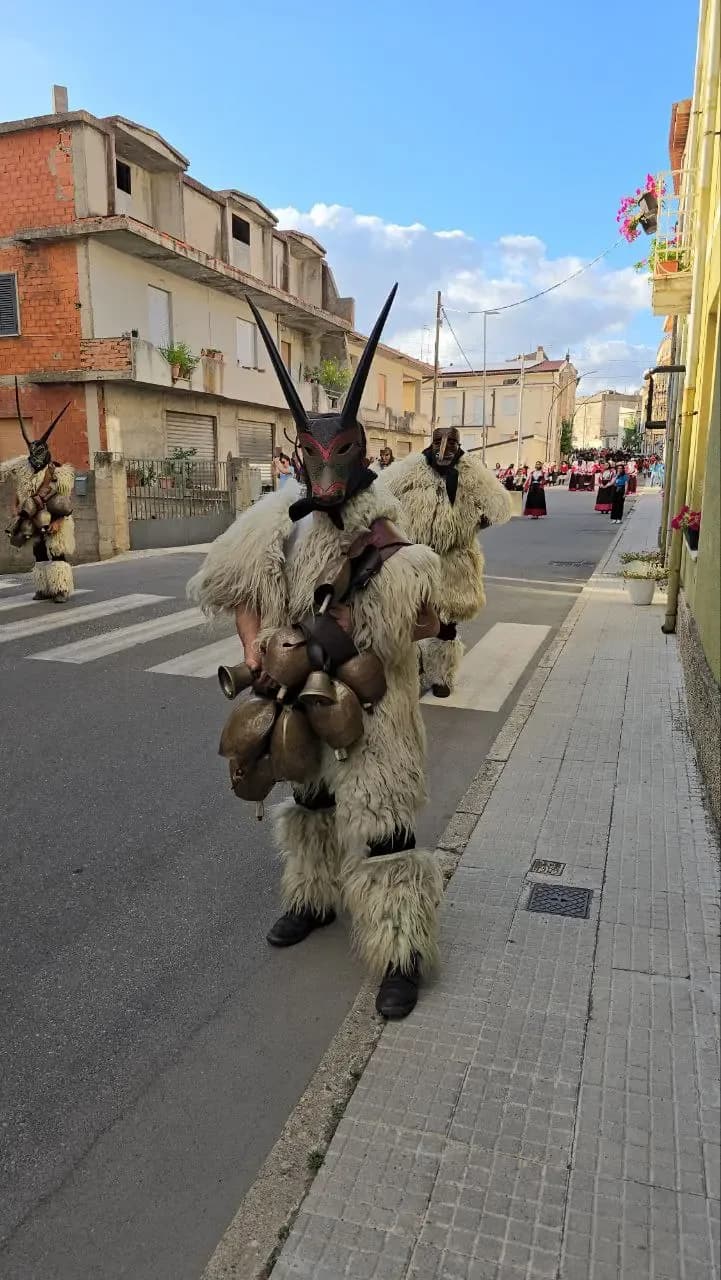
Legend says their dance once called for fertility and balance in nature. Today it feels like time defying time. You look at those dark wooden faces, the horns and the sheepskins, and you feel a curious mix of reverence and a tingle of fear. These masks are not for smiling selfies. They ask a deeper question: who are we when we put on a mask?
Meet Mamoiada
Set in the heart of Sardinia near Nuoro, Mamoiada is easy to weave into an inland itinerary that pairs beautifully with coastal days. The town is best known for its winter bonfires and carnival, for its artisanal mask makers, and for robust Cannonau wines produced by small family cellars. According to Sardinia’s official tourism board, the Mamuthones and Issohadores traditionally make their first appearance each year on 17 January for the fires of Saint Anthony, then return during Carnival Sundays and Shrove Tuesday, moving to the beat of dozens of cowbells that can weigh around 30 kilograms in total Sardegna Turismo.
The Museum: A Gallery Where Faces Look Back 🎭
The Museo delle Maschere Mediterranee in Mamoiada feels more like a gallery of living memory than a museum. Walls are lined with wooden viseras - masks with no smiles, carved in relief and finished in a deep, almost ink-black polish. There is no aggression here, only ritual and meaning.
In the ritual, the Mamuthones move in slow, deliberate rhythm. They wear black sheepskins and carry a set of bells on their backs and chest. Each step thuds the weight of time. Their silence is louder than sound. Close behind dance their opposites and equals, the Issohadores, dressed in white with a red vest, agile and bright. They carry a rope and throw the lasso into the crowd. It is not a gimmick - it is a blessing. Being gently caught is considered good luck in Mamoiada.
Plan at least 45 to 60 minutes to explore the collection and films that explain the ritual, then step into the village to find the craft still breathing in workshops and courtyards. Opening hours vary by season - check before you go on the museum’s official pages or Sardinia’s tourism site.
When Night Breathes in Bells 🔔
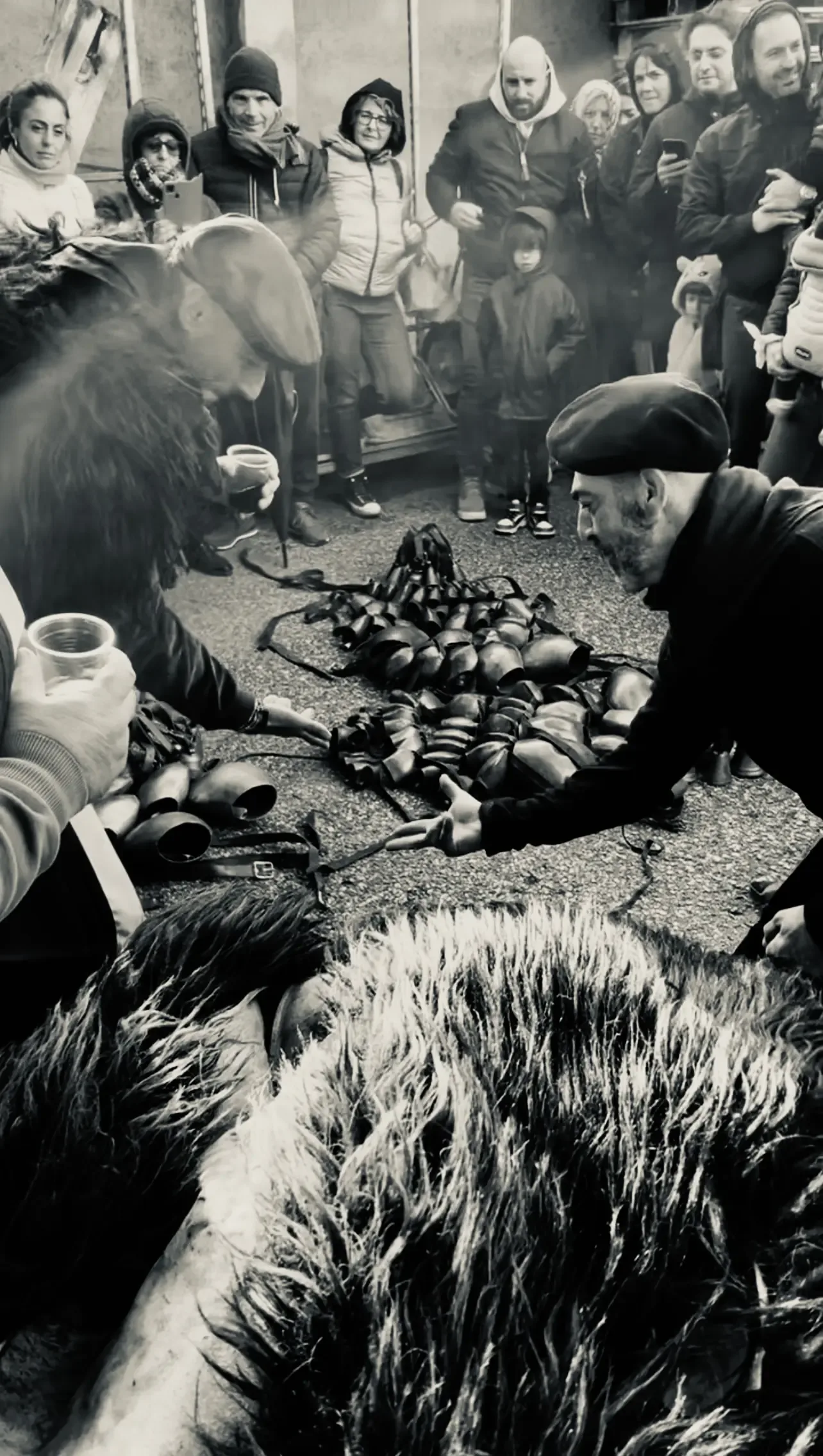
Arriving with my son one winter evening, we planned only to visit the museum. Fate had other ideas. We walked straight into the heart of the annual carnival. There was no stage. No audience. Just us, stone lanes and figures moving through mist and myth.
The Mamuthones advanced in unison, cowbells beating a heartbeat you can feel in your chest. The Issohadores laughed softly, teased, and cast their ropes with the clean elegance of a practiced hand. Children froze. Even tourists hesitated before lifting phones, sensing this was real and not to be interrupted.
Someone murmured a prayer. Someone else removed a hat. For a moment, the world slowed down.
The Workshop: Where a Mask Begins With Respect
Later that night we visited the Mameli family workshop, guardians of an ancient craft. It smelled of wood, fire and patience. Shelves were lined with faces - each slightly different, each waiting for its moment.
“La maschera non comincia con il coltello. Comincia con il rispetto per il legno... Solo allora la maschera può respirare.”
Daniele explained that a mask is shaped by hand, seasoned for months to prevent warping, then finished and varnished so it sits light and secure on the face. The process is slow for a reason. Precision is comfort. Comfort is endurance when you carry dozens of kilos of bells.
Interview with Mask Maker Daniele Mameli
Tell me your story
“La mia storia... sono nato e cresciuto da bambino nel laboratorio di mio padre. L'ho affiancato per 25 anni ed ora gestisco io l'attività... Ha appreso le tecniche della lavorazione del legno e gli antichi saperi. Tutto questo ha permesso di realizzare maschere sempre più comode, leggere e rifinite.”
Translation: I grew up in my father’s workshop, learning by his side for 25 years before taking the lead. He started as a self-taught woodworker and passed on the techniques and old knowledge that make masks comfortable, light and finely finished.
How long does it take to make a mask?
“Per realizzare la maschera servono almeno due giorni lavorativi... La scultura è la prima fase... La seconda fase è la stagionatura del legno... più di due mesi. Terza e ultima fase, la levigatura e la verniciatura...”
Translation: Carving takes about a day, seasoning the wood more than two months, then sanding and varnishing another day. The timeline stretches with harder woods.
Why continue this work?
“Continuo questo mestiere per passione... Ho una grande responsabilità da tramandare, e sto già iniziando con i miei figli.”
Translation: Passion, and the responsibility to pass the craft to my children.
What is the hardest part?
“La cosa più difficile è riuscire ad arrivare a fine mese... Ma io col duro lavoro continuo senza sosta, e con un grande orgoglio.”
Translation: The economics are tough, but work and pride carry us forward.
And under the mask - what do you feel?
“Quando si indossa la maschera... si sente una responsabilità antica, millenaria... Si è quell'anello di congiunzione che collega l'uomo al divino.”
Translation: Wearing the mask feels like stepping into a millennia-old responsibility, a link between humans and the divine.
Planning Your Visit to Mamoiada
When to go
- January 17 - Fires of Saint Anthony. The first appearance of Mamuthones and Issohadores each year around dozens of bonfires across Mamoiada.
- Carnival season - Most Sundays in the lead-up to Shrove Tuesday feature parades and rituals. Expect crowds and book early.
- Autunno in Barbagia - In autumn, Mamoiada opens courtyards for craft and food weekends known as Cortes Apertas. Wine tastings and workshops abound.
How to get there 📍
- From Olbia - about 1 hour 45 minutes by car via SS131 DCN to Nuoro, then local roads.
- From Cagliari - around 2 hours 15 minutes via SS131 then SS389var.
- From Alghero - roughly 2 hours through the scenic heart of Sardinia.
Public transport is limited, especially at night. For winter events, a private driver is a wise choice.
Where to stay
Base yourself in Mamoiada to feel the town breathe after dark, or in nearby Nuoro for boutique hotels and museums. Country estates in Barbagia offer serene stays with fireplaces, vineyards and panoramic terraces.
What to eat and drink 🍷
- Cannonau di Mamoiada - structured reds from high-altitude vineyards, often old vine.
- Granatza - a rare local white variety, mineral and dry.
- Pecorino, local charcuterie and pane carasau - perfect with a glass of red.
- Seadas - honey-drizzled cheese pastries, crisp and indulgent.
Etiquette and tips 💡
- If an Issohadore catches you with the rope, smile - it is a sign of good fortune.
- Photography - be discreet. Put the moment before the shot.
- Footwear - wear boots or sturdy shoes. Streets can be uneven.
- Layers - mountain evenings are cold, even when the bonfires roar.
- Support artisans - visit workshops, ask questions, and purchase directly where possible.
Practical Notes for the Museum
- Museum name - Museo delle Maschere Mediterranee, Mamoiada.
- Allow - 1 hour for exhibits and media.
- Tickets and times - schedules change by season and event days. Confirm details close to your date via official channels like Sardegna Turismo.
Advice From Me
Do not only visit the museum. Time your trip for the carnival. Do not be afraid if the lasso finds you - it means luck. Stay overnight. Step into a workshop. Talk to people. Listen when the bells begin. Take a glass of red wine and a slice of pecorino, and let time pass the way it does here - slowly, proudly, beautifully. And do not take off the mask too quickly. You might meet a version of yourself you have been seeking.
Why Mamoiada Stays With You
Mamoiada is a reminder that tradition is not about the past. It is eternity living in the present. Sometimes, to hear it, you simply arrive in the evening and wait for the bells to ring.