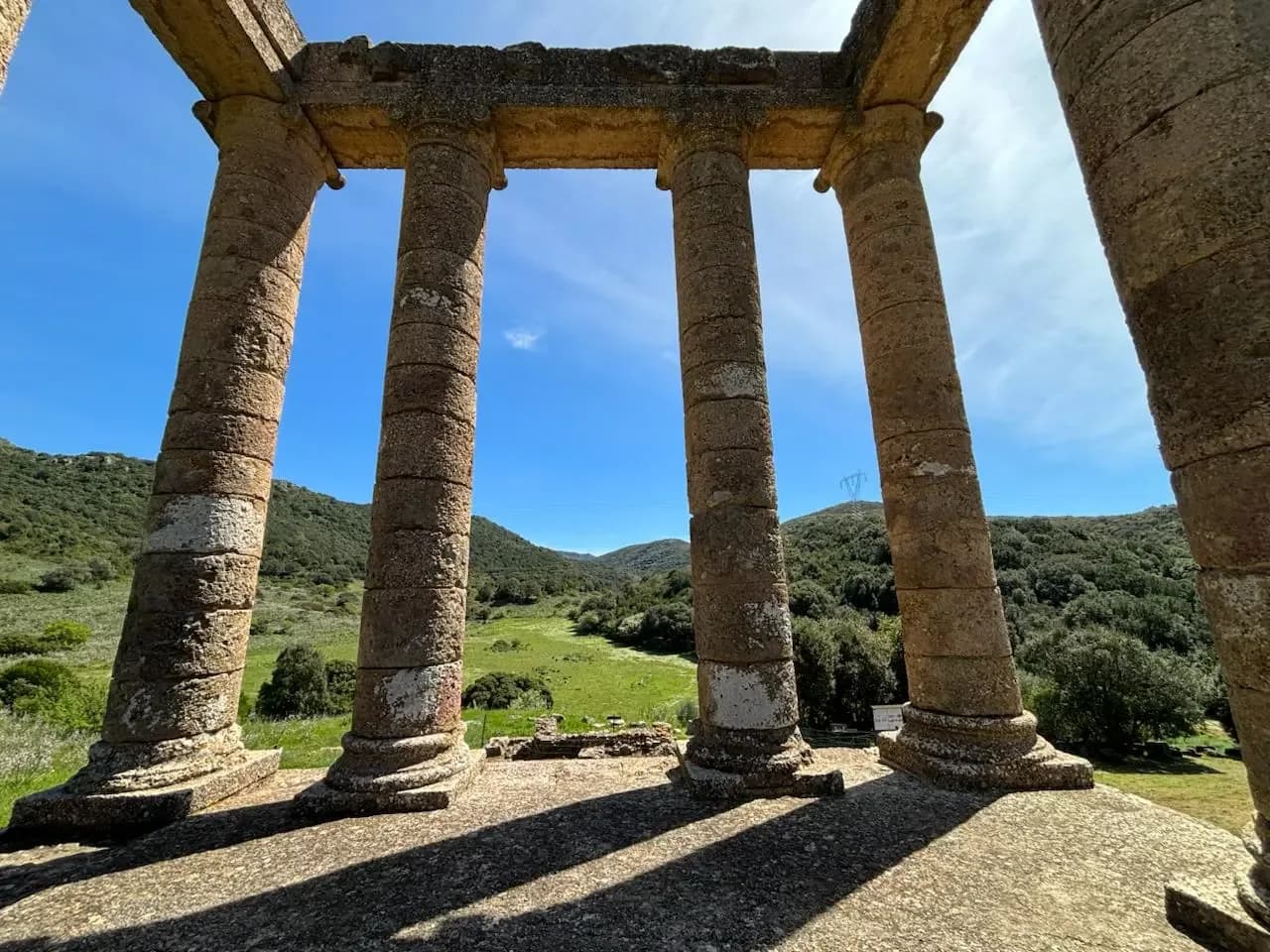

In the wild heart of Sardinia, hidden among the rolling green hills and rocky outcrops of Sulcis-Iglesiente, the Temple of Antas appears like a mirage. This elegant Roman sanctuary dedicated to Sardus Pater rises where an even older Punic place of worship once stood, creating a rare dialogue between myth and archaeology. The Temple of Antas is not simply another site to tick off. It is an experience, layered with silence, scent, and story.
Why the Temple of Antas captivates
Part of the charm is the journey. The Temple of Antas sits in a secluded valley near Fluminimaggiore. As the road narrows and the traffic thins, maquis scrub gives way to limestone ridges and stands of cork oak. You step out to a breeze scented with myrtle, and there it is: the Temple of Antas, its pale columns luminous against sage-green hills. The scene feels timeless, yet every stone tells a specific tale.
Where legend meets archaeology
The story begins long before Rome. Beneath the Roman columns of the Temple of Antas lie traces of a much older cult site used by the Punic settlers, who worshipped a deity that Romans later identified as Sardus Pater. The Roman temple we admire today dates to the 1st century AD, built over the Punic sanctuary and later restored, with the valley continuously frequented for religious purposes across centuries. The site was brought back to light in the 19th and 20th centuries and carefully studied and partially reconstructed so visitors could appreciate its original form. According to Sardegna Turismo, the sanctuary’s roots extend to the Punic age, with the Roman phase dedicated to Sardus Pater taking shape under the early Empire.
What you will see
- The temple frontage with re-erected columns and an atmospheric stairway leading up to the cella
- Masonry from different periods that reveals Punic and Roman building phases
- A beautifully preserved natural setting that frames the Temple of Antas like a proscenium
It is a place where you feel the continuity of belief, from Nuragic echoes through Punic rites to Roman ceremony. The Temple of Antas distills millennia into a single valley floor.
The setting: ancient stones and miner’s dreams
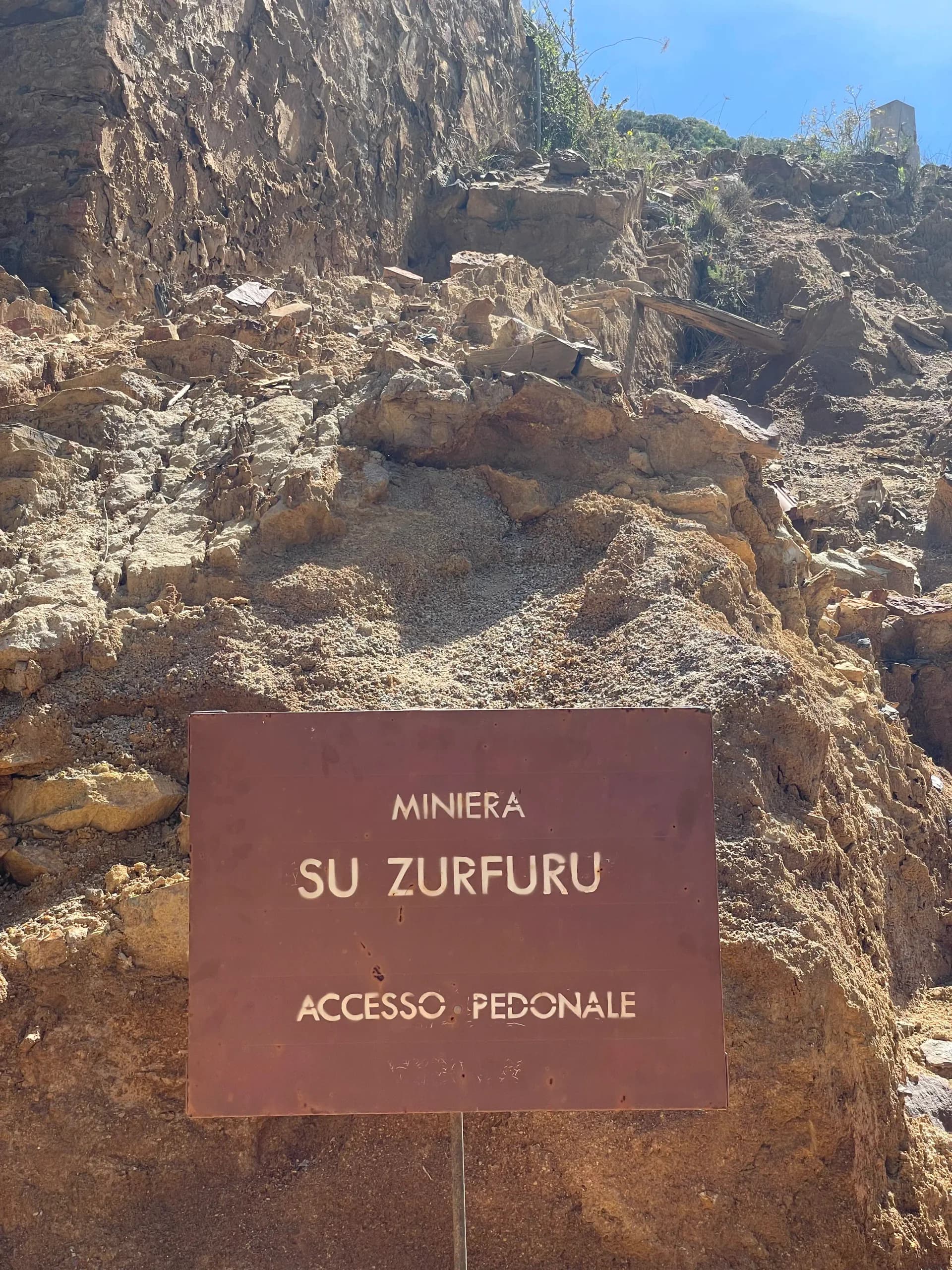
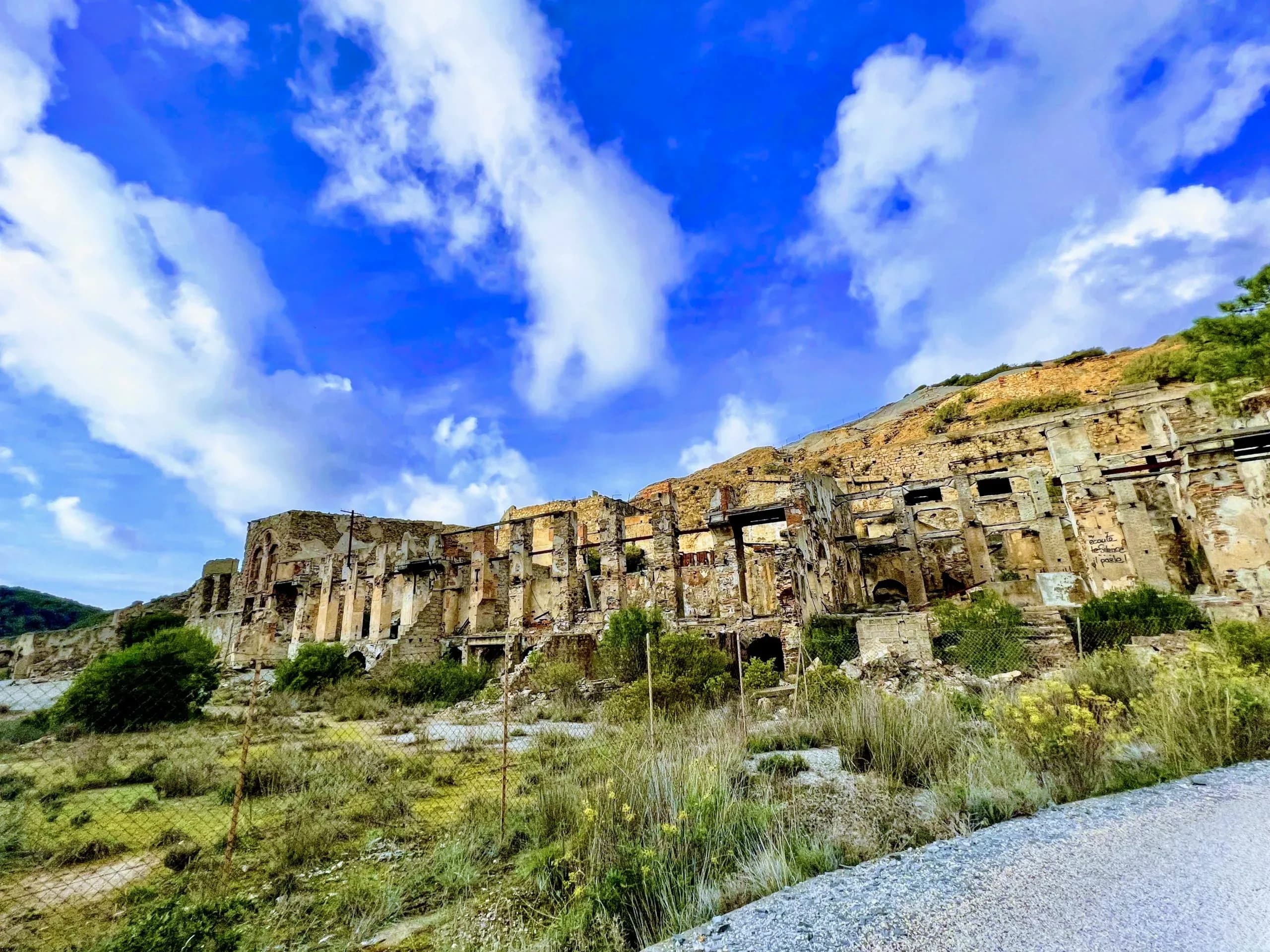
All around the Temple of Antas lies a landscape born from two forces: nature and industry. The hills are dotted with relics of Sardinia’s mining era, from rusted rails to ghostly engine houses. Explore selected sites to understand this unique heritage. The island’s Geomineral Park coordinates many of these museums and underground galleries across Sulcis-Iglesiente, preserving a network of extraordinary mining places that can be visited with guides (Parco Geominerario).
Nearby highlights to combine
- Porto Flavia at Masua: an audacious cliffside ore-loading tunnel and a dramatic terrace facing the Pan di Zucchero sea stack
- Nebida and the Laveria Lamarmora: a photogenic coastal ruin, especially at sunset
- Montevecchio mining complex: handsome 19th-century buildings and guided routes through former workshops
- Su Mannau Caves near Fluminimaggiore: a vast karst system with guided tours, once frequented in ancient times
Pairing the Temple of Antas with the mining coast makes for a day that moves from sacred calm to cinematic industrial vistas. 📷
How to visit the Temple of Antas
Getting there
- Location: Valle di Antas, near Fluminimaggiore in southwestern Sardinia
- Driving: Follow SS126 toward Fluminimaggiore, then local signs to Tempio di Antas; the final approach is a narrow paved road
- Parking: A small car park sits a short walk from the ticket office; the path to the Temple of Antas is an easy stroll
The Temple of Antas is best reached by car. Although the roads are quiet and winding, they are well maintained. Allow unhurried time so you can stop for views and arrive relaxed. 🚗
Tickets and opening times
Hours and prices can vary by season and management, and occasional closures happen for maintenance or weather. Check current details before you go; the Sardegna Turismo page is a reliable reference for practical information and contacts.
On-site experience
- Expect a peaceful site with minimal shade; bring water, a hat, and sunscreen
- Allow 45 to 60 minutes to visit the Temple of Antas, more if you enjoy photography
- Wear sturdy shoes; the ground is uneven in places
- Facilities are simple; restrooms are typically near the ticket point
Best time to go
- Spring and autumn: Mild temperatures, bright greens, and softer light
- Early morning or late afternoon: Golden light flatters the Temple of Antas and reduces midday heat
- Summer: Visit early or late; the valley can be hot at noon ☀️
For travelers who love the finer things
The Temple of Antas rewards a slow, curated approach. Consider a private driver-guide to weave the day’s narrative from sacred antiquity to industrial ingenuity. Pack a gourmet picnic with Sardinian pecorino, pane carasau, olives, and a chilled vermentino to enjoy in designated picnic areas before or after your visit. For lunch with a view, the coastal villages of Masua, Nebida, Buggeru, and Portixeddu offer simple seafood trattorie with panoramic terraces. Ask for the catch of the day and a local carignano.
Photography tips
- Compose from the lower path to capture the full frontal colonnade of the Temple of Antas
- Walk around the podium for side angles that reveal the stepped base and valley backdrop
- Bring a polarizer to deepen skies and limestone detail
Suggested itineraries
Half day: The Temple of Antas and Su Mannau
- Morning at the Temple of Antas for quiet light and cooler air
- Late morning guided tour of Su Mannau Caves
- Lunch in Fluminimaggiore or along the coast
Full day: Antas and the mining coast
- Start at the Temple of Antas, then drive toward Masua
- Visit Porto Flavia and the Pan di Zucchero viewpoint
- Golden-hour stroll at Nebida’s Laveria Lamarmora
From Cagliari, a relaxed full-day loop that includes the Temple of Antas, Masua, and Nebida is very doable with an early start.
Good to know
- Conservation etiquette: Do not climb on structures; stay on marked paths
- Guided visits: If available on-site, they add context to the Temple of Antas and its Punic layers
- Wildlife and plants: You may see hawks overhead and smell myrtle and cistus; admire, do not pick 🌿
- Mobile signal: Patchy in places; download maps or save contact info before arrival
A quiet classic of Sardinia
Elegant yet unassuming, the Temple of Antas offers a glimpse of Sardinia at its most authentic: ancient, layered, and deeply tied to its landscape. Come for the Roman architecture and Punic echoes. Stay for the hush of the valley, the sense of continuity, and the freedom of empty roads leading to a place that still feels like a secret.