
Why the Alghero bastions matter
Alghero’s sea walls frame the historic center with a continuous promenade facing the open water. The fortifications took shape under Catalan-Aragonese rule between the 13th and 16th centuries, which explains the Spanish flavor you still feel in the old town, according to Sardegna Turismo. Sardegna Turismo
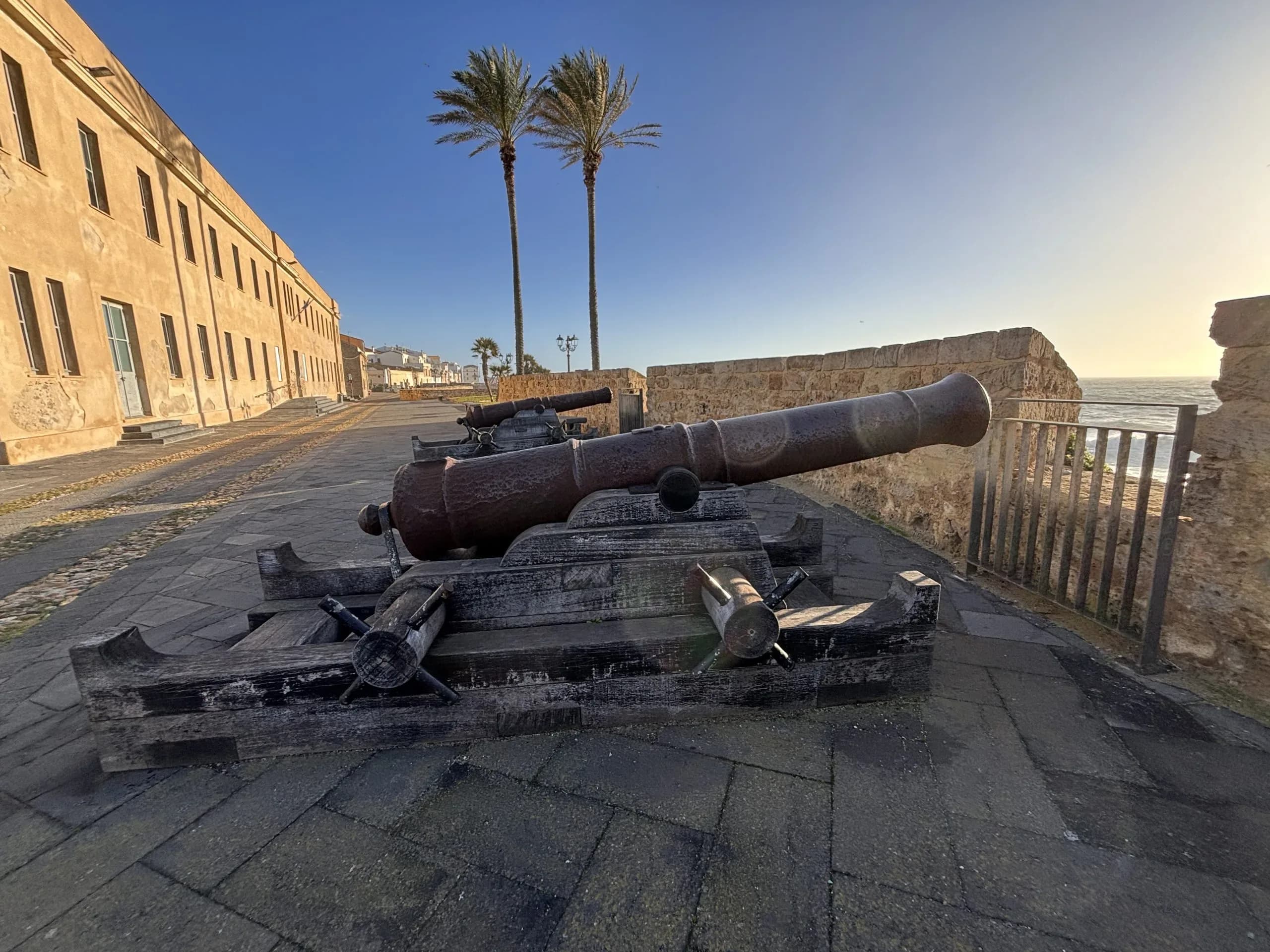
Walking the ramparts, you pass stretches of golden stone, restored curtain walls, and a line of historical cannons. Watchtowers punctuate the route and show how strategic the port once was.
The walk: route and highlights
Route at a glance
The bastions wrap around the seaward side of the old town. Most visitors follow the waterfront from the port side toward the open sea, then continue along the outer walls and round back toward the north. The path is compact and level for most of the way. Allow as little as 30 minutes for a simple out-and-back, or longer if you stop for photos and the towers.
What you will see
- Sea views that open toward Capo Caccia, the limestone headland at the heart of the Capo Caccia – Isola Piana Marine Protected Area. Area Marina Protetta
- Historic cannons mounted along the walls, a reminder of Alghero’s coastal defenses.
- Watchtowers such as Torre di Sulis and Torre di Porta Terra around the circuit. Some host small exhibits in season.
- The harbor, fishermen’s boats, and stone lanes slipping back into the old town.
Sunset is special here. The warm light turns the walls amber and the profile of Capo Caccia sharpens against the horizon. 🌅
History in context
Alghero’s fortifications evolved over centuries as powers shifted in the western Mediterranean. The Catalan-Aragonese strengthened the defenses with towers and sea-facing bastions to control maritime routes and protect the harbour, as outlined by the regional tourism board. Sardegna Turismo
What you see today is a layered structure. Some sections are medieval in origin, others were reinforced in the early modern period, and several stretches have been carefully restored for public access.
Practical tips
- Time of day: Early morning is quiet with soft light. Late afternoon into sunset offers the best color and a cooler breeze.
- Footwear: Surfaces are mostly flat paving stones, with short stepped links near towers. Wear comfortable shoes in case the stone is slick after sea spray or rain.
- Accessibility: Much of the promenade is step free. Tower interiors typically have stairs only.
- Wind and waves: Winter mistral winds can be strong. Expect occasional spray along exposed sections.
- Food and breaks: Cafes and gelaterie line parts of the route. Benches appear at regular intervals.
Getting there and logistics
- Access: The bastions are a public promenade and open at all hours.
- ZTL and parking: The historic center has restricted traffic. Use paid lots by the harbor or along the seafront, then enter on foot.
- Wayfinding: Join the walls from the port or from the northern seafront and simply follow the sea. You cannot get lost.
- Seasonality: July and August are busy in the evening. Visit early or shoulder seasons for a quieter walk.
Link it with nearby stops
- Towers and small exhibits: When open, towers like Porta Terra offer a peek into the city’s past and views over the roofs.
- Neptune’s Grotto: Boat trips to the famous sea cave depart from the port in season, and the grotto sits under Capo Caccia. Grotta di Nettuno
- Old town lanes: Step off the walls to explore narrow streets, small churches, and artisan workshops before looping back to the sea.
Photo notes
- Best light: Golden hour along the outer walls facing west.
- Compositions: Use the curve of the ramparts as a leading line with Capo Caccia in the distance.
- Low crowd shots: Early morning gives you empty walls and calm water.