
Why Turris Libisonis matters
In the heart of Porto Torres sits Turris Libisonis, the only confirmed Roman colony in Sardinia and a key hub for ancient maritime trade across the Mediterranean. Its streets, houses, and public buildings reflect a town closely connected to Rome and the main routes of the Empire.
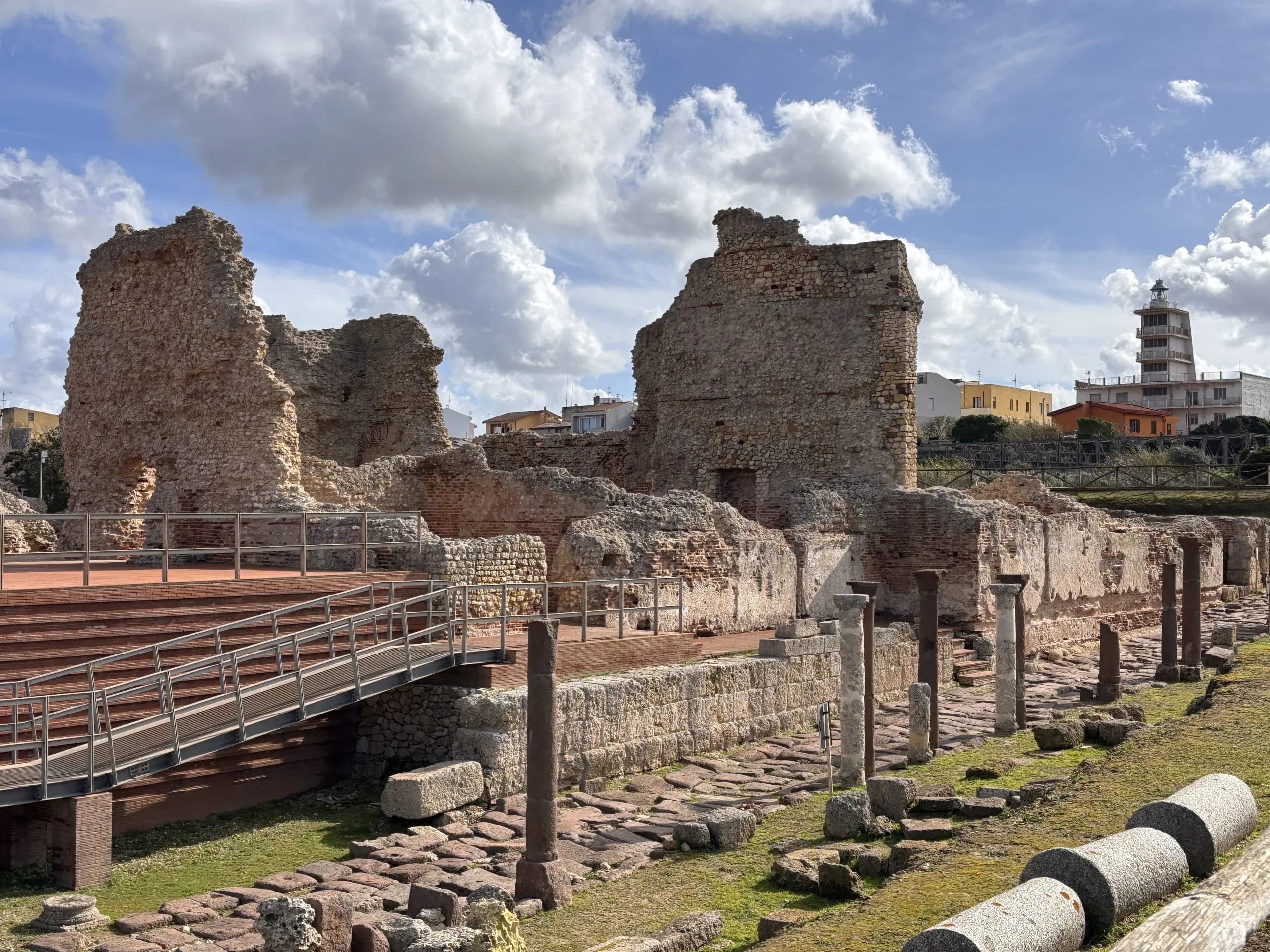
The site spreads across the ancient urban core. As you follow the paths, you will trace sections of paved roads, the footprint of residential domus, and the impressive Central Baths with their surviving rooms and heating systems. Many of the best finds were lifted from these very blocks and are now preserved in the local museum for close viewing.
Highlights inside the archaeological area
Streets, homes, and the Central Baths
Start with the paved streets to get a feel for the city plan. Look for thresholds and drainage channels that speak to everyday life two millennia ago. The Central Baths are the standout complex: even in partial ruin, the layout of hot and cold rooms and service areas is easy to read. Mosaics and wall finishes once decorated these spaces, and several examples survive.
Mosaics and inscriptions
Geometric black-and-white floors appear in several rooms, with marine motifs and simple borders typical of provincial Roman taste. Inscriptions and small finds add names and professions to the picture of Turris Libisonis as a working port town.
The Roman Bridge over the Rio Mannu
Just outside the core of the site, the Roman Bridge spans the Rio Mannu with a sequence of stone arches. Dating to the 1st century AD, it is among the most evocative works of Roman engineering in northern Sardinia, and it remains well preserved according to the regional tourism board (Sardegna Turismo).
The museum connection: Antiquarium Turritano
The Antiquarium Turritano displays mosaics, inscriptions, ceramics, and architectural elements recovered from Turris Libisonis. Visiting the museum after the open-air remains helps you place patterns, portraits, and trade goods back into their original rooms and streets. It also manages the archaeological area and provides official information for visitors (Direzione Regionale Musei Sardegna).
Planning your visit
Tickets and hours
Opening times and ticket details change seasonally. Check the latest information before you go on the official page for the site (Area archeologica di Turris Libisonis).
How long to allow
Plan 60 to 90 minutes for the archaeological area. Add 45 to 60 minutes for the museum, more if you enjoy reading displays in depth.
Getting there
- On foot: The site sits within Porto Torres, so it is an easy walk from the town center and waterfront.
- By car: Parking is usually easiest near the museum. Follow local signs for the archaeological area and Antiquarium Turritano.
- Public transport: Trains and buses connect Porto Torres with Sassari; from the station, the site is a short taxi or local bus ride.
Practical tips
- Footwear: Surfaces are uneven. Closed shoes make the visit more comfortable.
- Shade and heat: There is limited shade in summer. Bring water, a hat, and sunscreen, and aim for morning or late afternoon.
- Photography: Light is softer early and late in the day, helpful for reading mosaics and textures.
- Families: Clear paths and open spaces make it an easy site to explore with children.
A balanced day in Porto Torres
Combine the ruins with a walk to the Romanesque Basilica of San Gavino and a swim at Balai or Scogliolungo. If you are planning a longer stay, pair Turris Libisonis with a day on Asinara or a food-focused stop in Sassari. For deeper planning, see our guides to Porto Torres, Asinara, and the best beaches in the northwest.