
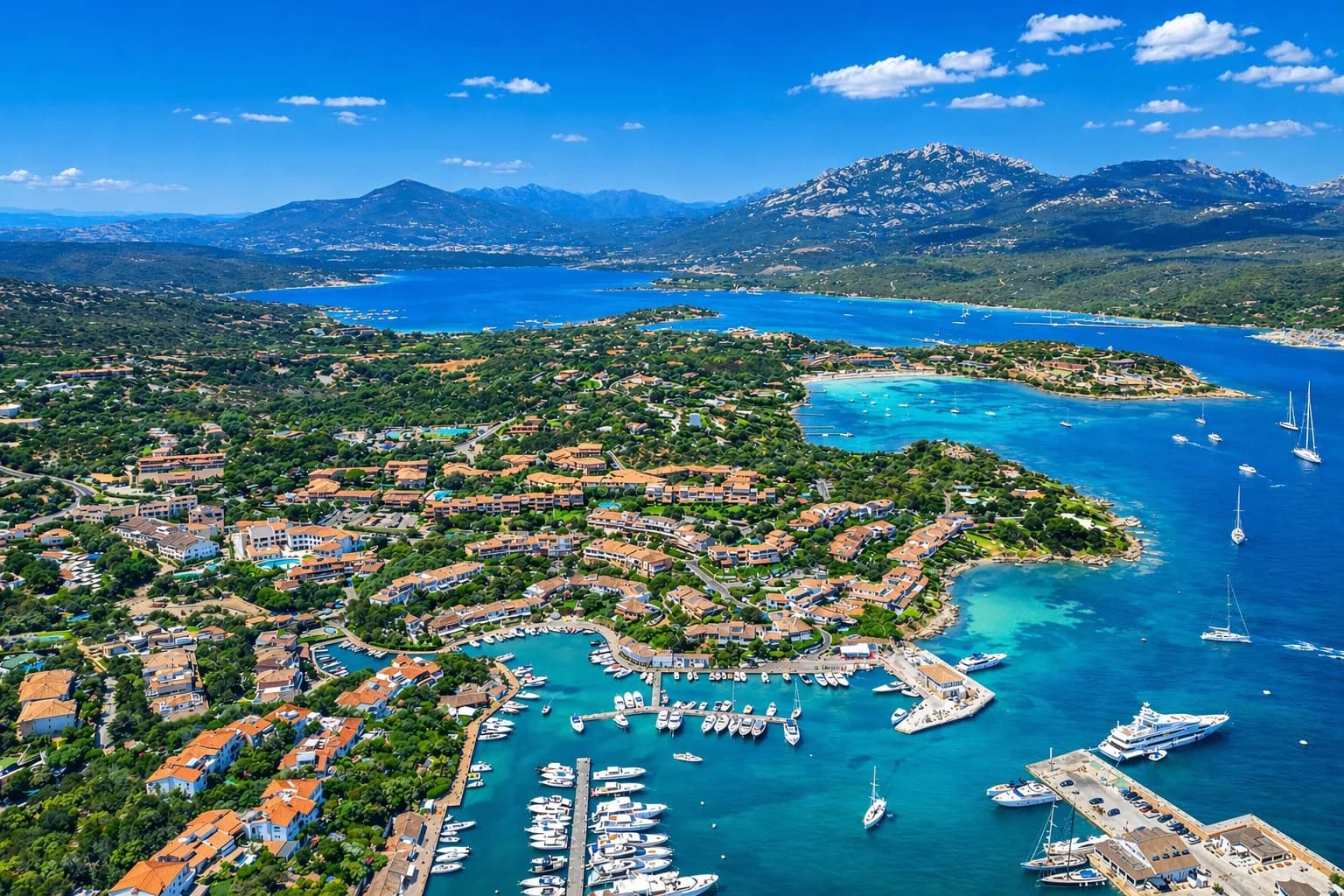

Costa Smeralda is often held up as proof that luxury tourism and landscape protection can coexist. A recent article from Travelling for Business, published on 20 October, makes a persuasive case: the coast avoided Italy's wider overtourism crisis because planning decisions were made more than sixty years ago, long before visitor numbers became a political problem. That argument deserves attention. But treating Costa Smeralda as a destination that has escaped overtourism altogether asks more of the evidence than it can deliver.
The distinction matters for anyone trying to understand what Sardinia's tourism model should look like going forward, from Porto Cervo to Olbia and the villages further along the Gallura coast.
The Architectural Committee: planning as the real asset
The strongest part of the story is architectural. The Consorzio Costa Smeralda's Architectural Committee dates to 1962. According to the organisation's own documentation, its oversight extends well beyond approving new buildings: it reviews alterations, landscaping, signage and external lighting, and other interventions within its boundaries. Local granite, restrained colour palettes and forms designed to sit quietly within the landscape are central to its approach.
Why continuous review matters more than a single style
This is not simply a matter of taste. Reviewing individual changes over decades, rather than relying on one master plan agreed at the outset, can prevent the gradual erosion of a place's character. A coastline rarely loses its identity to one enormous development. More often it is the accumulation of smaller decisions, each defensible on its own, that quietly changes what a place is. Costa Smeralda's continuous committee structure is designed specifically to resist that drift.
What the figures actually show
The Consorzio describes its territory as approximately 3,114 hectares, with 96.3% green surface and around 55 kilometres of coastline. These figures offer useful context for the preservation model, but they come with a caveat worth stating plainly: they are published by the organisation itself, not an independent body.
There is also a more fundamental limitation. Green surface is a land cover measure. It tells you how much of the territory remains undeveloped, but it is not a direct measurement of crowding on beaches, pressure on roads and water supplies, or the quality of life available to the people who work there. Limited construction does not automatically prevent those pressures, and attractive architecture says nothing about whether local workers can find affordable housing nearby. A genuine assessment of overtourism needs to look at seasonal visitor concentrations and community impacts alongside the appearance of the landscape, not instead of it.
The regional picture behind the headline
Zooming out from Costa Smeralda specifically, the wider numbers make these questions harder to avoid. In July 2026, the Sardinian regional government reported 22 million overnight stays in accommodation establishments during 2025, up 15.9% from 2024. Two qualifications matter here: these are overnight stays rather than individual visitors, and the figures describe Sardinia as a whole, not Costa Smeralda alone.
Seasonality as the unresolved variable
The same regional announcement noted that winter accounted for only about 4% of annual overnight stays. Spreading demand more evenly across the year could help businesses sustain employment and make better use of accommodation that otherwise sits empty for months, something destinations like Olbia are already positioning themselves around. Extending the season is worth pursuing, but it should run alongside efforts to manage pressure during the peak months, rather than replace them.
Practical measures worth watching
Beyond the architecture, there are concrete environmental initiatives that deserve scrutiny on their own terms. In December 2025, the Consorzio reported that Porto Cervo Marina had obtained Porto Sostenibile certification, covering environmental, social and governance aspects. It also described monitoring resource consumption and operating a mobile unit to collect wastewater from boats for transfer to treatment facilities.
Measures like these address tourism's everyday footprint, and their value lies in measurable improvement rather than branding. Certification alone cannot demonstrate that an entire destination is sustainable. Transparent, ongoing reporting on water use, energy consumption, waste and marine water quality would let residents and visitors judge progress for themselves, rather than taking a single certification as the final word. Anyone managing property in the area, whether through a hotel group or a private villa listed through something like the Rental12 ecosystem, has a direct stake in that kind of transparency, since infrastructure strain and water supply affect every rental and marina alike.
What other destinations should actually take from this
For other parts of Sardinia, the useful lesson from Costa Smeralda is selective rather than wholesale. The planning history suggests that consistent design standards and sustained oversight deserve real attention, and that the Architectural Committee model is worth studying by any authority trying to protect a coastline over decades rather than years. What should not be taken from it is the idea that luxury positioning alone resolves tourism's environmental or social pressures.
For Olbia, Golfo Aranci and the wider Gallura area, including waterfront towns like those around Marina di Olbia, the relevant questions are practical rather than reputational: what can existing infrastructure actually support, how can hotels, holiday homes and marinas contribute to its maintenance, and how will residents, not just visitors, benefit from growth. Those questions apply equally to a five-star resort and to a single holiday let.
A fuller test of success
Costa Smeralda offers a genuine example of protecting a landscape through sustained oversight, and the Architectural Committee's sixty-year record is not nothing. But the next step for the coast, and for Sardinia more broadly, is to match that visible achievement with equally clear evidence about tourism's wider effects on housing, water, roads and year-round employment. Preserving beauty matters. Ensuring a destination remains liveable, accessible and environmentally resilient is the fuller test, and it is one that deserves regular public scrutiny as international interest and investment in Sardinia continue to grow.