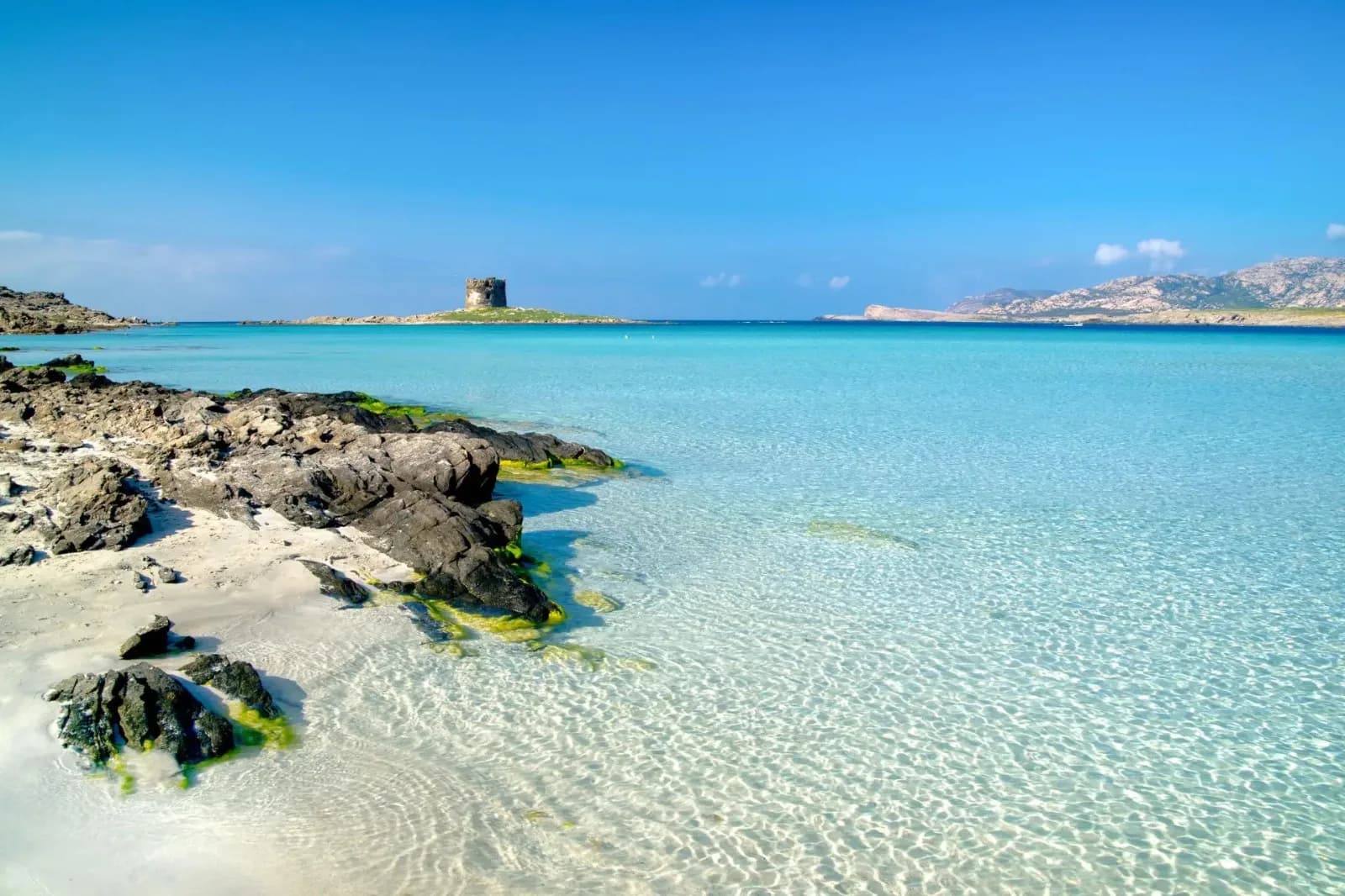

A few steps into the water at Spiaggia La Pelosa and it becomes obvious why this stretch of sand near Stintino is considered one of Sardinia's great icons. The water is improbably shallow and turquoise, the sand is pale and fine, and just offshore a weathered stone tower rises from its own tiny island, framed against the blue. It looks almost unreal. It is not the Caribbean, though. It is the north-western tip of Sardinia, and it comes with a few practical rules that every visitor now needs to know before turning up.
Where is La Pelosa?
La Pelosa sits just outside the village of Stintino, on Sardinia's north-western tip, facing the Gulf of Asinara. The setting is spectacular: small islands and rocky outcrops punctuate the view, while the historic tower stands on a tiny islet rising directly from the shallow sea.
What makes the water behave the way it does comes down to geography. Capo Falcone, Isola Piana and the island of Asinara shelter this bay from some of the strongest waves and winds that otherwise shape Sardinia's coastline, which is part of why the sea here can stay so calm and shallow so close to shore. Travellers curious about how exposed coasts elsewhere on the island compare might find it useful to read our guide to the Mistral and Scirocco winds, since La Pelosa's shelter is the exception rather than the rule.
Why is La Pelosa so famous?
The first thing you notice is the colour. Instead of jumping straight from sand to deep blue, the sea around La Pelosa moves through an extraordinary gradient of pale green, turquoise, cyan and, further out, a deeper Mediterranean blue. The seabed stays shallow for a considerable distance from the shore, which lets sunlight reach the pale sand beneath the surface and gives the water that glowing, almost lit-from-within quality.
This shallowness is also why La Pelosa works well for families, since the water close to the beach is generally shallow. That said, normal supervision still matters, especially with younger children, since conditions can vary along the bay.
The beach itself is backed by dunes and Mediterranean scrub, and the tower provides the unmistakable landmark that turns up in countless photographs of Stintino.
The Torre della Pelosa
If one detail makes this beach instantly recognisable, it is the old stone tower standing in the sea. The Torre della Pelosa is a Spanish coastal watchtower built in the late 16th century, part of a much larger defensive network of towers raised around Sardinia's coastline during that period. Its position was strategic: lookouts stationed here could spot ships approaching and warn nearby settlements of potential attacks.
Today the tower looks entirely peaceful, and instead of guarding the coast it has become the backdrop every visitor wants in their photographs. One of the more unusual things about La Pelosa is that, when sea conditions and water level allow it, you can walk out to the tower on foot, wading through the exceptionally shallow water that surrounds the islet.
What does the name mean?
“La Pelosa” sounds like an odd name for such a pristine beach. The explanation lies in the vegetation and seaweed historically found along this stretch of coast; the Sardinian name Sa Pelosa has traditionally been linked to the abundance of marine vegetation in the area. These days, though, when people hear “La Pelosa” they think of one thing only: white sand and startlingly clear water.
Planning a visit in 2026: booking, limits and cost
La Pelosa is no longer a beach you can simply turn up to in the middle of summer and expect to walk straight onto the sand. From 15 May to 15 October 2026, access is capped at 1,500 people per day and advance booking is compulsory. The daily ticket costs €3.50 per person.
The reasoning behind the system is straightforward: La Pelosa is an extremely delicate coastal environment that has had to absorb enormous visitor numbers over the years, and the dune system and seabed simply cannot sustain unlimited footfall indefinitely. If your trip falls within that booking window, sort tickets before you arrive rather than relying on turning up and hoping.
Getting there
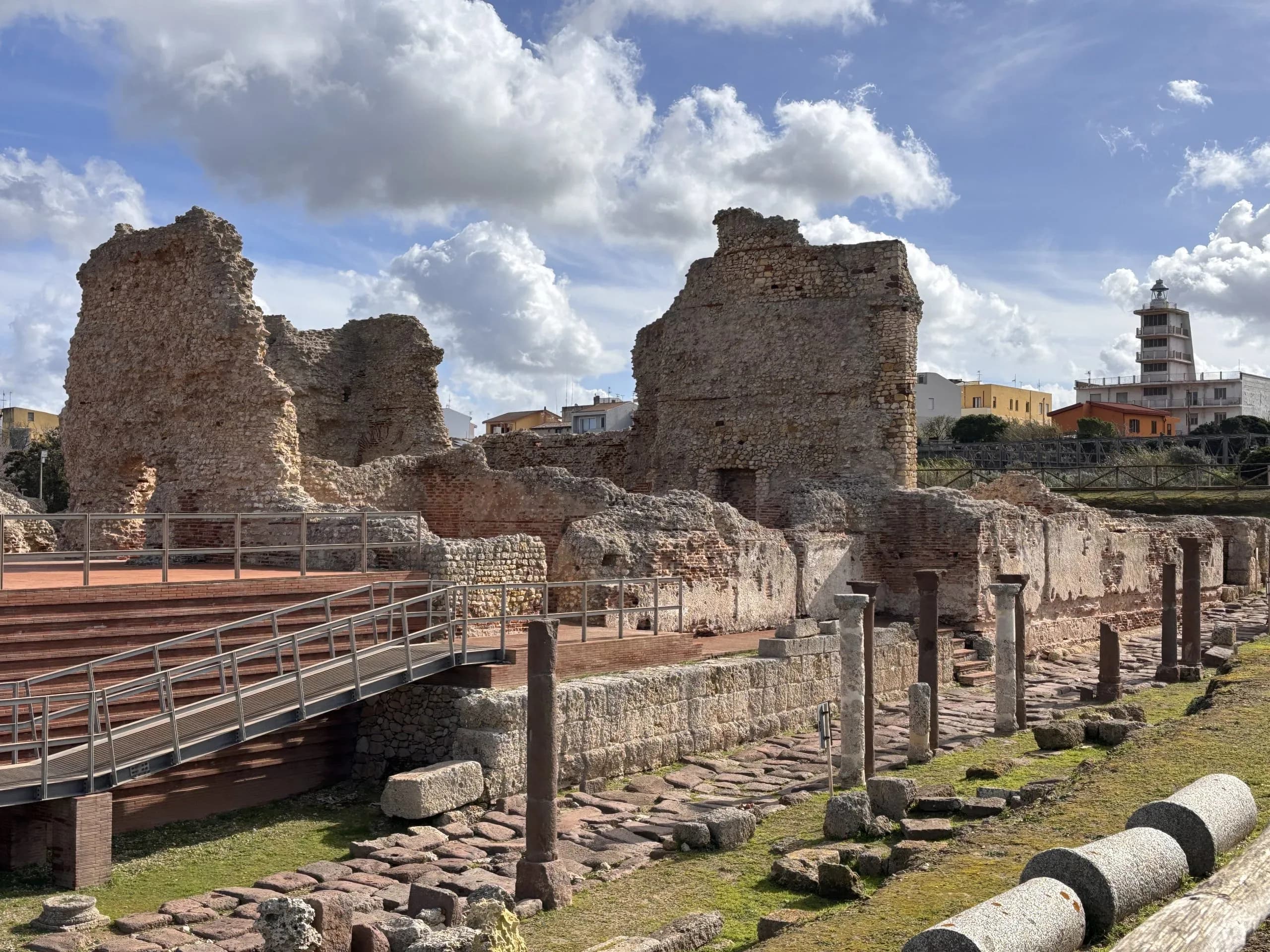
Stintino sits a reasonable drive from Porto Torres and Sassari, and most visitors arrive by car. If you are organising your own transport around the north-west, our Rental12 ecosystem is worth checking for rental cars and logistics across this part of Sardinia, since parking near the beach is limited and best approached with a plan rather than guesswork. Those also exploring the wider Porto Torres area might enjoy pairing the beach with our guide to Turris Libisonis for a fuller day around the north-west coast.
A glimpse of pure Sardinia
The author's own impression of the place sums up its appeal better than any list of practical details can.
La Pelosa is more than a beach—it's a glimpse of Sardinia at its most pure, where crystal-clear water, ancient stone and wild nature come together in a place you'll carry with you long after you leave.
Whether you come for the colour of the water, the tower, or simply to say you have stood in that particular shade of turquoise, La Pelosa earns its reputation. Just arrive with your booking sorted, your sun protection packed, and a little respect for the dunes that make the whole scene possible.