
Why Lake Liscia is worth your time
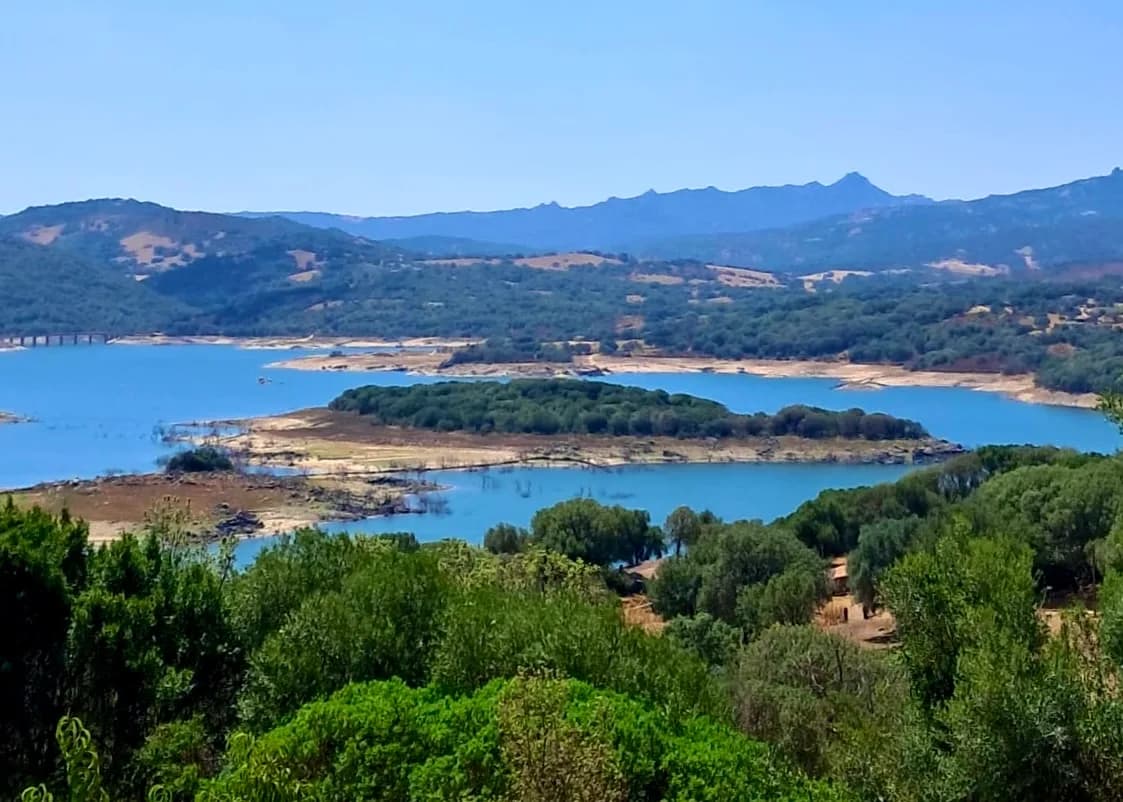
Lake Liscia is a quiet corner of inland Gallura, shared by the municipalities of Sant’Antonio di Gallura, Luras and Arzachena. It is an artificial reservoir created by a dam on the Liscia River, according to the regional tourism board Sardegna Turismo. Expect a calm, green landscape that feels far from the coast, yet it is only about 20 to 30 minutes by car from Arzachena and Tempio Pausania.
Landscapes shaped by water and wind
The lakeshore is lined with sculpted granite, cork oak and pockets of Mediterranean scrub. Water levels shift with the seasons, revealing shelves of pale rock that make striking photo stops. It is an easy place for slow walks, birdwatching and quiet time with a view. Keep the experience light-footed: take photos, but leave stones and branches as you find them so the shoreline stays stable for plants and wildlife.
The millenary wild olive trees of Santu Baltolu
Just above the lake near Luras, the countryside of Santu Baltolu di Carana shelters ancient wild olives. The most famous, S’Ozzastru, is estimated at 3,000 to 4,000 years old and is protected as a Natural Monument, according to Sardegna Turismo. Standing among these trees gives a strong sense of time and place. Visits are straightforward and often coordinated locally through the Museo Galluras in Luras, which provides current visiting details.
Simple ways to explore
Lakeside strolls
Pick a quiet pull-off along the northern or western shores and follow the dirt tracks that weave between granite outcrops and low scrub. These informal paths suit short out-and-back walks. Wear sturdy shoes, as footing can be uneven and slippery near the waterline.
Picnic spots
Look for flat granite slabs with natural shade from cork oaks. There are no services on the shore, so bring water, snacks and a bag to carry out all waste. Avoid open flames year-round.
Combine lake and olives
Spend an hour or two along the lake, then drive up to Santu Baltolu di Carana to see the ancient olives. If you are staying on the Costa Smeralda, this makes a rewarding half-day inland loop with minimal driving.
Practical tips
- Getting there: The lake lies between Luras and Sant’Antonio di Gallura. If you are based near the Costa Smeralda, check local visitor information from the municipality of Arzachena.
- Parking: Expect informal roadside pull-offs and dirt lay-bys. Do not block gates or tracks used by landowners.
- Best seasons: Spring and autumn bring mild temperatures and green hills. In summer, go early or late for softer light and cooler air. Winter can be atmospheric, with low mist over the water.
- Wildlife: You may spot waterbirds along the inlets. Binoculars help, and patience helps even more.
- Safety and access: Water levels and shorelines change. Keep back from the dam area, follow any signage, and watch footing on wet rock.
Need-to-know for a low-impact visit 🌿
- Stick to existing tracks and rock slabs to protect soil and native plants.
- Enjoy rock formations as they are. Avoid building stone piles so the shoreline remains undisturbed.
- Carry water and sun protection. There is little shade in midday hours.
Nearby ideas
Pair the lake with a short wander in Luras’ historic center, a visit to the Galluras Museum, or a stop at the archaeological sites around Arzachena. It is a simple way to experience Gallura beyond the beaches without adding long drives to your day.