When Olbia became a theatre
Some summer evenings in Sardinia are simply about the beach. Others become memories you never expected to make. On the evenings of 5, 6, 7 and 8 August 2026, Olbia's Molo Brin hosted four performances of Notre Dame de Paris, one of the most recognised musicals in the world, and what unfolded was something considerably more than a concert.
It was the city itself that made the difference.
Walking to Molo Brin
Arriving at the waterfront on a warm August evening already felt different from entering a conventional theatre. The streets leading down to the harbour were busy with exactly the kind of life that Olbia produces effortlessly in summer: restaurants spilling onto terraces, families walking with no particular urgency, couples lingering over drinks, visitors mixing with locals who had no plans to be anywhere else.
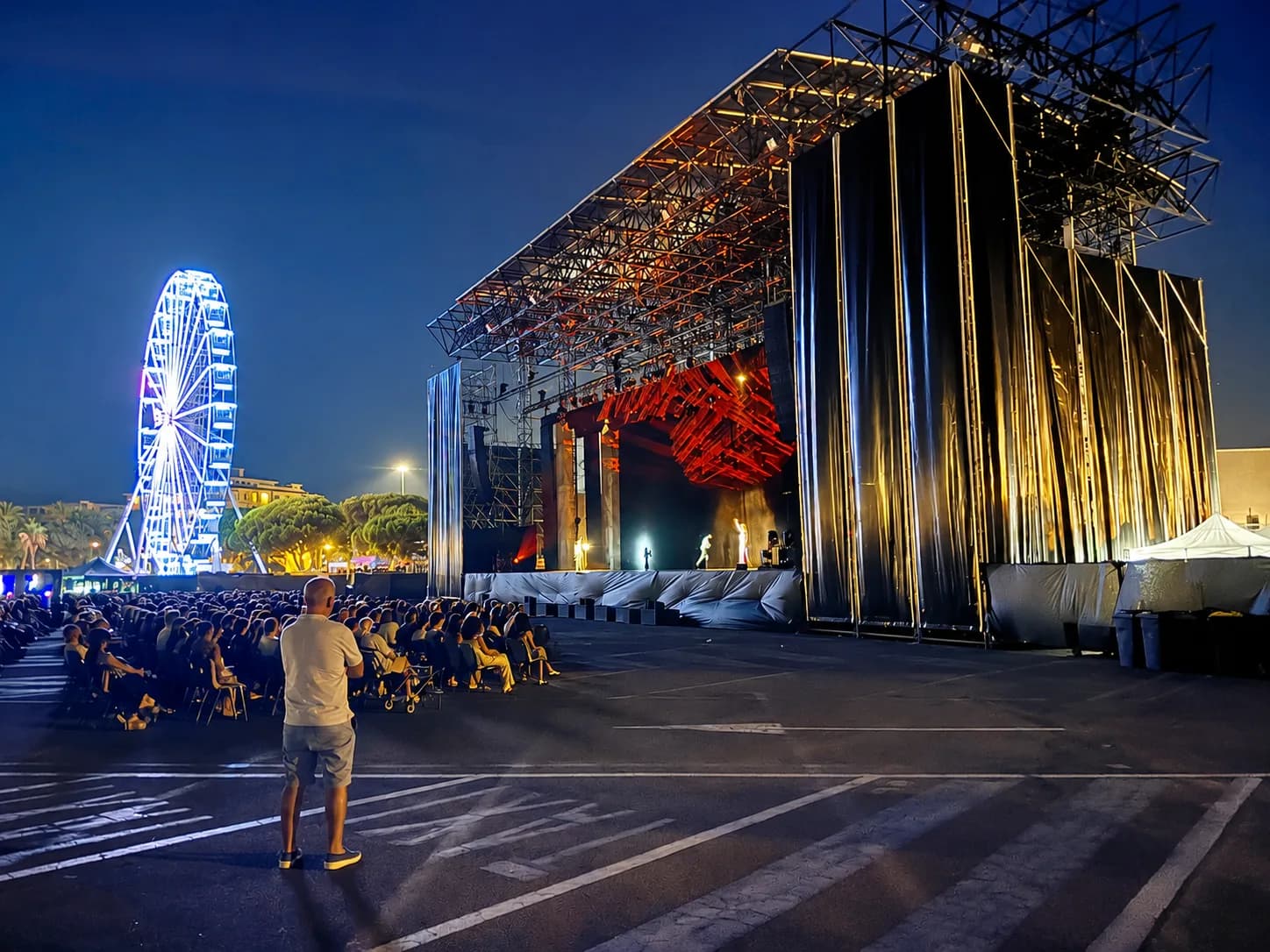
And then, beside the harbour, rose the stage.
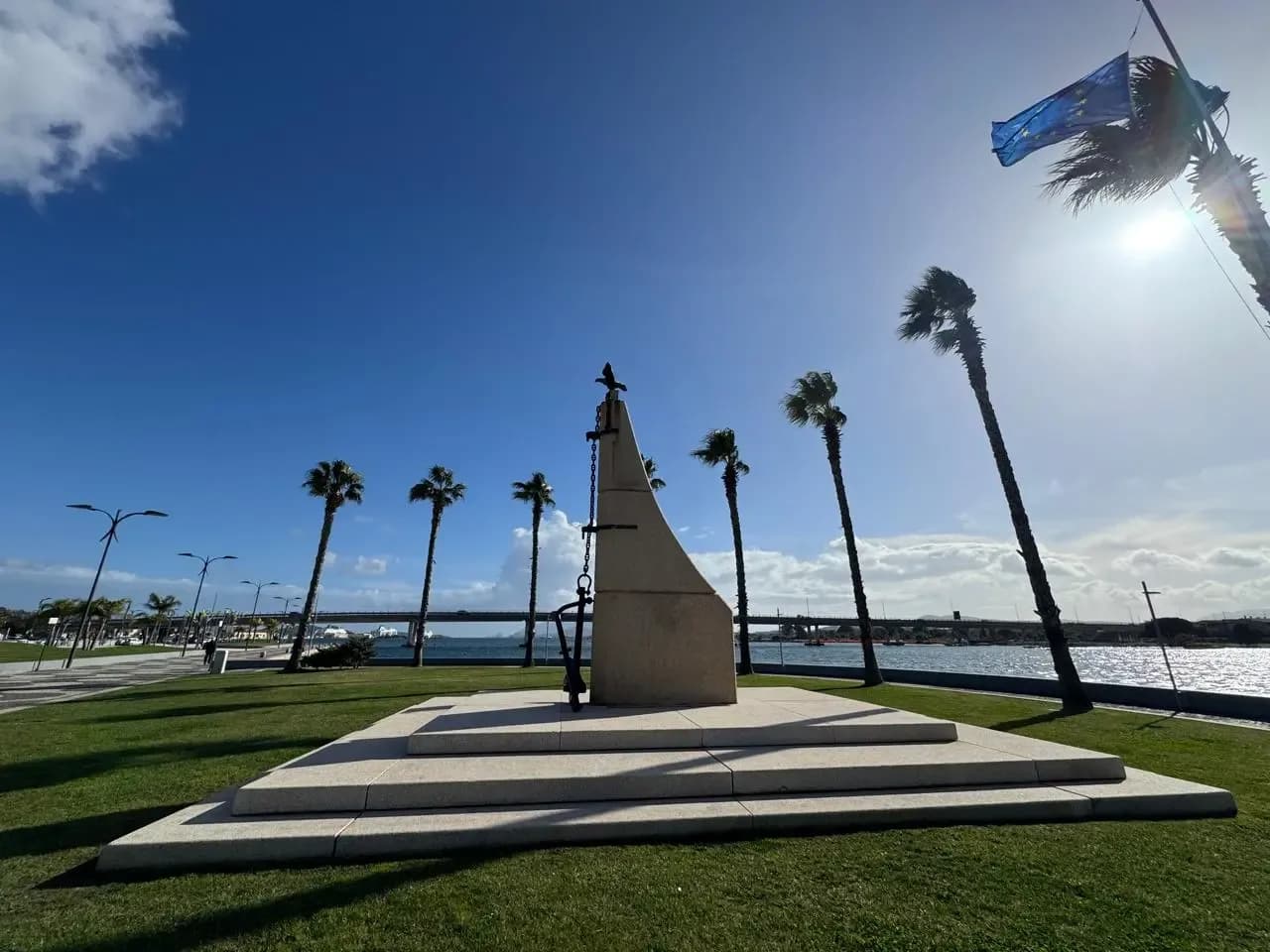
Behind it was the Olbia most people know: the lit waterfront, the reflections on the water and, rising above everything, the illuminated Ferris wheel turning slowly against the summer sky. For a few hours, one of the city's most familiar public spaces had been completely transformed.
The production
Notre Dame de Paris is built on Victor Hugo's novel and carries music by Riccardo Cocciante, original lyrics by Luc Plamondon and the celebrated Italian adaptation by Pasquale Panella. Since its premiere in Paris in 1998 the production has toured the world, and its songs have become genuinely familiar even to people who have never seen it performed live.
Quasimodo. Esmeralda. Frollo. Phoebus. And the music that most people in the audience already knew by heart: Il tempo delle cattedrali, Bella, and a score that loses nothing in an open-air setting.
The scale of the stage
The first thing that struck the audience at Molo Brin was the sheer size of the production. A monumental theatrical structure had been assembled on the waterfront, creating an extraordinary contrast with the open harbour around it. Once the performance began, that structure became medieval Paris.
The dancers used every level of the scenery. Light and choreography shifted the atmosphere of the stage within seconds, moving between something intimate and almost silent to something enormous and overwhelming. The voices carried across the waterfront with a clarity that a large outdoor space does not always deliver.
The author on hearing the music live
Hearing music that so many of us have known for years performed live, in this setting, was something completely different.
All of Olbia was outside
One of the things that makes Olbia exceptional in summer is its instinct to move outdoors. On evenings like this, the city does not stay home. People who had tickets walked to Molo Brin. People who did not still came out, drawn by the atmosphere around the waterfront, the music audible from a distance, the simple pleasure of being in an Italian city on a warm night when something is clearly happening.
That quality is easy to overlook if you only pass through Olbia on the way somewhere else. Many travellers arrive at the city's airport and continue immediately towards the beaches of Capo Testa, the Costa Smeralda or Porto Rotondo. But the city itself has been quietly building a waterfront culture that offers something different: a place where concerts, festivals and community life regularly overlap.
The city Olbia is becoming
Evenings like this one do not happen by accident. Olbia's Molo Brin has gradually established itself as the main gathering point for summer cultural events, a space where the harbour setting amplifies whatever is being staged. Notre Dame de Paris was one of the largest productions to appear there, but it sat alongside a summer calendar that increasingly treats the waterfront as a genuine public stage.
You can spend the morning swimming in water the colour of shallow glass, as you might at nearby Golfo Aranci, and then walk from an apartment in the centre to an international musical beside the harbour a few hours later. That particular combination is difficult to replicate.
For visitors thinking about where to base themselves, a well-placed apartment in Olbia puts the waterfront, the restaurants and the historic centre all within walking distance. And if you want to explore further afield, the Rental12 ecosystem makes it straightforward to arrange a car, scooter or other transport for the days you want to reach the coast or the interior.
After the performance
What stayed with me after the final curtain was not simply the production itself. It was the combination of everything around it: the music, the warm night, the harbour lights, the Ferris wheel still turning, and restaurants that remained full well past midnight because nobody felt any particular reason to rush home.
That unmistakable quality of an Italian summer city completely alive is not something you can manufacture. Olbia either has it or it does not. On those August evenings, it absolutely did.
Event information
- Event: Notre Dame de Paris
- Dates: 5–8 August 2026
- Final performances: Friday 7 and Saturday 8 August
- Time: 21:00
- Location: Molo Brin, Piazzale Benedetto Brin, 3, Olbia
- Production credits: Music by Riccardo Cocciante, lyrics by Luc Plamondon, Italian adaptation by Pasquale Panella
If you are planning a summer visit and want to check what is on at Molo Brin during your stay, the local events calendar is worth consulting well in advance, as the larger productions sell quickly.
Planning a stay on the island? Explore the Rental12 ecosystem for hand-picked places to stay across Sardinia.