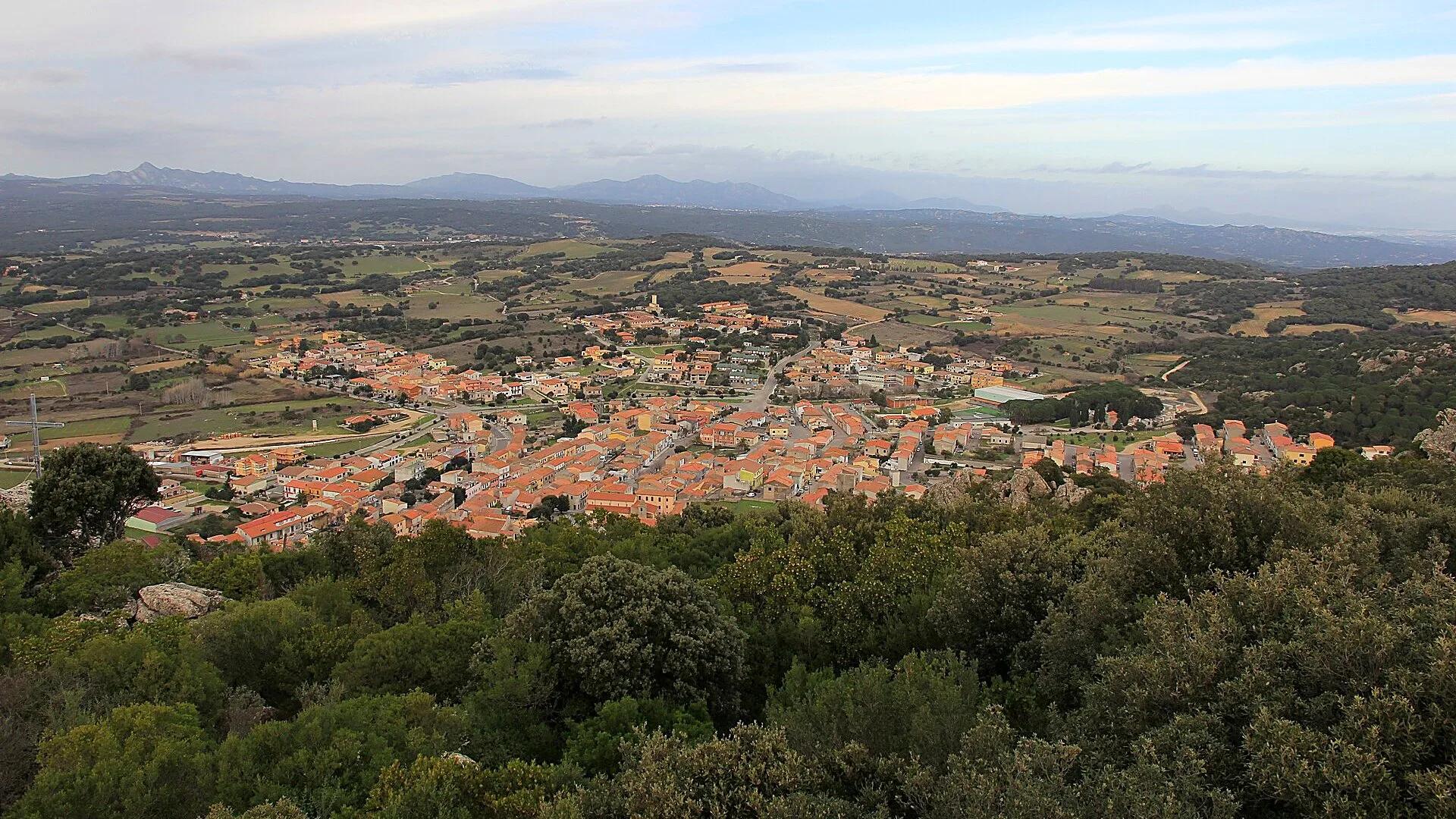

Monti is a granite village of about 2,400 people in inland Gallura, 25 km south-west of Olbia and about 25 minutes by car from the airport. It makes an easy half-day trip: a free ethnographic museum in an early 1800s house, a hermit's sanctuary 12 km out in the oak woods, and a natural rock pool on the Rio Crasta.
Monti at a glance
- Where: inland Gallura, at 308 m, between Monte Limbara and the Alà mountains.
- Population: 2,406 (ISTAT estimate for 1 January 2026, via Tuttitalia).
- From Olbia: about 25 km on the SS 729 dual carriageway, then the SP 147 into the village.
- Museum: Casa Franco, free, open four afternoons a week from October to June.
The granite historic centre
Old Monti is built of grey granite and the centre is small. Start at the Museo Etnografico "Luigi Pirisino - Casa Franco" at Piazza del Mandorlo 10, a Gallura house from the early 19th century with a bare granite front and wooden floors. Downstairs is the traditional kitchen, the coghina, furnished in the style of about 1900, and since 2017 a permanent display of traditional Sardinian breads. Upstairs are two bedrooms with period furniture. According to Giuseppe Mattioli's guide to Monti, the house also keeps old craft tools.
Opening times (Sardegna Cultura, page updated 8 October 2026): October to June, Monday, Tuesday, Wednesday and Friday, 16:00 to 20:00; July to September, the same days, 17:00 to 19:30. Other times by appointment (+39 345 632 8150). Entry is free.
The booklet also describes three more landmarks. Sa Funtana Manna is a public fountain finished in 1870, a granite cube with a stepped top. The town hall carries a maiolica coat of arms by Anna Spanu and a 2012 painting of the Pischina by Pietro Marras. The booklet also notes that the barons' house, Su palattu baronale, still stands, a reminder that Monti was a fief from 1412 until the 1830s. No other source we found confirms these details.
San Gavino, the 1734 bell tower and the Calice di Monti
The parish church of San Gavino Martire is a neo-Romanesque building in exposed granite blocks, built from about 1940 and consecrated on 25 October 1955. Of the older church, demolished in the 1940s, only the bell tower survives; the stone recording its consecration in 1734 is in the crypt. The apse and the arch above it were painted in 1966 by the Scuola del Beato Angelico of Milan. According to Giuseppe Mattioli's guide to Monti, the tower reuses stones from the ruined church of Santa Barbara, carries a Gallura rooster made by don Columbano and was restored in 1988, and the church holds an Annunciation by Arnaldo Jacobbi.
The church's treasure is the Calice di Monti, a silver Romanesque chalice about 12 cm tall, dated to the late 12th or early 13th century. An inscription on the foot says the priest Getimel (or Gitimel) had it made. It came to light in the bishops' census of church goods and sits in a granite showcase by Pinuccio Derosas in the chapel of the Madonna. The parish, the Comune and the booklet call it the oldest chalice in Sardinia and one of three of its age known in the world, with one in the Louvre and one in Assisi. No catalogue we found confirms it. You can see it during services or by arrangement with the parish of San Gavino Martire (0789 44001).
The sanctuary of San Paolo Eremita
The sanctuary of San Paolo Eremita, Santu Paulu 'e monte, stands in a wooded valley about 12 km from the village. To get there, take the SS 389 towards Alà dei Sardi south out of Monti. The Comune says Byzantine-rite hermits lived on the site until the 11th century. A parchment found in the altar records a consecration on 31 July 1348, and the present building was rebuilt in stages between the 18th and the early 20th century, according to Sardegna Turismo.
The Comune publishes no regular opening hours for the sanctuary, so outside the August feast and Easter Monday, ask at the Comune (+39 0789 478200) before you drive out. The small Santu Pauleddu chapel is a different church, and some map pins for the sanctuary wrongly point to the village.
Country chapels: San Michele, San Giovanni and Santa Rosa
- San Michele Arcangelo (Santi Migali): a 17th-century country church on an older site, about 1.7 km east of the centre along Via Garibaldi and Viale Italia, then 300 m of dirt road. The booklet mentions juniper roof beams and a restoration in the late 1990s.
- San Giovanni Battista: two churches on the northern edge of the village, a 16th-century church now in ruins and a newer one built about 100 m away.
- Santa Rosa da Lima: a small church at Sa Cialda on the border with Telti, built in the late 1920s in a wave of chapels supported by Pope Pius XI.
Sa Pischina 'e s'Elighe and Lada Pilosa
Sa Pischina 'e s'Elighe, listed on Google Maps as Piscina Naturale S'elighe (40.7817 N, 9.3082 E), is a clear pool that the Rio Crasta has carved into granite, below the rocky spur of Lada Pilosa. Access is free. According to Giuseppe Mattioli's guide to Monti, it lies about 3 km out along the local road towards Monte Olia, a pool ringed by tafoni, the hollowed granite boulders of Gallura. A local walker who described the route in 2017 started from the car park of the La Pineta pizzeria and walked mostly on dirt tracks.
Two warnings. The path is not signed, so save the coordinates before you set off. And the water drops sharply in July and August and can turn stagnant, so spring and early summer are the time for a swim. Visitors report a rough track, a short scramble and patchy phone signal. From Lada Pilosa, Sardegna Turismo notes huts and wooden cabins among the trees. The booklet adds that the huts sheltered families from Olbia during the Second World War.
Sa Chessa and Su Padre e Sa Monza
Giuseppe Mattioli's guide to Monti calls Sa Chessa, a lentisk tree, the oldest tree in Sardinia, over 1,000 years old and 5 m tall. It gives directions of about 1 km past a hairpin on the old Olbia road, through a gate on the right. In 2012 the regional forestry corps described it more carefully as possibly the oldest lentisk on the island, probably well over a thousand years old, with a trunk 3.4 m round. It stands on private land, so look from the gate and do not go in without permission. For trees that really are among the oldest in Sardinia, see the wild olives of Luras near Lake Liscia.
The same booklet tells of Su Padre e Sa Monza, two rocks about 4 km out on the road towards Nuoro: a runaway friar and nun, the story goes, turned to stone. We found no other source for the rocks or the legend.
Monte Olia forest and the Belvedere di Monti
The Monte Olia state forest covers 2,236 ha in Monti and Berchidda and rises to 811 m at Punta Mesureris. Turn off at about km 12 of the state road from Monti to Alà dei Sardi. Forestas keeps a rest area that is usable all year, a small lake and a summer campsite at Sa Toa, but says the forest has few trails. Closer in, the Belvedere di Monti (40.8014 N, 9.3248 E) looks out over the village and the valley, probably the belvedere the booklet says the Comune built.
How to get there
- By car: from Olbia airport, about 24 km and 25 minutes on the SS 729 towards Sassari, then the SP 147. From the centre or the Isola Bianca port, about 25 km and 27 minutes (routing estimates, November 2026).
- By train: Monti-Telti station is about 3 km north of the village on the SP 147. Until 12 December 2026, trains that normally use Olbia station start and end at Olbia Terranova (RFI notice). Check times on Trenitalia.
A half-day plan and local tips
- Do the museum last. From October to June it opens only in the afternoon, from 16:00, and never on Thursdays or at weekends without an appointment.
- Morning: drive the SS 389 to San Paolo Eremita, then come back for the walk to Sa Pischina 'e s'Elighe if the ground is dry.
- Afternoon: walk the granite centre, San Gavino and the 1734 tower, then Casa Franco at 16:00.
- Eat: our review of Trattoria Locanda Stella in Monti covers a family-run place in the village.
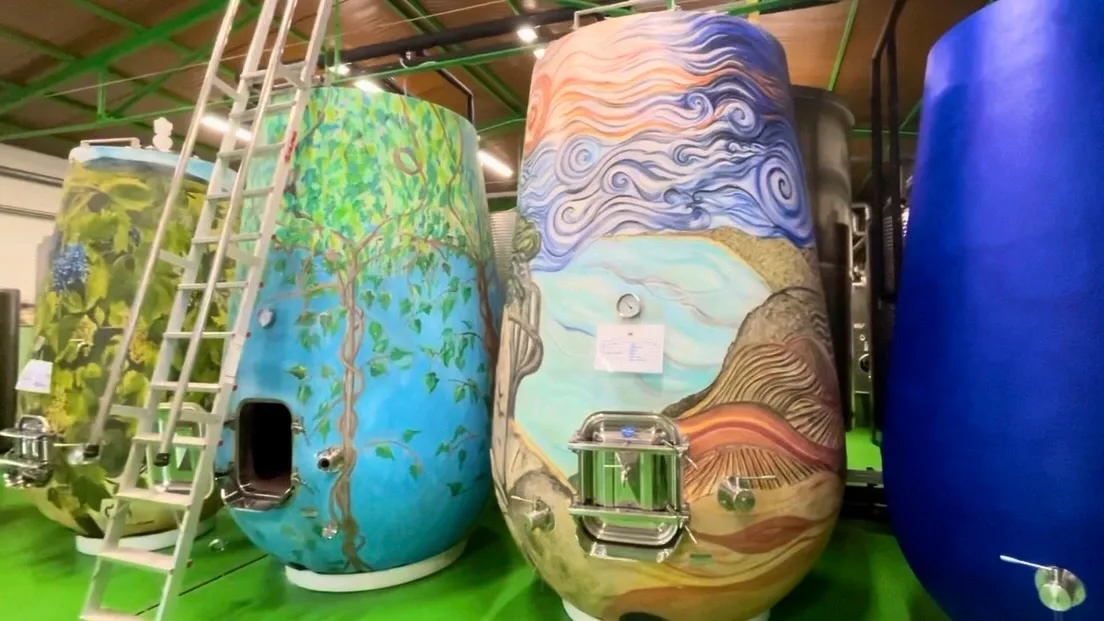
- Wine: the cooperative's cellar on Via San Paolo sells direct; see our news piece on the Cantina del Vermentino's 70th anniversary, and the Tenuta Masone Mannu tasting guide for a private estate.
Festivals, food and history in brief
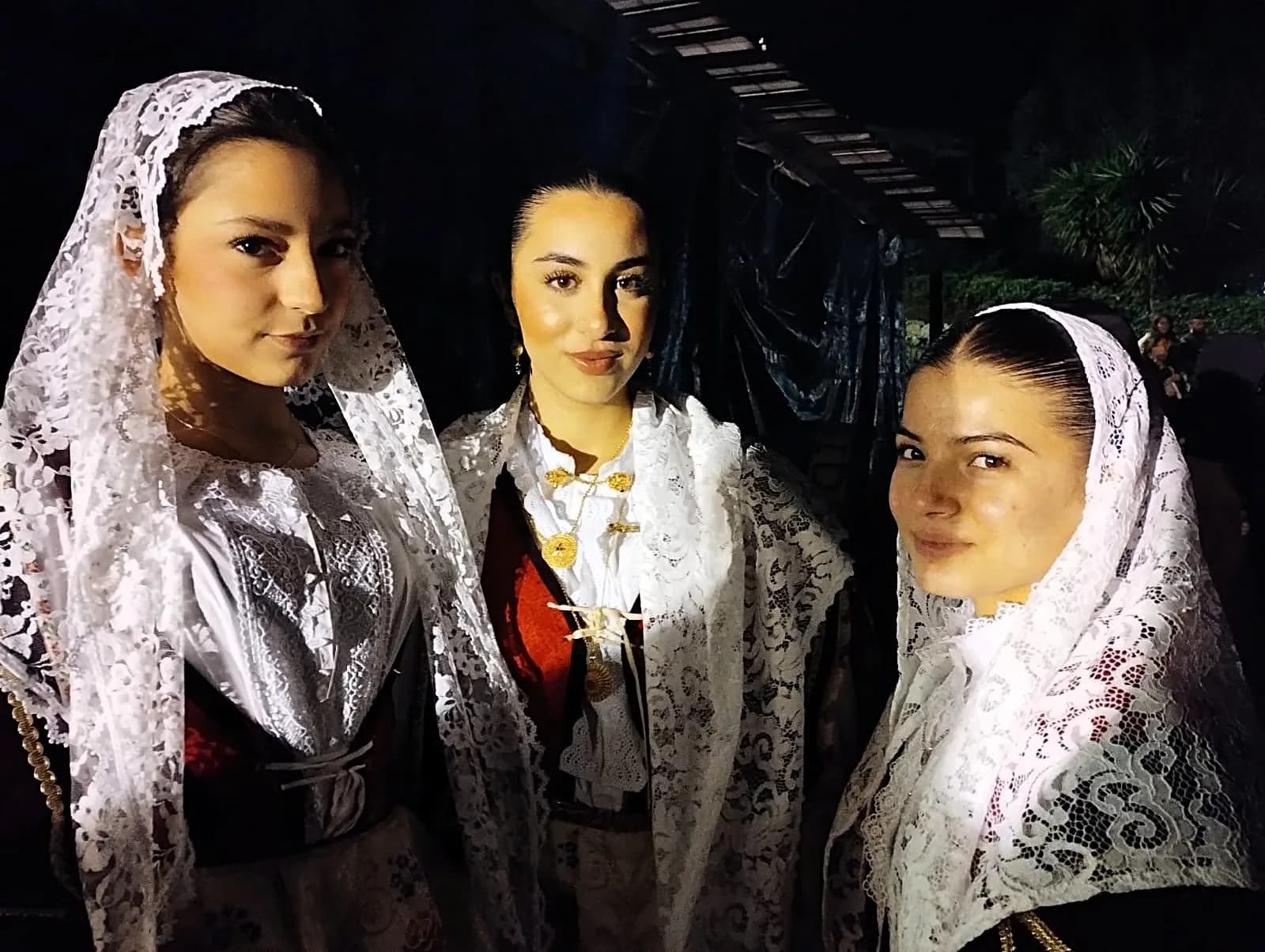
Monti's biggest days are the San Paolo feast in mid-August and the Sagra del Vermentino, normally on the first Sunday of August. Local dishes include sa suppa montina, a bread and cheese soup cooked over the flame. The territory also holds nuraghi and a Roman boundary inscription. We cover festivals, food and wine, and history in three later guides in this series.
Rental12, a holiday-rental company in Olbia that shares an owner with Sardinia Blog, sets out eight other routes from the town, from Tavolara to Tempio Pausania, in its guide to day trips from Olbia. It is a company guide, not independent research.
Sources: Sardegna Cultura, Casa Franco museum · Ministry of Culture, San Gavino Martire · Comune di Monti, San Paolo Eremita · Sardegna Turismo, San Paolo Eremita · Forestas, Monte Olia · Sardegna Turismo, Monte Olia · Gabob blog, Monti walk (2017) · La Nuova Sardegna, Sa Chessa (2012) · RFI, Olbia Terranova notice · ISTAT via Tuttitalia, population · Giuseppe Mattioli, Monti (Tutti i comuni della Sardegna 167), Carlo Delfino editore, pp. 6, 10, 14, 25 to 27, 31 to 33. Routing estimates: OSRM, 16 November 2026.