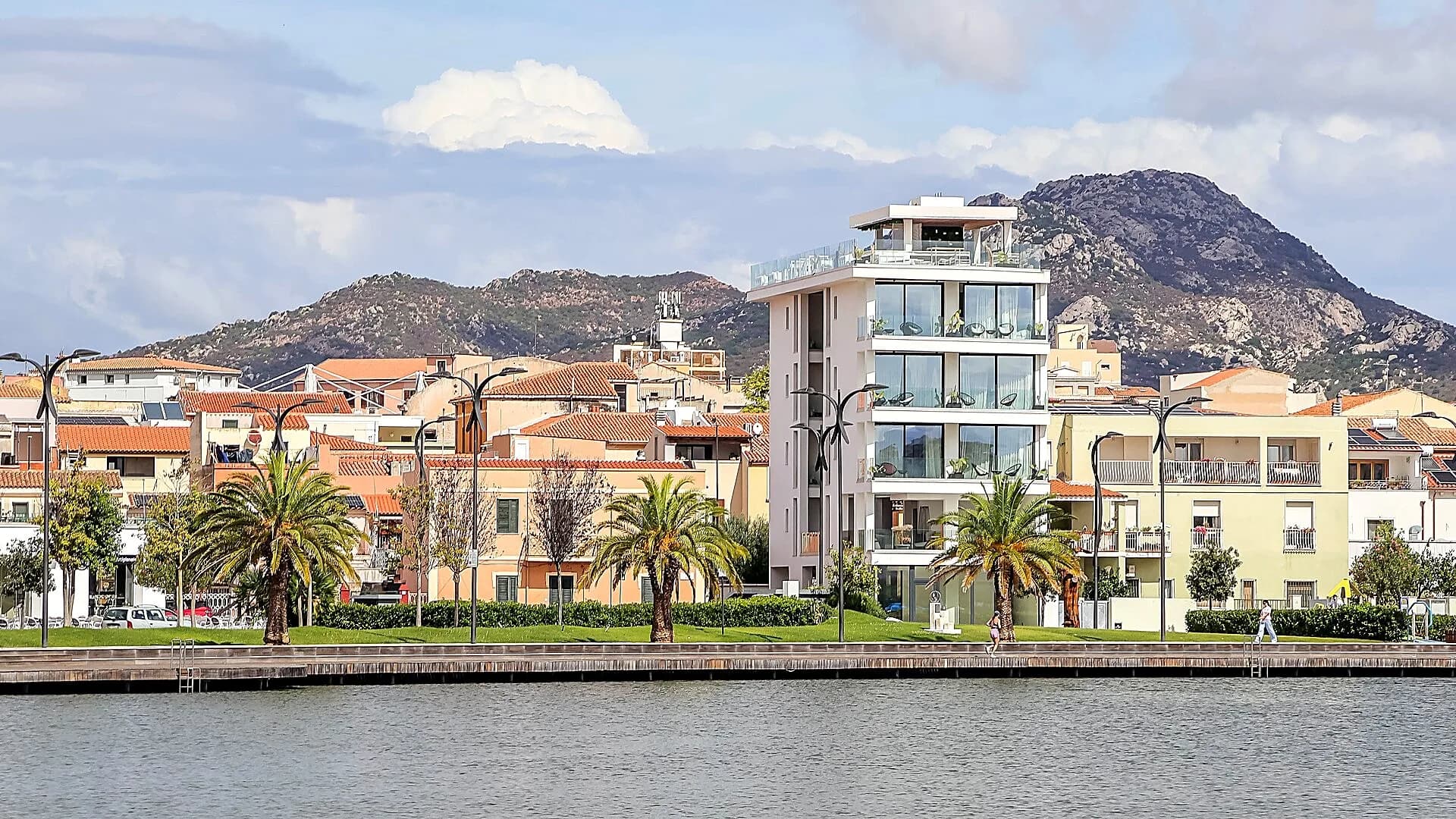
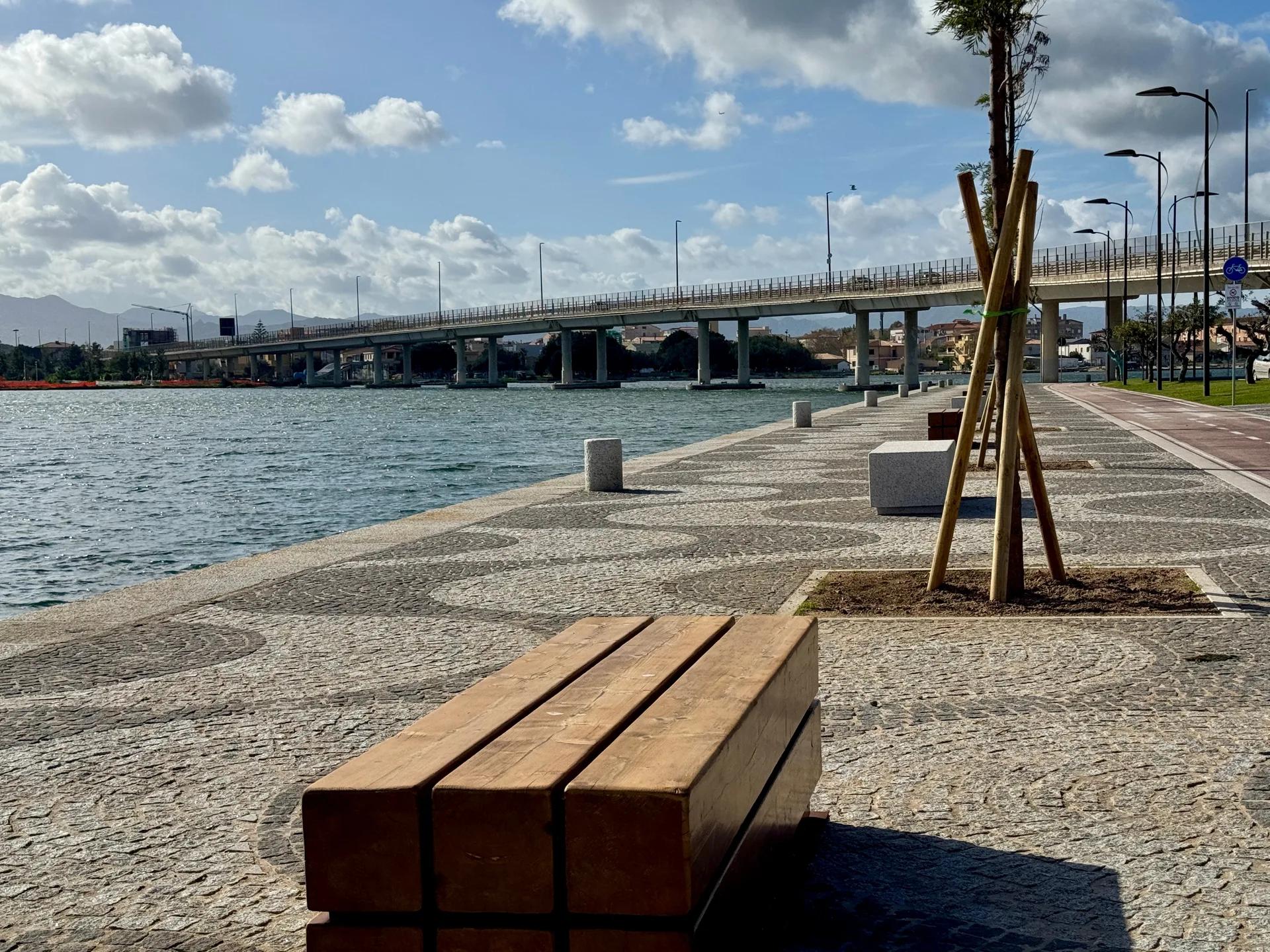
Most people meet Olbia at the airport and leave it behind on the road to the Costa Smeralda. That is their loss. The town has a harbor where excavations turned up the wrecks of 24 old boats, a granite basilica from around 1100, a seafront where Olbia takes its evening walk, and a white sand beach ten minutes from the center. About 61,700 people live here, which makes it the largest town in Gallura and the main way in to north-east Sardinia.
A town that changed its name three times
The first walled town was Punic, built in the 5th to 4th century BC. Rome took it in 238 BC and made it the main town of the east coast, with a forum, baths and an aqueduct. Around the year 1000 it reappeared as Civita, later became Terranova, and got its old name back only on 4 August 1939, by royal decree. Olbia comes from the Greek word for "happy".
The best chapter came out of the harbor in 1999: 24 wrecks, 16 of them from the 5th century, probably sunk during a Vandal siege. Two have been rebuilt full size in the Museo Archeologico, on the Peddone islet, facing the water where they went down.
What to see in town
Corso Umberto I, the main street of the old town. Roman paving still shows at the Via Dante junction, and the Chiesa di San Paolo nearby has a dome of shining majolica tiles.
Basilica di San Simplicio, built in local granite in the late 11th and early 12th century over a Punic and Roman cemetery. The saint's day, 15 May, brings the town's biggest party: see the Festa di San Simplicio.
The seafront, best on foot toward sunset. Our waterfront walk covers the route and the public art along it.
Parco Fausto Noce, the big city park, with a lake, playgrounds, a free skatepark and floodlit basketball courts. More in our park guide.
The Saturday market in Via Sangallo, where Olbia does its weekly shop. Hours and stalls are in our market guide.
Beaches, mussels and an island
There is no beach in the center. Pittulongu, about 8 km north, is a long curve of fine white sand facing Tavolara, and our guide to the best beaches near Olbia compares ten more. Tavolara itself, a block of limestone and granite 560 m high, is the classic day trip, with boats from Porto San Paolo, about 20 minutes south of town.
The local food is the mussel. Farming in the gulf began in 1918, and Golfo di Olbia mussels are on sale from May to October: steamed, with pasta or as a zuppa, ideally with a glass of Vermentino di Gallura, the only DOCG wine in Sardinia.
Getting here
Olbia Costa Smeralda airport handled 4,161,572 passengers in 2025, and ferries from Civitavecchia, Livorno and Genoa dock at Isola Bianca. Our airport guide covers the transfer into town.
How long to stay
Give it two days: one for the old town, the basilica and the museum, one for a beach. Then use it as a base for Tavolara, San Pantaleo and La Maddalena. The full Olbia travel guide has the history, food, tourist tax and day trips in detail.
Rental12, a holiday-rental company in Olbia that shares an owner with Sardinia Blog, compares the town's neighborhoods in Where to stay in Olbia.
Sources: Comune di Olbia, population on 31 December 2025 (provisional) · SardegnaTurismo, Olbia · SardegnaTurismo, Roman Olbia · SardegnaTurismo, San Simplicio · Assaeroporti, 2025 traffic. Checked 25 November 2026.