
Olbia, Sardinia, is the gateway to the island's northeast: its airport handled 4,128,015 passengers in 2025 and its Isola Bianca ferry terminal links Gallura with mainland Italy. Most visitors pass straight through, but the town itself repays a stay, with a Roman harbour whose sunken ships now fill a museum, an 11th-century granite basilica and town beaches 10 to 20 minutes away. In 2025 Olbia ranked third in Sardinia for official overnight stays, with an average stay of 3.2 nights.
Olbia in brief: quick facts
- Where: Gallura, on the northeast coast, at the head of the Golfo di Olbia.
- Airport: Olbia Costa Smeralda (OLB), 4,128,015 passengers in 2025, according to the operator's 2026 service charter filed with ENAC.
- Port: Isola Bianca, with 10 berths for passenger and vehicle ferries. The port of Olbia handles more than three million passenger movements a year, says the Sardinian port authority.
- Overnight stays: 1,161,262 in 2025, third in Sardinia behind Alghero and Arzachena.
- Patron saint: San Simplicio, feast day 15 May.
- Tourist tax 2026: up to €5.00 per person per night, for up to seven nights.
Why Olbia matters: the gateway to the northeast
Olbia is where most people first set foot in northern Sardinia. In July and August the airport handles more than 800,000 passengers a month, and June to September bring 68% of its annual traffic, according to the operator's charter.
The port is the other front door. Ferries reach Isola Bianca from Civitavecchia in about 7 hours by day, from Livorno in about 7 hours 45 minutes and from Genoa in roughly 10 hours 45 minutes to 12 hours 30 minutes, depending on operator and sailing.
From Olbia, the Costa Smeralda is 34 km from the airport, Porto Rotondo 20 km, San Teodoro 35 km and Palau 44 km, according to airport operator Geasar's distance table. That is why so many travellers use it as a base rather than a stopover.
A short history: from Punic walls to Terranova
The name comes from the Greek olbìa, "happy". Phoenician and Greek traders visited the gulf from the 7th century BC, but the first permanent town was Punic, built in the 5th to 4th century BC and ringed with walls and towers, says SardegnaTurismo's Olbia page.
Olbia became Roman with the conquest of Sardinia in 238 BC, according to the regional guide to Roman Olbia. It grew into the main town of the east coast, with a forum, baths and an aqueduct fed from the Cabu Abbas springs about 3.5 km away. A section of the forum paving is still visible where Via Dante meets Corso Umberto I.
In 1999, excavations in the old port uncovered the wrecks of 24 boats. Two date from the 1st century AD, 16 from the 5th century and two from the medieval Giudicati period. The 5th-century fleet was probably sunk during a Vandal siege.
Around the year 1000 the town reappeared as Civita, seat of a diocese. It later took the name Terranova, and on 4 August 1939 a royal decree restored the classical name, Olbia.
Things to do in Olbia town
Corso Umberto and the old centre
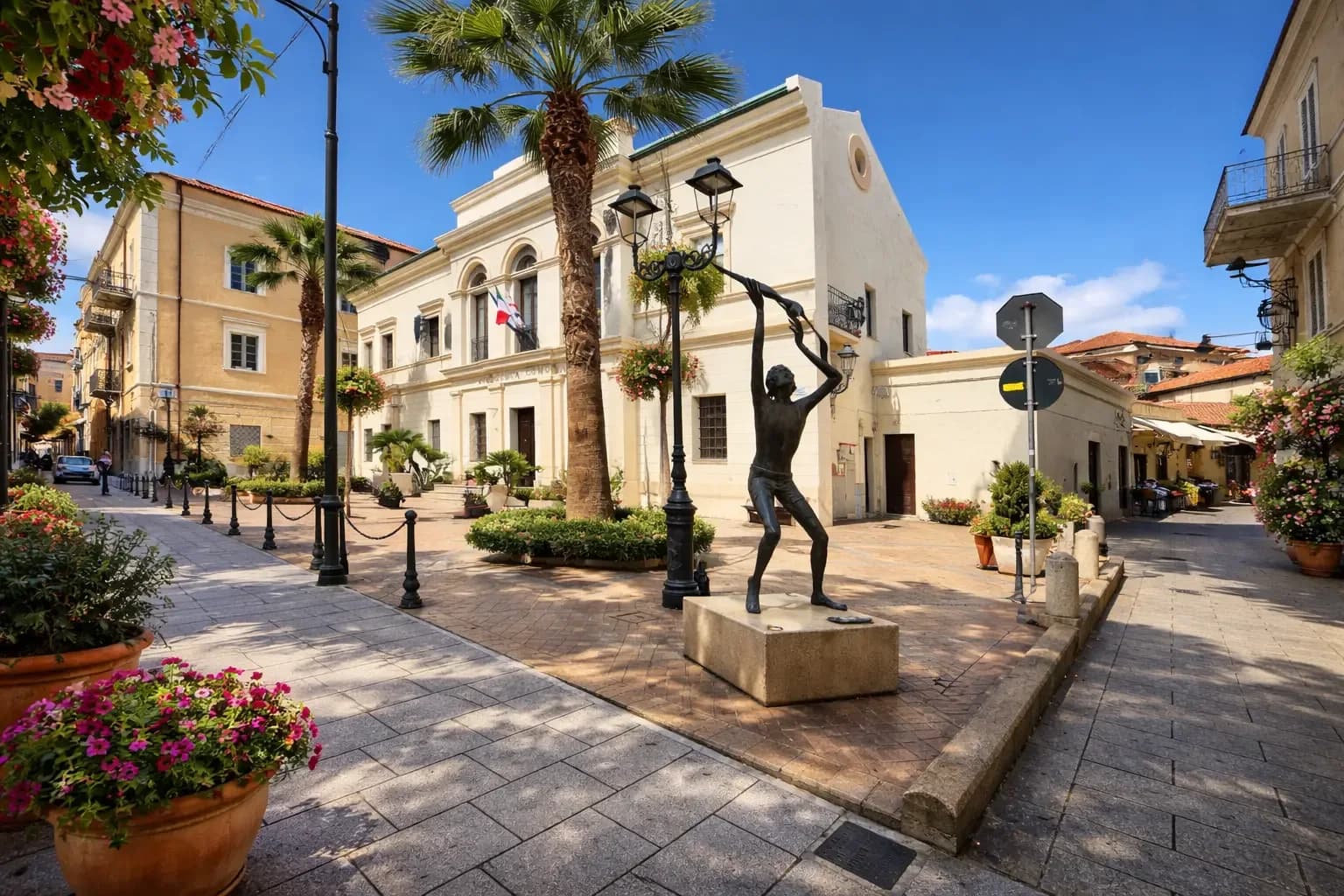
Corso Umberto I is the main street of the old town, lined with cafés and shops. Look for the Roman paving at the Via Dante junction, then find the nearby Chiesa di San Paolo, a Baroque church with a dome of iridescent majolica tiles.
Basilica di San Simplicio
The Basilica di San Simplicio was built in local granite between the late 11th and early 12th century for the Giudici of Gallura. It stands on a hill that was once outside the walls, over a Punic and Roman necropolis of about 450 tombs. SardegnaTurismo calls it the best-preserved basilica in Sardinia.
Museo Archeologico and the Roman ships
The archaeological museum stands on the Peddone islet, facing the old port. Its ground floor shows original parts of Roman ships and full reconstructions of two wrecks sunk by the Vandals. Upstairs covers prehistory, the Nuragic period and the imperial city. The Comune sets opening hours and tickets, so check current times before you go.
The waterfront and the flamingos
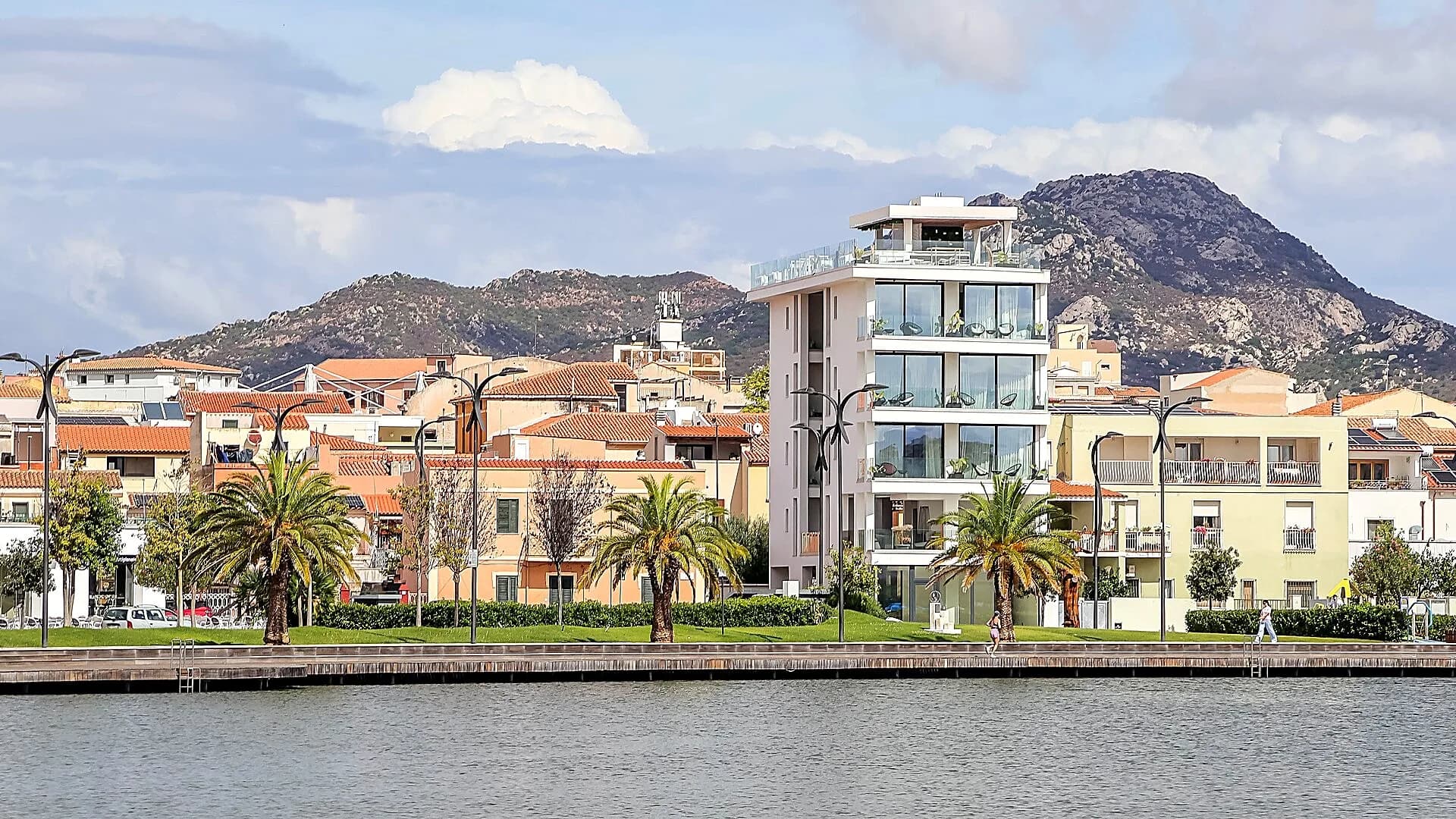
The seafront along the old port is where Olbia takes its evening walk. Our easy day plan for the Olbia waterfront covers the route, the art and the best stops.
South of the centre, the Padrongianus river park and its ponds draw wading birds. In February 2026 a rare black stork was recorded there, sharing the ponds with flamingos and great white herons. Our guide to when and where to see flamingos in Olbia has the viewing spots.
Olbia town beaches
Olbia has no beach in the centre, but several lie within a short drive. Times below are approximate drive times from the town centre.
- Pittulongu (about 10 minutes): a long half-moon of fine white sand facing Tavolara, about 8 km from town, with shallow water, parking and rentals. See our Pittulongu local guide and tips.
- Mare e Rocce: just north of Pittulongu.
- Bados (about 15 minutes): on the border with Golfo Aranci.
- Porto Istana (15 to 20 minutes): four coves separated by low rocks, with fine white sand that shelves gently, which makes it suitable for children. It marks the northern edge of the marine protected area.
What to eat in Olbia
Olbia's signature food is the mussel. Mussel farming in the gulf began in 1918, and the local consortium of 18 firms also farms oysters and clams, L'Unione Sarda reported in 2020. Golfo di Olbia mussels are sold from May to October.
- Cozze del Golfo: steamed, in pasta or as zuppa, ideally with a glass of Vermentino.
- Malloreddus: small ridged semolina gnocchetti, listed by the Italian agriculture ministry as a traditional Sardinian product.
- Vermentino di Gallura: Gallura's white wine and the only DOCG wine in Sardinia.
- Fregola: toasted semolina pasta, another listed traditional product, often cooked with clams or mussels.
Day trips from Olbia
- Tavolara: a limestone and granite island 560 m high and 4 km long. Boats leave from Loiri Porto San Paolo, and some private boats run from Olbia and Golfo Aranci, says SardegnaTurismo's Tavolara page.
- Capo Coda Cavallo: the headland that gives its name to the Tavolara Punta Coda Cavallo marine protected area, which covers 15,357 hectares of sea.
- San Pantaleo: a granite village in Olbia's territory, known for artists and a market on spring and summer Thursdays.
- Costa Smeralda: 34 km from the airport, for Porto Cervo and the beaches of Arzachena.
- La Maddalena: drive 44 km to Palau, then take the 20-minute ferry into the national park archipelago.
Festa di San Simplicio
Olbia's biggest festival honours its patron, martyred on 15 May 304. In 2026 the Festa di San Simplicio ran from 12 to 17 May. On 15 May a parade with the bishop and the town band leaves Piazza Santa Croce at 10:00 for the basilica, the procession with bands and folk groups follows at 18:00, and a mussel festival and the Palio della Stella horse race fill the weekend. Dates for 2027 had not been published on 25 October 2026. Our guide to the Festa di San Simplicio in Olbia explains what happens each day.
Getting around Olbia in 2026
- From the airport: urban bus lines 2 and 10 run to the railway station. A taxi to town costs at least €15 under the Comune's tariff. More options are in our Olbia airport guide.
- Trains: since 1 June 2026, all trains start and end at Olbia Terranova instead of Olbia's main station, because of extraordinary maintenance. The latest RFI notice keeps this in place until 12 December 2026.
- Driving: the old town around Corso Umberto is a camera-controlled limited traffic zone (ZTL). Park outside it and walk.
Olbia tourist tax 2026
Olbia charges its tourist tax all year, per person and per night, for up to seven consecutive nights. The 2026 rates were set by resolution 534 of the Giunta, the town's executive, on 13 November 2025 and published on the Comune's tourist tax portal.
- 5-star hotels and homes in cadastral class A/7 or above: €5.00.
- 4-star hotels: €4.50.
- 3-star hotels, holiday apartments, B&Bs and agriturismi: €3.50.
- 1 and 2-star hotels and campsites: €2.50.
- Stays booked and paid through an agreed short-let platform or agency: 5% of the price of the stay, up to €5.00 per person per night.
- Children under 16 and Olbia residents are exempt.
When to go and how many days
July and August are the peak. Across Sardinia they accounted for 10.4 million of the 21.9 million official overnight stays in 2025. May, June, September and October are calmer and still warm: Olbia's average daily maximum is 23.9°C in May and 23.3°C in October.
Two full days cover the old town, the basilica, the museum and a beach. Add one or two days for Tavolara, San Pantaleo or La Maddalena.
Local tips: what most guides get wrong
- "Olbia station" in 2026 means Olbia Terranova. Check your ticket and the RFI notice before you travel.
- The tourist tax is year-round. Unlike Arzachena or San Teodoro, Olbia does not limit it to summer.
- Mussels are seasonal. Fresh Golfo di Olbia mussels are on sale from May to October.
- Choose your beach by the wind. When the maestrale blows from the northwest, local sources list Pittulongu, Mare e Rocce and Porto Istana among the more sheltered beaches.
Sources: ENAC, Carta dei Servizi Olbia 2026 · AdSP del Mare di Sardegna, Porto di Olbia · SardegnaTurismo, Città romana di Olbia · SardegnaTurismo, San Simplicio · SardegnaTurismo, Porto Istana · SardegnaTurismo, Olbia · SardegnaTurismo, Tavolara · SardegnaTurismo, Festa di San Simplicio · RFI, infomobilità notice · Comune di Olbia, imposta di soggiorno
Photo credits: The palm-lined Lungomare di Olbia, the town's waterfront promenade, with the hills behind the town (Dr. Thomas Liptak, CC BY-SA 4.0, via Wikimedia Commons); White sand and clear shallow water at Porto Istana, south of Olbia, with Tavolara on the horizon (Luisella Pala, CC BY-SA 4.0, via Wikimedia Commons); Tavolara seen from Porto San Paolo, the usual departure point for boats to the island (Terragio67, CC BY-SA 4.0, via Wikimedia Commons); The granite west front of the Basilica di San Simplicio in Olbia, built between the late 11th and early 12th century (Sailko, CC BY-SA 4.0, via Wikimedia Commons); Café tables on Corso Umberto I, the main street of Olbia's old town, which lies inside a camera-controlled limited traffic zone (Dr. Thomas Liptak, CC BY-SA 4.0, via Wikimedia Commons). Fact sheet and chart: Sardinia Blog, from the sources listed above.
Choosing where to stay in Olbia? Rental12, a holiday-rental company based in Olbia, compares the old town, Pittulongu, the Aldo Moro district and Golfo Aranci in Where to stay in Olbia. It is a company guide, not independent research.