
Last updated: November 26, 2026.
Castello di Pedres is a ruined medieval castle on a granite rock about five kilometres south of Olbia. The rock is about 140 metres above sea level according to Sardegna Turismo, and the keep looks out over the plain of Olbia, the port and the distant sea. Before 2025 a short walk among wild olives and granite took you to the top. Today you can only see it from below.
Closed to visitors as of November 2026. On 13 August 2025 the mayor of Olbia issued an order banning access to the castle, after the Soprintendenza reported cracks at the top of the keep, according to L'Unione Sarda and La Nuova Sardegna. The ban stays in force until the structure is made safe. The city's Hello Olbia tourism site still carried the no-access notice when we last checked, and we found no announcement of a reopening. Do not go up to the ruins while the ban is in place.
Castello di Pedres at a glance
- Where: on a granite rock about 5 km south of Olbia, off the SP 24 towards Loiri
- What: the ruins of a medieval castle with a square keep, a double wall and an underground cistern
- Built: between 1296 and 1322 according to Sardegna Cultura, by the Visconti of Pisa
- Status: closed by mayoral order since 13 August 2025, no reopening date announced
- Before the closure: free, open at all hours, a walk of 5 to 10 minutes each way
- Nearby: the Bronze Age Tomb of the Giants Su Monte 'e s'Abe, about 300 metres to the west
What the castle is
Sardegna Turismo calls Castello di Pedres one of the symbols of Olbia and, with the Basilica of San Simplicio, one of the city's most important medieval monuments. In the Middle Ages it defended the Giudicato of Gallura, one of the four kingdoms into which Sardinia was then divided.
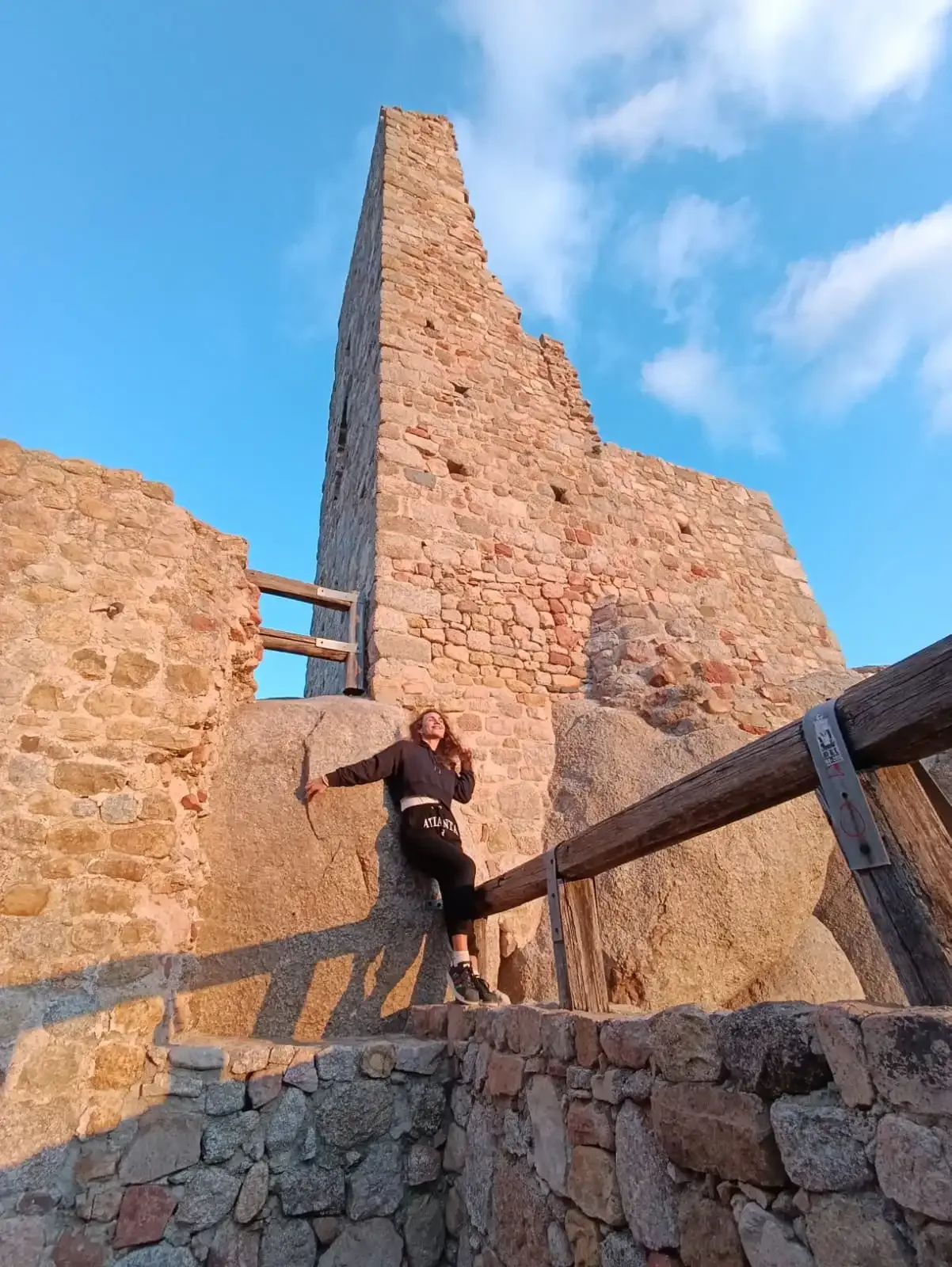
What survives is a ruin. The keep is square in plan and about ten metres high, with two of its original four floors left, and there is an underground cistern. The castle had a double wall: the outer one enclosed a fortified area where the garrison was probably housed, the inner one protected the keep. Halfway up the hill are the remains of a small watchtower from the same period, and on the summit a much later building from the Second World War, which Sardegna Turismo says may have been an anti-aircraft post, a casemate or a store. Sardegna Cultura describes the hill as covered with olive trees and dotted with natural cavities in the granite.
A brief history
Sardegna Cultura dates the castle to between 1296 and 1322 and attributes it to the Visconti, the family from Pisa that ruled the Giudicato of Gallura for most of the 13th century. Sardegna Turismo puts it more loosely, saying the castle is assumed to have been built in the 13th century under the Visconti. Both agree it was wanted for its strategic position above the plain of Olbia.
Little is recorded after that. In 1339 the castellan was a friar of the Hospitallers of Saint John of Jerusalem. Between 1355 and the end of the century the castle passed back and forth between the Aragonese and the Giudicato of Arborea, and it was abandoned for good at the beginning of the 15th century. The name may come from Villa Petresa, a medieval village nearby that has since disappeared.
Why it is closed, and since when
Until August 2025 the castle was open at all hours, free of charge, and people walked up to the top. On 13 August 2025 the mayor signed an order banning access with immediate effect. La Nuova Sardegna quotes the order: the Soprintendenza had received reports of cracks at the top of the keep, and access was banned to protect public safety. L'Unione Sarda reported that the order stays in force until the building is fully secured.
When we last checked, in November 2026, we found no report of works being completed and no reopening date. The notice on Hello Olbia says only that the area will stay closed until the safety works are finished. If that changes, we will update this page.
How the visit worked before the closure
We walked up before the ban, and this is what the visit was like. From the small parking area below the hill, granite steps wound between wild olive trees and sculpted rock cavities. In a few minutes you rose above the countryside, with every turn revealing a wider panorama, until the weathered walls of the castle came into view: courtyards on two terraces linked by a granite stair, the base of the keep and thick curtain walls. In the late afternoon the granite warmed to honey tones, and on clear days you could see across the city to the Gulf of Olbia. The ground was uneven, with no handrails, so it was never suitable for wheelchairs or strollers.
Children loved it: knights, lookouts and a treasure hunt for lichen colours and wild olive leaves. If the castle reopens, the same rules will apply: stay on the paths, keep away from the edges and do not climb the walls.
What you can still see without going in
The castle is visible from a distance. Sardegna Cultura notes that it dominates the whole southern part of the Olbia basin and that, seen from the north, it still looks powerful despite the collapses. So you can pick out the keep on its rock from the plain south of the city without going near it.
Hello Olbia gives the route by car: from Olbia take the SP 24 towards Loiri, turn right at km 3.3 into Via Castello Pedrese and continue for about two kilometres to a parking area. Two short paths start there, one to the castle and one to the Tomb of the Giants. The path to the castle is the one the ban covers. Respect any barrier or sign you find and do not climb to the ruins. The photos on this page were taken before the closure.
The Tomb of the Giants Su Monte 'e s'Abe
About 300 metres west of the castle, according to Sardegna Turismo, is the Tomba dei Giganti Su Monte 'e s'Abe, a Bronze Age collective tomb. It was built in two phases: first as a gallery grave in the Early Bronze Age (1800 to 1600 BC), then turned into a Giants' Tomb with a semicircular forecourt, a corridor and a burial chamber. Sardegna Cultura gives the length of the tomb body as 28.30 metres and counts it among the longest found on the island.
The newspaper reports of the closure speak only of the castle, and Hello Olbia describes the tomb as reached by its own path from the parking area. We could not confirm from an official page whether the tomb is open as of November 2026, so check with the Olbia tourist office before you make the trip for it.
What else to see nearby
- Olbia's old town: the Romanesque Basilica of San Simplicio, cafés, wine bars and the Archaeological Museum on a small island next to the port; start with our Olbia guide
- Nuragic sites: the nuraghe Riu Mulinu above Olbia, described in our Cabu Abbas walk, and the sacred well of Sa Testa, covered in our Marina di Olbia day plan
- Tavolara: beaches and boat trips in the marine protected area, see our Tavolara guide
- Wine: a Vermentino di Gallura tasting at Tenute Olbios, close to the city
If you are planning a stay in the area, Rental12, a holiday-rental company in Olbia that shares an owner with Sardinia Blog, lets its own homes in Olbia and Golfo Aranci.
Sources: Sardegna Turismo, Castle of Pedres; Sardegna Cultura, Castello di Pedres; L'Unione Sarda, 13 August 2025; La Nuova Sardegna, 13 August 2025; Hello Olbia, Monumenti; Sardegna Turismo, Giants' tomb of Mont'e s'Abe; Sardegna Cultura, Tomba di giganti Su Monte de s'Ape.