
Cabras is worth a stop for three things that sit side by side here: a 2,200-hectare lagoon that still feeds a traditional mullet fishery, the bottarga made from that mullet, and the Museo Civico Giovanni Marongiu, which since April 2026 holds the entire Mont'e Prama statue group. The town of about 8,700 people sits 8 km from Oristano and is the gateway to the Sinis peninsula, with its quartz-grain beaches, the ruins of Tharros and a marine protected area.
Where: west coast, province of Oristano, at the head of the Sinis peninsula
Population: 8,726 residents at 1 January 2026 (ISTAT estimate)
Lagoon: Stagno di Cabras, about 2,200 ha in two basins, part of a Ramsar wetland
Museum: Via Tharros 121; from 1 November to 31 March, Tuesday to Sunday 10:00 to 18:00
Big event: Corsa degli Scalzi, usually the first weekend of September (5 and 6 September in 2026)
Beach rule: taking sand, quartz grains or shells costs €500 to €3,000
Is Cabras worth visiting?
Yes, if you want more than a beach. In one day you can see Iron Age stone sculpture in the museum, eat mullet and bottarga caught in the lagoon behind the town, and swim at Is Arutas or Mari Ermi in the afternoon. Cabras itself is a working fishing town on the lagoon shore, not a resort. Most visitors base themselves here or in Oristano and drive out to the Sinis coast: Is Arutas is about 14 km from town.
The Cabras lagoon (Stagno di Cabras)
The Stagno di Cabras covers about 2,200 hectares in two basins and takes up a fifth of the municipality, according to SardegnaTurismo, the regional tourism board. It is the largest lagoon in central-western Sardinia. Together with the Mistras, Pauli 'e Sali and Sale 'e Porcus wetlands it forms a site of international importance under the Ramsar Convention. The Ramsar register lists the Stagno di Cábras as site number 178, designated on 28 March 1979.
Flamingos, mallards and red-crested pochards nest here, and purple swamphens move through the reeds. The lagoon is also a fishery. Traditional fishing is still done from fassonis (fassoni in Italian), boats of woven marsh reed, and the Pontis fish works (Mar'e Pontis) is more than four centuries old.
Mullet fishing and bottarga di Cabras
Young grey mullet swim into the lagoons of the Gulf of Oristano every spring. In summer they try to return to the sea, and the fishermen's barriers trap them in chambers called sos saigusu, once built of marsh reed. The roe-bearing females are caught by hand, gripped behind the gills so the egg sacs stay intact. The sacs are washed, salted and then air-dried for 4 to 15 days, according to the Slow Food Presidium sheet for Cabras bottarga.
The status of the product is often misreported:
Slow Food Presidium since May 2025: "Bottarga di muggine e pesca tradizionale dello Stagno di Cabras", awarded at Slow Fish in Genoa. Only the Consorzio Pontis fishermen use it.
Traditional product (PAT): "Bottarga di muggine" appears for Sardinia as no. 245 on the Ministry of Agriculture's 26th list of traditional food products. The listing covers the island, not Cabras alone.
No DOP or IGP: an IGP was announced in 2022 but never arrived, and there is no DOP.
For buying tips and label wording, see our guide to buying real bottarga di Cabras.
Museo Civico Giovanni Marongiu and the Mont'e Prama statues
The civic museum on Via Tharros opened in 1997 and covers the Sinis from prehistory to the Middle Ages. Since April 2026 the entire statue group has been on show in Cabras, the National Archaeological Museum of Cagliari confirms, so you no longer need to visit Cagliari to see the full set.
The key facts, from the same Ministry of Culture page:
The statues date from 900 to 700 BC and are the only Nuragic stone statuary found in Sardinia so far.
A plough turned up the first fragments in 1974 on the Mont'e Prama hill, west of the lagoon.
Digs in the 1970s recovered more than 5,000 fragments, later reassembled into 38 statues at the Li Punti restoration centre.
Many figures are up to two metres tall, which is why they are called "giants", a label the Ministry calls incorrect.
Opening hours: the regional culture portal Sardegna Cultura (updated 16 October 2026) lists April to October daily 10:00 to 19:00, and November to March Tuesday to Sunday 10:00 to 18:00. The museum is closed on 25 December and 1 January. Tickets: the Fondazione Mont'e Prama visitor page listed €12 full price (ages 18 to 64), €8 reduced and €6 for school groups and under-18s on 30 October 2026. A combined ticket with Tharros costs €15, or €17 with the Torre di San Giovanni as well. Residents of Cabras and children under six enter free. The museum opens on Monday 2 November and Monday 7 December 2026 despite the winter Monday closure.
Sinis beaches: Is Arutas and Mari Ermi
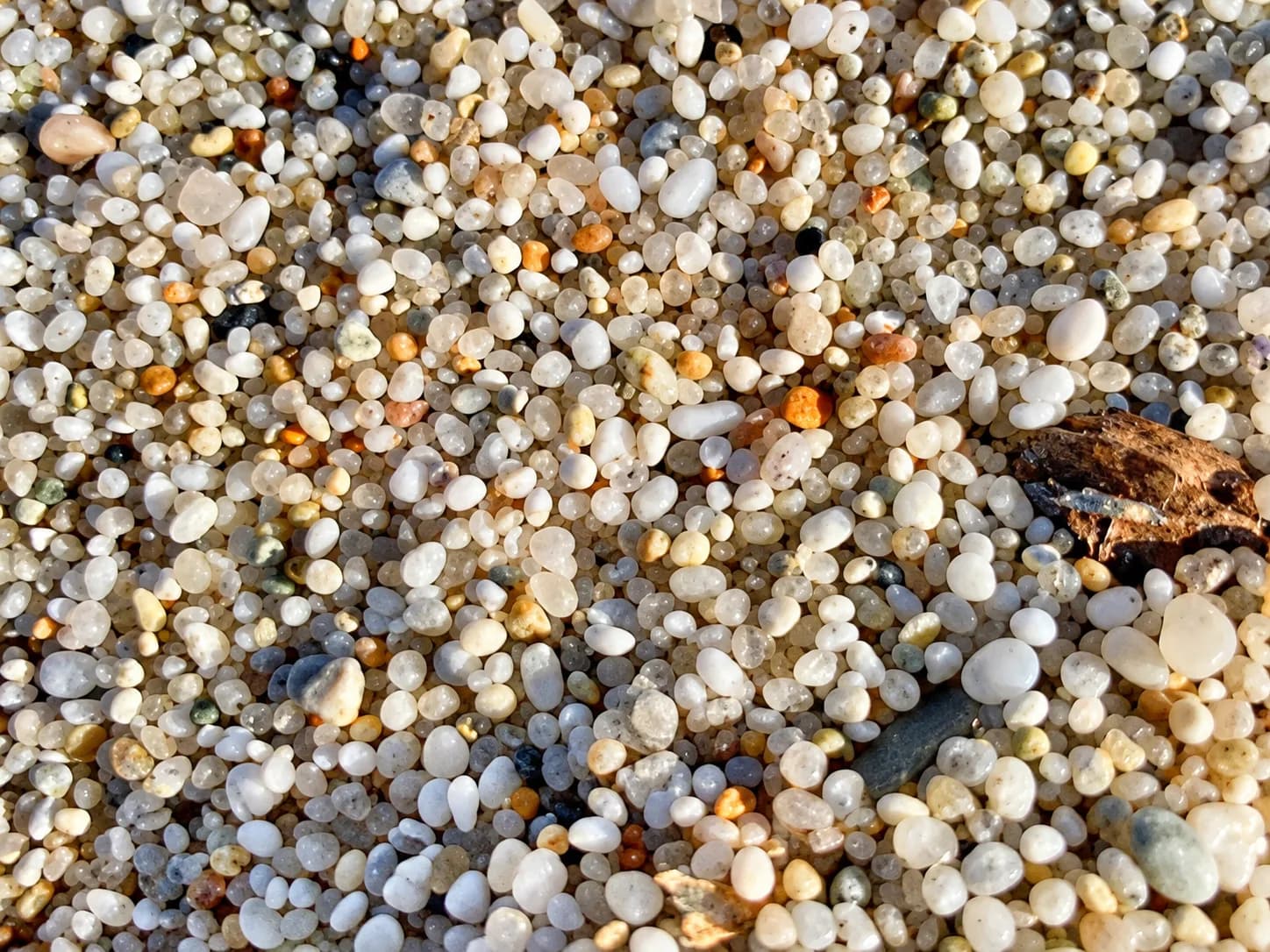
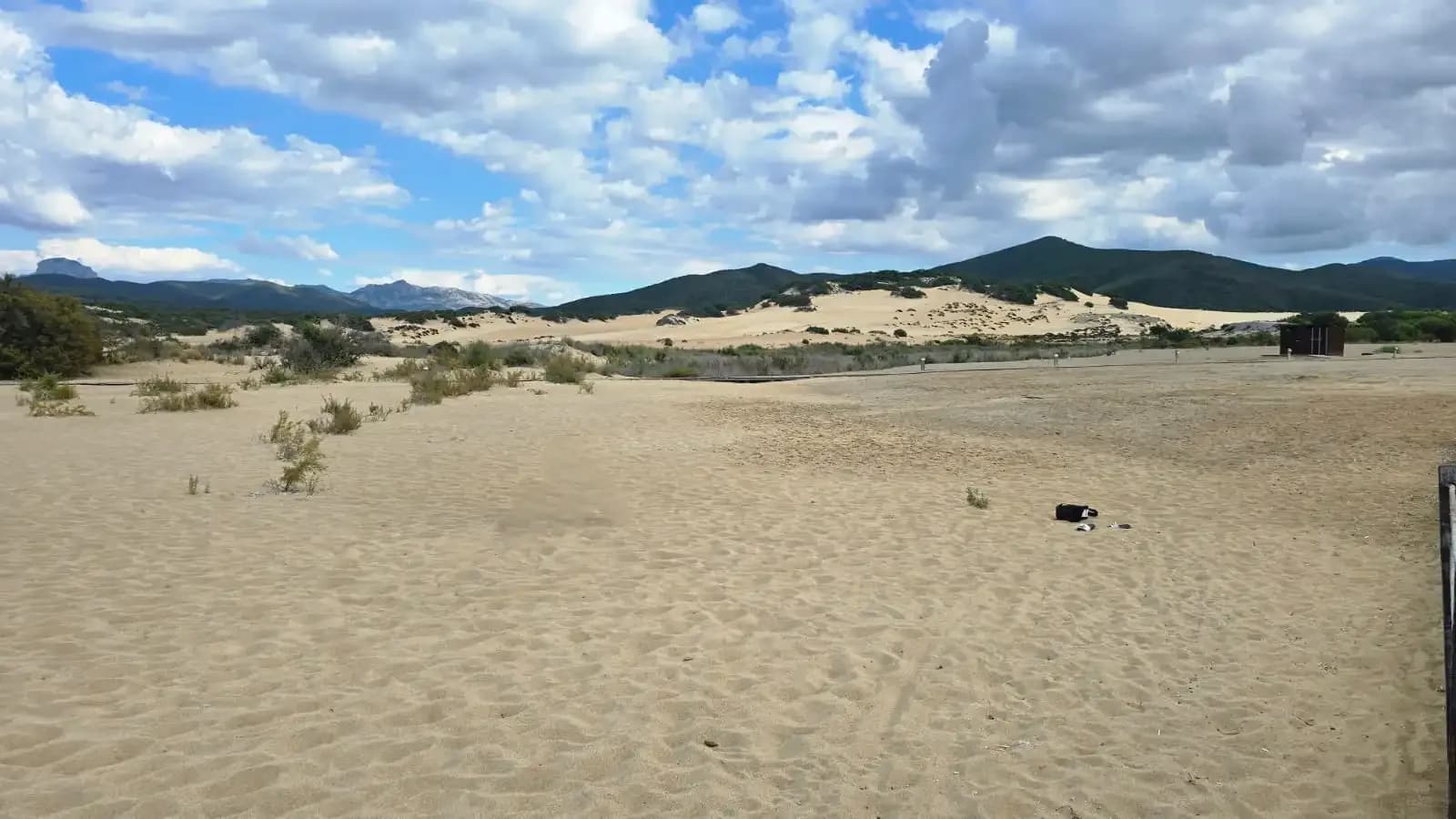
Is Arutas, about 14 km from Cabras, is made of small rounded quartz grains in white, pink and green, which is why locals call it the "rice grain" beach. The water gets deep a few metres from the shore, which suits snorkelling more than toddlers. Next door, Mari Ermi runs for 2.5 km, mixes golden sand with quartz and shelves gently, so it is the better pick for families. Both lie inside the marine protected area. Our Is Arutas beach guide has more on the beach itself.
Leave every grain where it is. Under regional law 16 of 2017, article 40, removing, keeping or selling even small amounts of sand, pebbles, stones or shells from the coast is fined €500 to €3,000, as the Regione Sardegna beach rules repeat each summer.
Tharros, San Giovanni di Sinis and the marine protected area
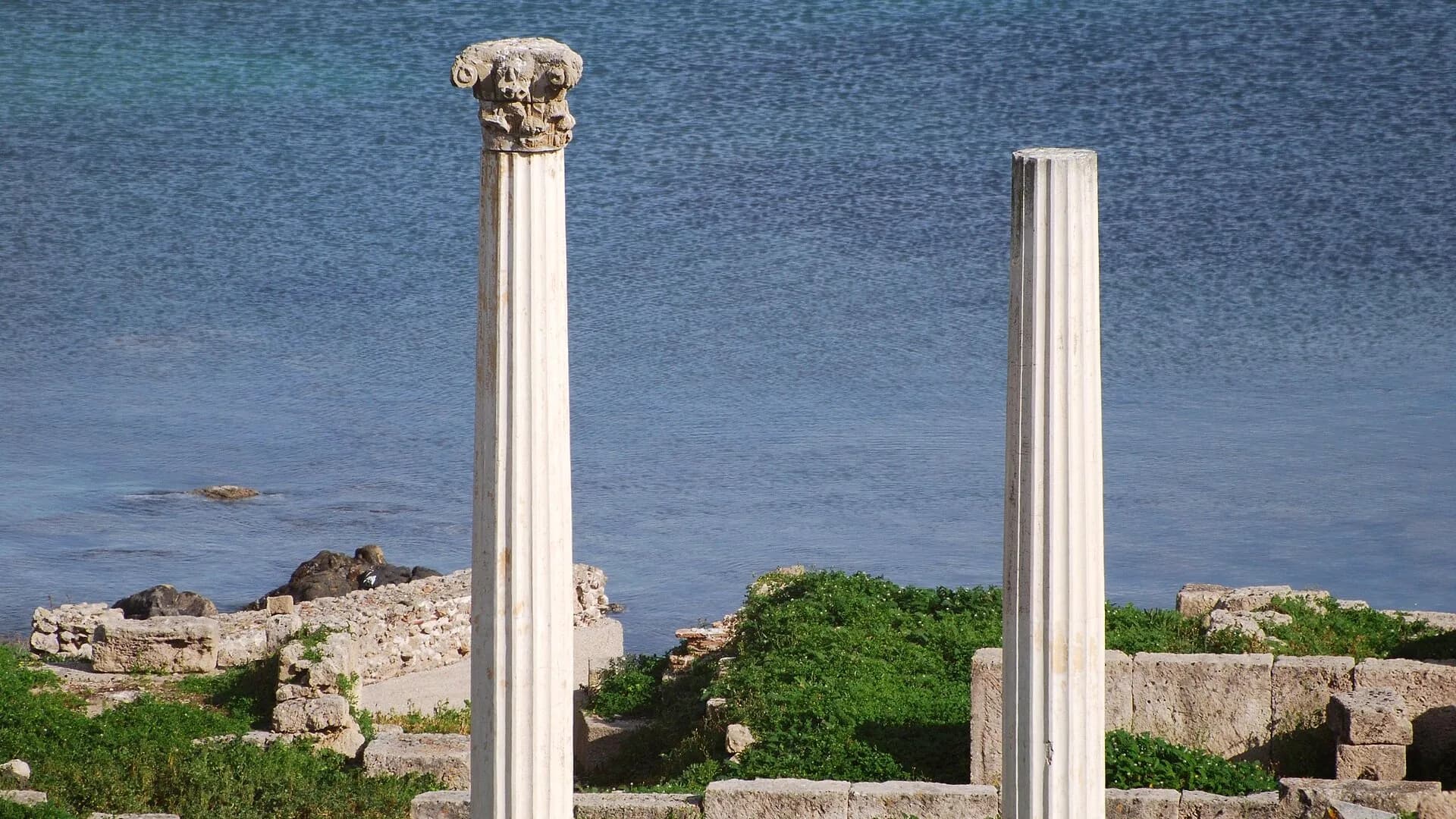
At the southern tip of the peninsula, Tharros was founded by the Phoenicians in the 8th century BC over a Nuragic village, then became Punic, Roman and Byzantine. The village of San Giovanni di Sinis below it has a beach of about 2 km, a small palaeo-Christian church dating from the 5th century and a Spanish watchtower built between 1580 and 1610. From November to March Tharros opens 09:00 to 17:00 (last entry 16:15), closed on Mondays, and a single ticket costs €10, according to the Fondazione Mont'e Prama.
The sea off Cabras belongs to the Area Marina Protetta Penisola del Sinis, Isola di Mal di Ventre, created by a Ministry of the Environment decree of 12 December 1997. Mal di Ventre, a pink granite island 10 km offshore, is the core of Zone A, the strict reserve. Rules for diving, fishing and anchoring differ by zone, so read them before taking a boat out.
The Corsa degli Scalzi in September
The Corsa degli Scalzi (barefoot race) is the big date in the Cabras calendar. About 900 men in white robes run barefoot for 7 km, carrying the statue of San Salvatore from the church of Santa Maria Assunta in Cabras to the village of San Salvatore di Sinis, and back the next day. The tradition goes back to the 17th century. In 2026 it ran on Saturday 5 and Sunday 6 September, according to the Comune di Cabras traffic ordinance. San Salvatore, 9 km from town, is otherwise almost empty. Between 1967 and 1990 its low houses served as a set for spaghetti westerns.
When to go
The museum is open all year, so Cabras works in winter too. For swimming, the sea off Is Arutas averaged about 25°C in August and still 22°C in October in 2023 to 2025, but fell below 20°C in November. Daytime highs in Cabras average about 30°C in July and August and 22°C in October. July and August get almost no rain; November and December are the wettest months. Early September combines warm water with the Corsa degli Scalzi.
How to get there
From Oristano: about 8 km, around 11 minutes by car.
From Cagliari Elmas airport: about 97 km via the SS131, roughly 1 hour 30 minutes.
From Alghero airport: about 113 km, just over 2 hours.
From Olbia airport: about 173 km, around 2 hours 35 minutes.
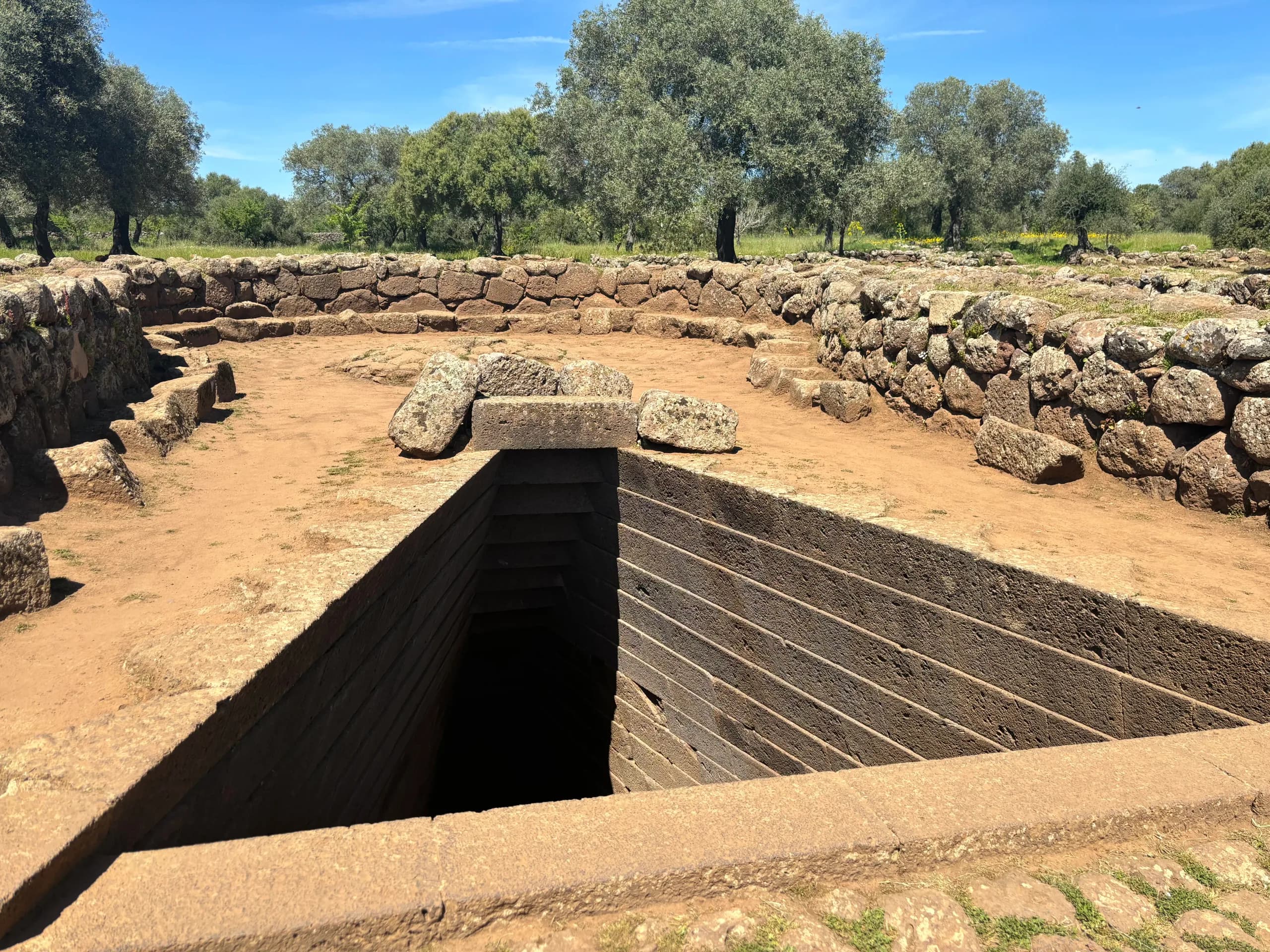
The beaches, Tharros and San Salvatore are spread across the peninsula, so a car or bike is the practical choice. Inland, the Nuragic well temple at Pozzo di Santa Cristina near Paulilatino is an easy inland add-on from Cabras.
What most guides get wrong
"Half the giants are in Cagliari." Not since April 2026. Even some official pages still say only six statues are in Cabras; the Ministry of Culture now states the whole group is there.
"Bottarga di Cabras is DOP." It has no DOP or IGP. It is a Slow Food Presidium and a listed traditional product.
"The museum is closed on Mondays." Only from November to March. From April to October it opens every day.
"A handful of quartz is a harmless souvenir." It can cost a fine of €500 to €3,000, and the rule covers every beach on the island.
Planning meals around the lagoon? Rental12, a holiday-rental company in Olbia that shares an owner with Sardinia Blog, covers Sardinian food more broadly, including bottarga from the Cabras lagoon, in Sardinian Food: 12 Traditional Dishes, Wine & Blue Zone. It is a company guide, not independent research.
Sources: Museo Archeologico Nazionale di Cagliari, Mont'e Prama · Sardegna Cultura, Museo Civico Giovanni Marongiu · SardegnaTurismo, Stagno di Cabras · Fondazione Slow Food, Cabras bottarga Presidium · Masaf, 26th list of traditional products · SardegnaTurismo, Is Arutas · Regione Sardegna, beach rules · AMP Penisola del Sinis · Comune di Cabras, ordinance 76/2026 · Fondazione Mont'e Prama, hours and tickets
Photo credits: The Stagno di Cabras seen across the reeds, with the town and the church of Santa Maria Assunta on the far shore (Gianni Careddu, CC BY-SA 4.0, via Wikimedia Commons); Is Arutas on a summer day, with its quartz-grain shore, clear water and eroded sandstone rocks (Panoramio user fadda domenico, CC BY-SA 3.0, via Wikimedia Commons); The two columns of Tharros stand above the sea at the southern tip of the Sinis peninsula (Gloriamusa, CC BY-SA 3.0, via Wikimedia Commons); Fishermen row two small boats across the Stagno di Cabras at dusk (Rita Puddu, CC BY-SA 4.0, via Wikimedia Commons); A handful of the rounded quartz grains of Is Arutas, which by law must stay on the beach (Redef87, CC BY-SA 4.0, via Wikimedia Commons). Fact sheet and chart: Sardinia Blog, from the sources listed above.