
There are beautiful beaches in Sardinia. And then there is Is Arutas.
At first glance, the water looks like the usual Sardinian dream: bright turquoise, remarkably clear, stretching out towards the horizon. Then you look down, and you realise the beach beneath your feet isn’t really made of sand at all. Is Arutas is one of the most unusual beaches on the island, where tiny rounded quartz grains cover the shore like a giant bowl of rice. The colours shift from bright white to soft pink, grey and pale green, and the whole scene can look almost artificially enhanced. It isn’t. This is the real thing.
Where Is Arutas Sits on the Sinis Peninsula
Is Arutas lies on the Sinis Peninsula, on Sardinia’s western coast, within the territory of Cabras in the Province of Oristano. It is around 14 kilometres from the town of Cabras itself and sits inside the protected marine area of the Sinis Peninsula, which helps explain why the landscape feels so untouched.
The easiest way to reach it is by car. The final stretch of the drive passes through open countryside and rocky coast, with none of the resort polish you find in parts of the Costa Smeralda further north. That is a large part of the appeal: you park, walk towards the sea, and the beach simply appears in front of you. Since there is no simple public transport link out to this part of the Sinis, most visitors arrive self-driven. Booking a car in advance through a service like our Rental12 ecosystem makes the logistics straightforward, particularly if you plan to combine Is Arutas with Tharros or the nearby beaches in a single day on the Sinis.
The Beach Made of “Rice Grains”
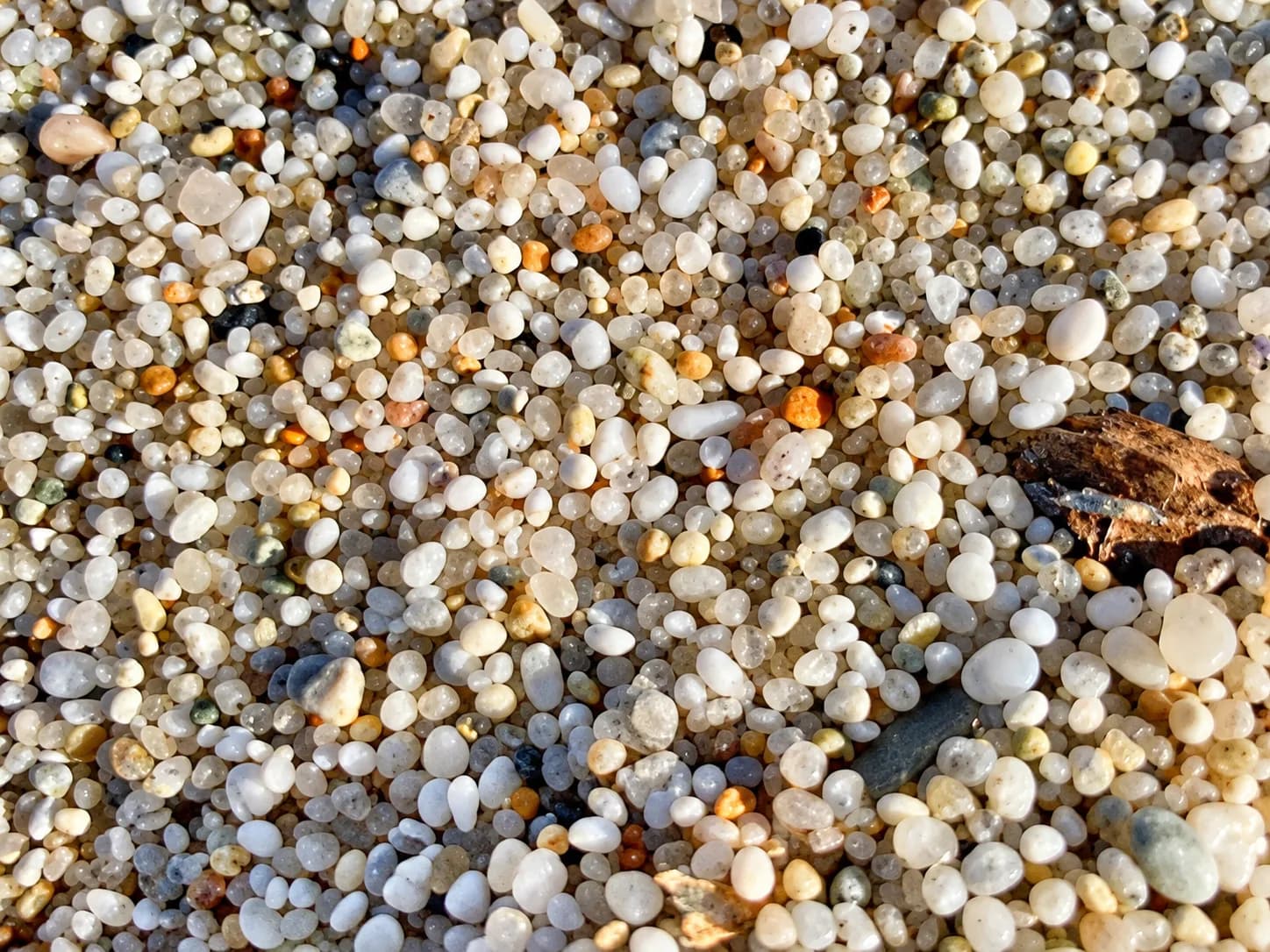
This is the reason everyone comes to Is Arutas. Instead of fine golden sand, the shore is covered with thousands of tiny, smooth quartz grains, rounded over time by the action of the sea and coloured in shades of white, pink and green. From a distance they almost look like coarse white sand. Get closer and the difference becomes obvious: it feels more like walking across a carpet of tiny polished stones than a conventional beach. The resemblance to rice is close enough that Is Arutas is often simply called the “rice-grain beach”.
How SardegnaTurismo Describes It
The official Sardinian tourism board sums up the setting well.
A half-moon of colourful quartz fragments surrounded by rocky cliffs and clear turquoise water.
You can read more about the Sinis coast on SardegnaTurismo, which also covers the wider protected area the beach sits within.
Don’t Take the Quartz Home
This is probably the single most important thing to know before you visit. Don’t put the quartz in your pocket, not even one little grain. The quartz is part of the natural heritage of the beach, and removing it is prohibited. The issue became serious over the years as thousands of visitors took sand and stones away a handful at a time. In July 2026, the Municipality of Cabras reported the return of 40 kilograms of quartz that had been taken from Is Arutas years earlier by a family who had kept it at home.
So take photos. Take a ridiculous number of photos. Take a video. But leave the rice grains exactly where they are. Future you will still have the pictures; the beach needs the stones more than you do.
And the Sea?
The quartz is the star of the show, but the sea isn’t exactly playing a supporting role. The water around Is Arutas can be spectacular on a calm, sunny day, shifting from pale turquoise close to shore to deeper blue further out, while the rocky coastline gives the whole place a wild, natural feel. This isn’t one of those beaches lined with hotels and rows of beach clubs; it feels far more open, and far more Sardinian. When the wind drops, the combination of white quartz and turquoise water is genuinely hard to beat.
Is Arutas Isn’t Alone
One of the best things about visiting this part of Sardinia is that you don’t have to stop at a single beach. Nearby you’ll find Mari Ermi and Maimoni, two other beaches known for their own quartz-rich shorelines and slightly different colour tones. With a car, it’s easy to turn a trip to Is Arutas into a full day exploring the Sinis Peninsula.
There’s plenty more close by, too. You can combine the beaches with a visit to Tharros, the ancient archaeological site overlooking the sea, or spend time around Cabras itself. It’s a strong mix of beach, nature and history within a small area, which is fairly typical of what the Sinis does well.
What It’s Like to Visit
Is Arutas rewards a slower pace. Come early if you want a quieter experience, especially in summer. Walk along the shore. Swim. Sit on the quartz and watch the colours of the sea shift as the light changes. And spend a few minutes looking closely at the ground beneath you, because that is when you really understand why Is Arutas is different from everywhere else.
Practicalities to Check Before You Go
In summer, the municipality provides organised parking and basic beach services, though access and facilities can change through the season, so it’s worth checking the latest local information before travelling.
The Best Time to Visit Is Arutas
Summer is the most popular season, especially for swimming in the warmer, clearer water. But Is Arutas can feel even more atmospheric outside the busiest weeks. Spring and early autumn bring milder temperatures, fewer people and good light for photos. On a calm morning with little wind, the sea turns remarkably clear, the quartz looks brighter, and the beach feels almost unreal.
Remember that this is the west coast of Sardinia, so wind is part of the experience. The Sinis is known for its exposure to the Mistral, which is exactly why the area draws surfers, windsurfers and kitesurfers. If you’d like to understand how that wind shapes conditions across the island, our guide to the Mistral and Scirocco covers it in more detail.
Is Arutas: Worth Visiting?
Absolutely. Is Arutas isn’t the beach you visit because you want the softest sand in Sardinia. You come because there is something genuinely strange and beautiful about it: a beach made of tiny pieces of quartz, water that looks almost tropical, a wild stretch of the Sinis Peninsula, and thousands of little “rice grains” sparkling underfoot.
It’s one of those places where you don’t need much. A towel. A pair of sunglasses. Your phone. And, most importantly, empty pockets, because the best souvenir from Is Arutas is the memory, not the quartz.