
Last updated: November 26, 2026.
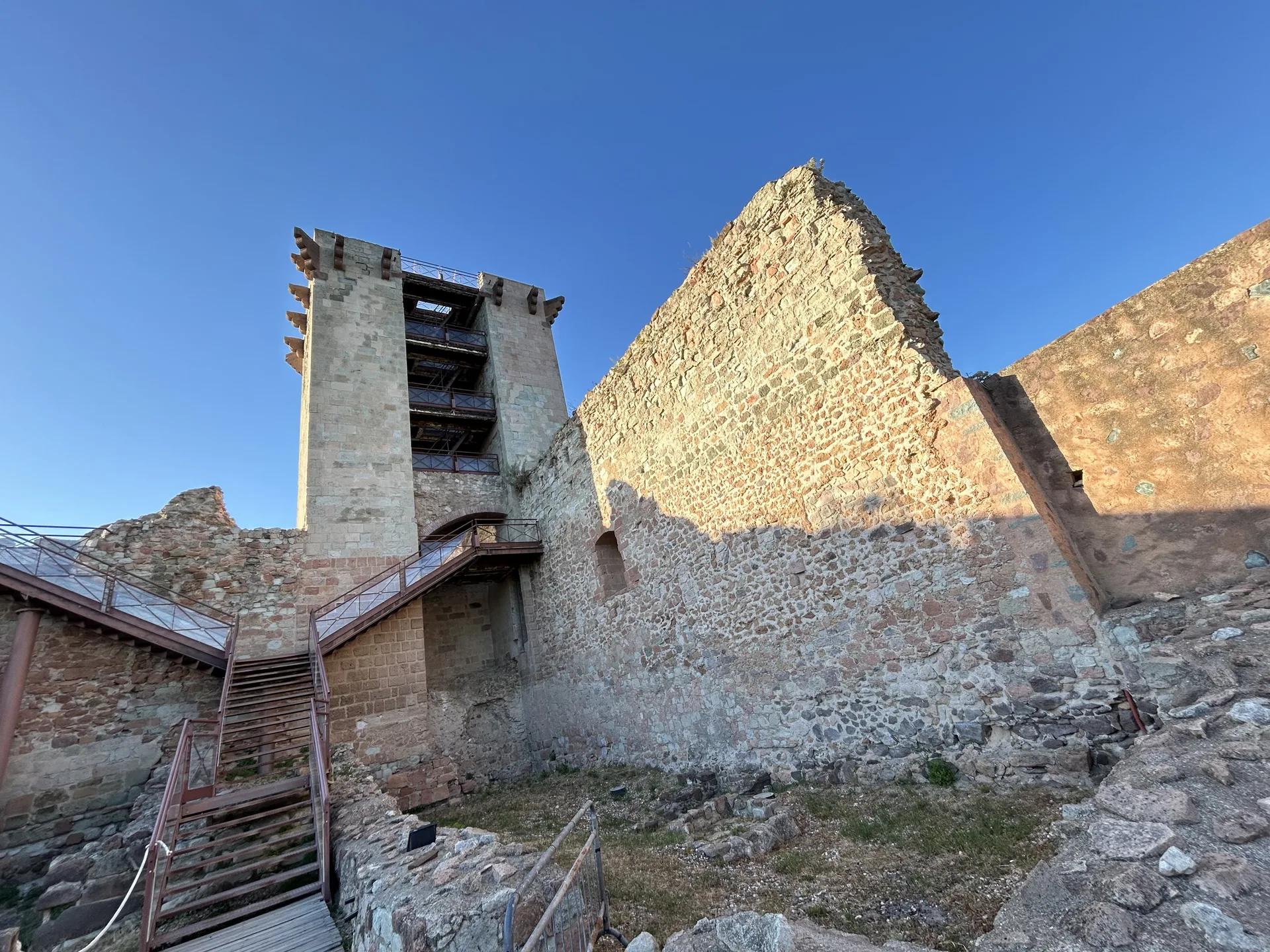
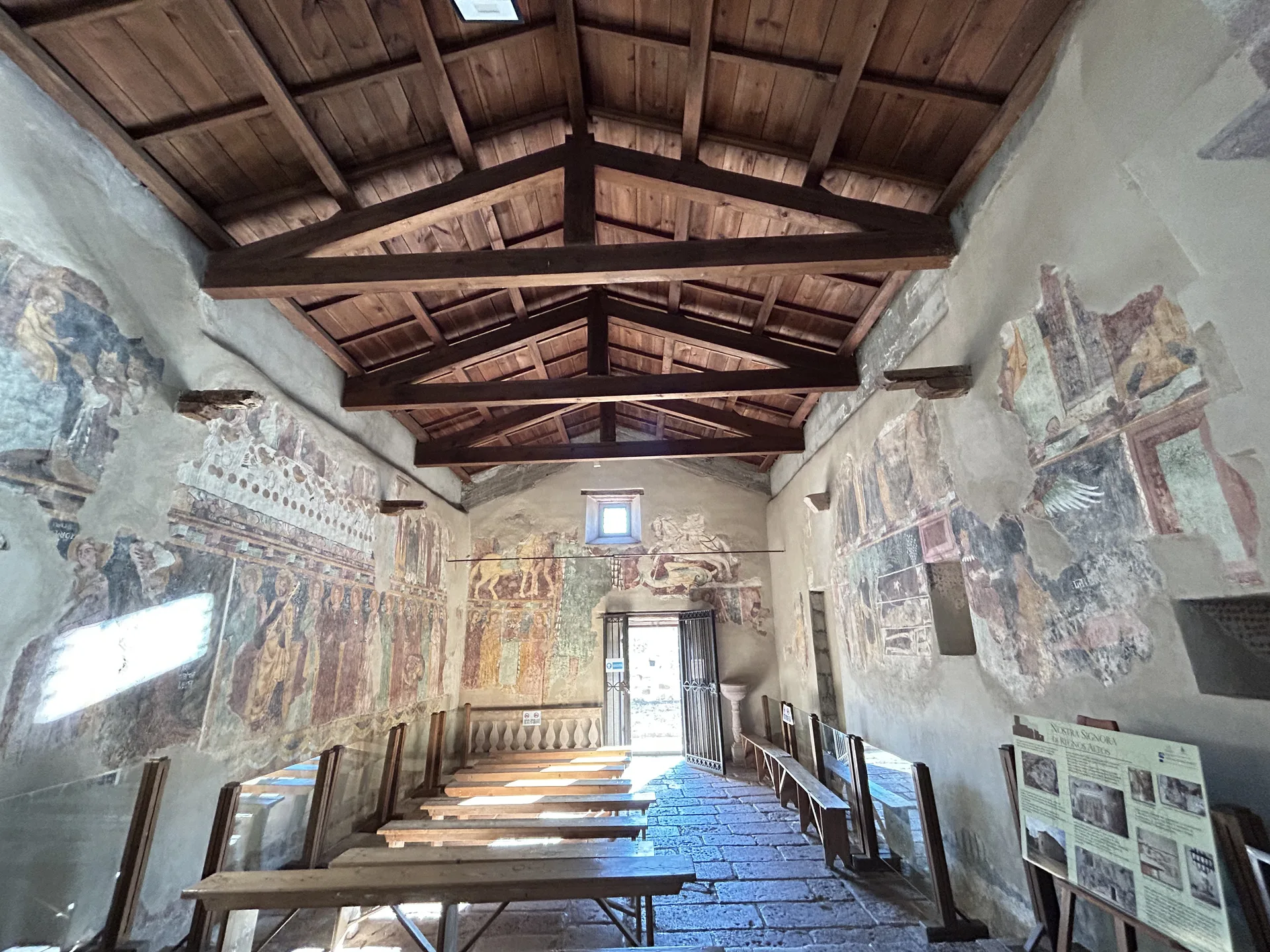
The Church of Our Lady ‘Regnos Altos’ (Nostra Signora de Sos Regnos Altos) is a small, plain chapel inside the walls of Malaspina Castle, on the hill of Serravalle in Bosa. Its modest exterior hides a cycle of 14th-century frescoes, uncovered in 1972-1973, including a scene of the Three Living and the Three Dead that is considered unique in Sardinia.
What to know before you go
- Where: inside the walls of Malaspina Castle, at the top of the Serravalle hill; the address given is Via Canonico Gavino Nino, Bosa.
- What it was: the palatine chapel of the fortress, the place of worship for the castle and the people who lived there.
- What to look for: the medieval frescoes, probably the work of a Tuscan workshop and dated to the 14th century.
- When to time it: the second weekend of September, when Bosa celebrates the festa of the Madonna.
- Opening times: every day from 15 March to 15 November (10:00 to 20:00 from July to October, 10:00 to 16:00 in November); from 16 November to 14 March, weekends and holidays only, 10:00 to 16:00
- Tickets: the chapel is visited with the castle ticket, €7 adults and €5 for ages 6 to 25; a €12 single ticket adds Museo Casa Deriu and the Museo delle Conce. Details on the official castle website, checked in November 2026.
A chapel inside the castle walls
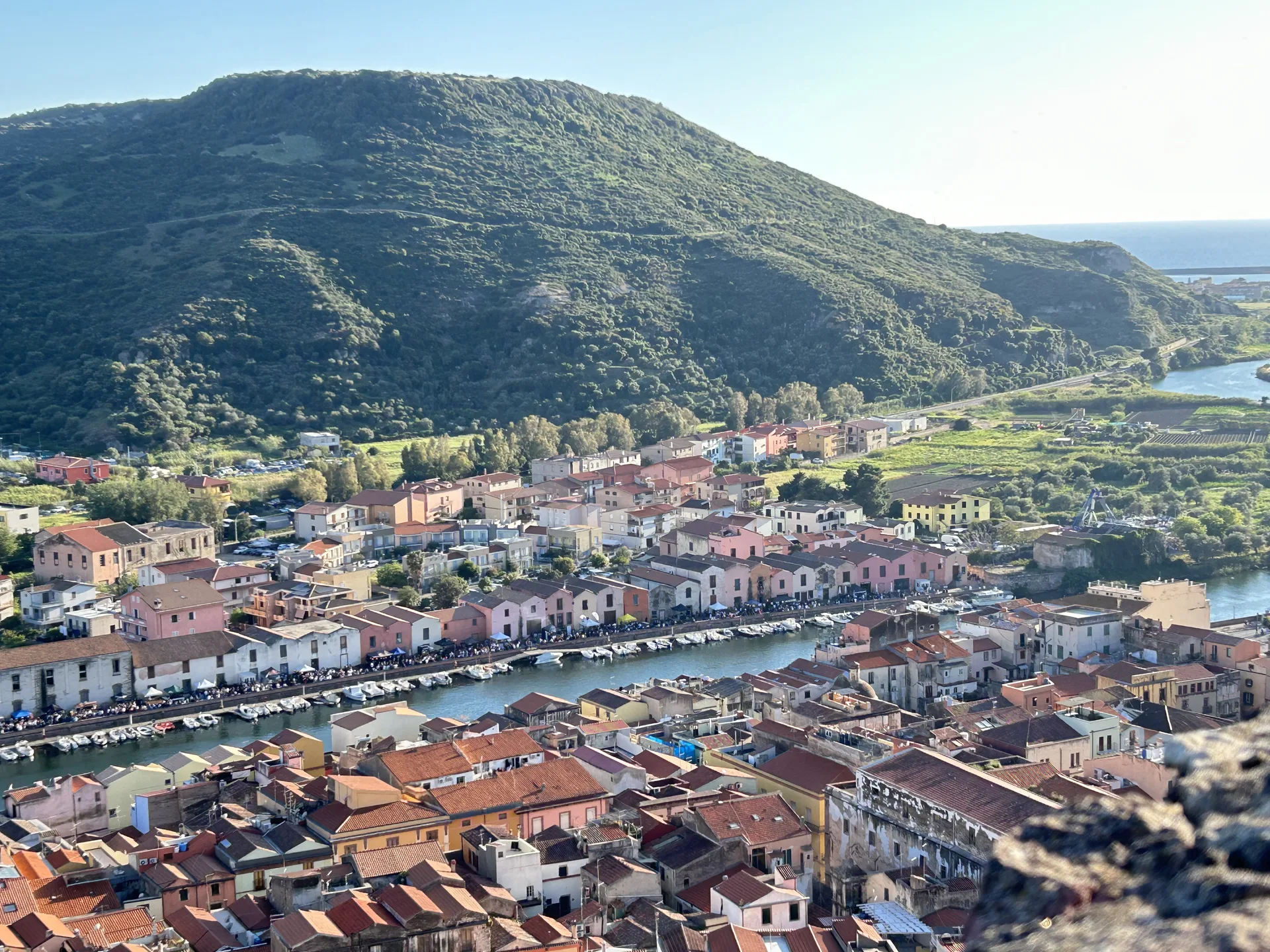
The walk up is part of the experience. You climb through the colourful lanes of Sa Costa, with Bosa opening out below you, and the church appears among the castle walls. If you are planning the rest of the day in town, our Bosa travel guide covers the river, the houses and the wine.
Nobody knows exactly when it was built. According to SardegnaTurismo, estimates range from the 12th to the 14th century, and the church was originally dedicated to Saint Andrew. In the late 19th century the nave was extended, which destroyed the original apse. The building itself is simple, a single nave with no striking decoration outside. The surprise is not outside but within.
The frescoes that were plastered over
For a long time nobody suspected what lay under the plaster. The paintings had been covered and forgotten until restoration work in 1972-1973 removed the plaster and brought medieval decoration back to light. It recovered an important part of Bosa’s artistic history, and the cycle is still counted among the more interesting medieval testimonies in Sardinia.
What the paintings show
The cycle is dated to the 14th century and attributed to Tuscan painters, probably brought to Bosa by Giovanni d'Arborea, brother of Mariano IV, according to SardegnaTurismo. The walls tell episodes from the life of Christ and show saints, both men and women. Among the scenes are:
- the Annunciation
- the Last Supper
- the Adoration of the Magi
- the Martyrdom of Saint Lawrence
- Saint George slaying the dragon
In the Middle Ages such images did more than decorate. They taught, carrying sacred stories to a congregation that often could not read. Think of it as an illustrated book painted on the walls.
The Three Living and the Three Dead
The scene that deserves the longest look is the Encounter of the Three Living and the Three Dead, a rare medieval theme and the only depiction of it in Sardinia. Three knights come across three corpses at different stages of decay. It is a blunt image even now, and the message was plain: wealth, beauty, power and privilege do not last. It is a medieval memento mori, and it is the detail that makes this small church of real historical interest.
The little statue and the September festa
The church is tied to popular devotion as well as to art. According to tradition, in 1847 a child found a small wooden statuette of the Madonna among the ruins of the castle. The devotion to Nostra Signora de Sos Regnos Altos grew from that find, and the statuette has been kept in a niche in the chapel since. Its arrival is why the church, once dedicated to Saint Andrew, took its present name.
Every year, on the second weekend of September, Bosa marks the occasion with a deeply felt festa. One of its most distinctive features is sos altarittos: small altars set up along the procession route and decorated with flowers, lace and fine filet work made by Bosa’s women. Faith, craft and community come together in them, and the festa shows how much this small place still matters to the town.
Making it part of a day in Bosa
Malaspina Castle is worth the climb for its towers, walls, legends and view alone, but the chapel shows a quieter side of it, closer to daily life, spirituality and the culture of the people who lived here. Please respect the no-photography signs inside the chapel, which protect the frescoes. If you are already on the west coast, the drive from Alghero to Bosa makes a natural way to arrive, and the nearby mural village of Tinnura suits the same trip. Planning transport, stays or a car for the area? Our Rental12 ecosystem is a place to start.
If your dates are flexible, aim for September. Seeing the frescoes is one thing; seeing the altarittos and the procession in the same town gives you the community behind the chapel. In April, combine the visit with Bosa Beer Fest on the riverside below.
Sources: SardegnaTurismo, Nostra Signora de Sos Regnos Altos; Castello di Bosa, hours and prices. Links checked 26 November 2026.