
In December the gate at Tharros closes at 17:00, and by our calculation the sun sets over the Sinis peninsula at about 17:01. That tells you most of what you need to plan a winter visit. Tharros is the ruined city at the southern tip of the peninsula near Cabras, founded by Phoenician settlers at the end of the 8th century BC and abandoned in the 11th century AD. As of November 2026 it opens from 09:00 to 17:00 between November and March, closes on Mondays, and a full ticket costs €10.
Where: San Giovanni di Sinis, municipality of Cabras, province of Oristano, at the end of the SP6 road
Winter hours (November to March): 09:00 to 17:00, last entry 16:15, closed on Mondays, 25 December and 1 January
Tickets: €10 full, €7 reduced, €5 for ages 6 to 17, free up to age 5
Combined tickets: €11 with the Spanish tower, €15 with the Cabras museum, €17 for all three
Time needed: 1 to 1.5 hours on the site
Run by: the Fondazione Mont'e Prama, since 5 August 2022
Is Tharros worth visiting in winter?
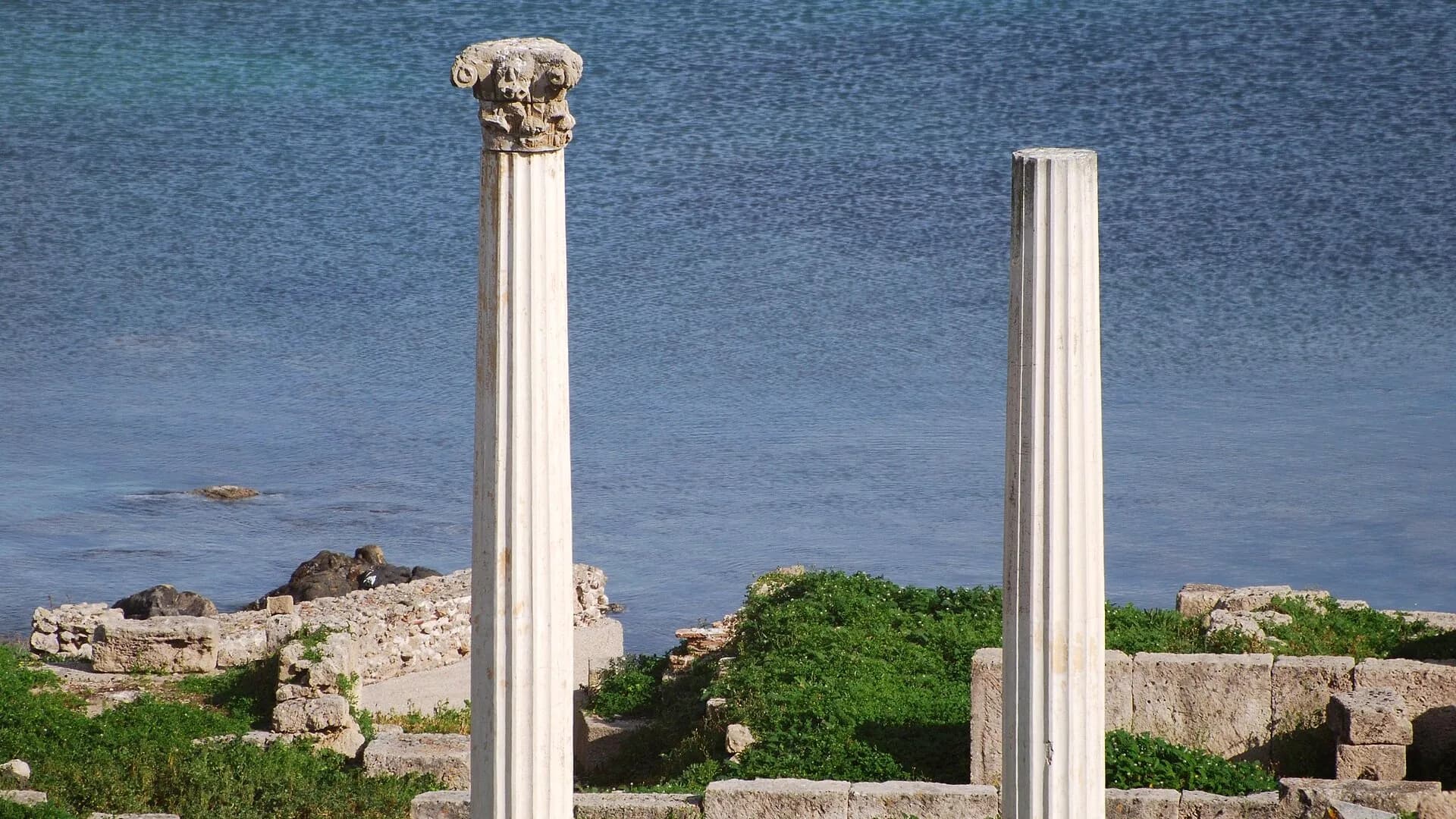
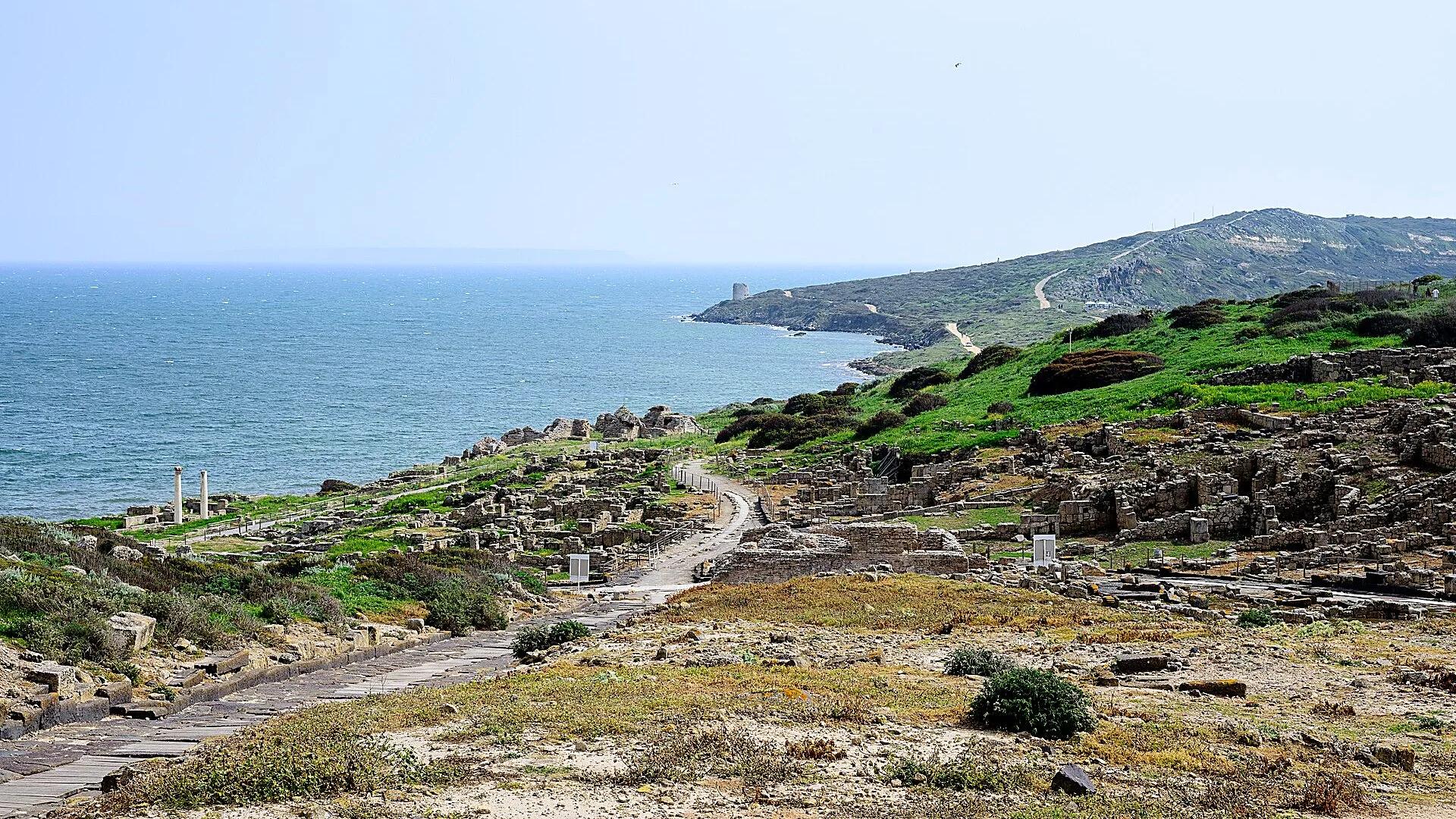
Yes, if you like ruins with the sea on both sides and do not need them to be tall. Most of what remains is low walls, paving and foundations: house plots, Roman streets with their drains, bath buildings, a water tank and temple platforms. The two white columns in almost every photo of Tharros were rebuilt, according to SardegnaTurismo, the regional tourism board. The real interest is that the same promontory was a Nuragic village, a Phoenician trading town, a Carthaginian stronghold, a Roman town and an early Christian center, and in places one layer sits directly on another.
Winter suits the site. It has no shade at all, which its own visitor service points out, so a July visit means a hot walk on bare stone. In November the grass between the walls is green and the afternoon sun stays low. Skip Tharros if you need every stone explained in English: the free daily tours are in Italian, and tours in other languages are on request only. For a nuraghe that is visited only with a guide, see our Su Nuraxi di Barumini guide.
Tharros opening hours and tickets, winter 2026 to 2027
The hours and prices below come from the Penisola del Sinis cooperative, which runs the ticket desks and visits at Tharros for the Fondazione Mont'e Prama. We checked them on 25 November 2026. The foundation's own website did not load that day, so if you are driving a long way, call the Tharros ticket office first on +39 0783 370019.
Opening hours by month
November to March: 09:00 to 17:00, closed on Mondays
April and October: 09:00 to 18:00
May and September: 09:00 to 19:00
June to August: 09:00 to 20:00
Last entry is 45 minutes before closing all year. The site is closed on 25 December and 1 January.
Ticket prices
Full: €10, ages 18 to 64
Reduced: €7, for over-65s, university students under 26 and groups of at least 20
Students: €5, ages 6 to 17
Free: children up to 5, residents of Cabras and Solanas, visitors with disabilities and one companion, plus some professional groups such as licensed EU tour guides
The combined tickets are where the savings are. Tharros with the Spanish tower costs €11 instead of €14. Tharros with the Museo Civico Giovanni Marongiu in Cabras costs €15 instead of €22, and all three cost €17 instead of €26. You can buy at the site or online through the Fondazione Mont'e Prama. Guided tours in Italian run every day at set times and are included in the ticket, and you can join one that has already started. Tours in other languages are available only on request, so contact the visitor service before you go. The ArcheoVoce app has text and audio notes for a self-guided walk.
What you are looking at: one city, five lives
The Ministry of Culture and the regional Sardegna Cultura portal give the sequence. The ministry's page still lists old hours and prices, so use it for history only.
Nuragic, from about 1500 to 1200 BC: the oldest traces, including a Nuragic village on the northern hill of Su Murru Mannu that was abandoned before the Phoenicians arrived.
Phoenician, end of the 8th century BC: settlers, probably from Sidon, founded the city. From this phase come two cemeteries, one toward Capo San Marco and one by the village of San Giovanni, and the tophet on Su Murru Mannu, a sanctuary where urns with the cremated remains of newborns and of sacrificed animals were placed.
Carthaginian, late 6th century to 238 BC: the walls on Su Murru Mannu, a quarter of iron workshops and the temple of the Doric half-columns, a stepped podium cut into the rock with half-columns carved in low relief.
Roman, from 238 BC: most of what you walk on. The paved streets follow a grid and carry drains underneath, three bath buildings stand near the sea, and the aqueduct fed a tank in the center, the castellum aquae, divided into three aisles by pillars.
Christian and medieval: a baptismal font of the 5th to 6th century survives. The city declined, and the bishop's seat moved to Oristano in 1071, according to SardegnaTurismo.
The rebuilt columns belong to what SardegnaTurismo calls the tetrastyle temple, overlooking the sea. They are worth the photo. The drains under your feet are the better story.
Why so much of Tharros is somewhere else
Tharros was dug for treasure long before it was studied. Sardegna Cultura sets out the record. The first digs came in 1838. In 1842 an excavation ordered by King Carlo Alberto sent gold coins, jewels and scarabs to the royal collections in Turin. In 1851 Lord Vernon, an Englishman on the Grand Tour, opened 14 tombs and took jewels home, and people from nearby Cabras then broke into about 500 tombs. In 1860 Gaetano Cara, director of the Cagliari museum, found rich Punic tombs and sold their contents to the British Museum. The large modern excavations came later: Gennaro Pesce dug here from 1956 to 1964, and Ferruccio Barreca from 1958.
The result: much of the jewelry, amulets and scarabs from the tombs is in museums in Cabras, Cagliari, Turin and London, as the Ministry of Culture's IDESE portal puts it. Some is coming back. In September 2025 the Fondazione Mont'e Prama signed an agreement with Brighton Museum to return 132 objects from the Tharros cemeteries, donated there by a British member of parliament between 1861 and 1874, to the civic museum in Cabras, Finestre sull'Arte reported. We found no published date for when they go on show.
The Spanish tower and the church of San Giovanni di Sinis
The Torre di San Giovanni, on the hill above the ruins, was built at the end of the 16th century as one of the Spanish coastal towers that watched for North African corsairs. After restoration you can go inside and up to the roof terrace. Its winter hours are shorter than the ruins: November to March, 10:30 to 13:00 and 15:00 to 16:00, closed on Mondays. A ticket costs €4 (€3 reduced, €2 ages 6 to 17). The tower does not take card payments, and access may be limited in bad weather.
The church of San Giovanni di Sinis stands in the village, about 1 km north of the ruins. The Ministry of Culture's IDESE entry dates its core, a Byzantine cross-in-square church with a dome, to the 6th or 7th century, rebuilt with three aisles in the 11th century. Its bare sandstone blocks recall the walls of Tharros, and entry is free.
When to go: closing time and the light
The chart in the gallery sets the site's closing time against sunset for each month. From November to March the gates close at 17:00. By our calculation the sun sets at about 17:10 in mid-November, 17:01 in mid-December and 17:25 in mid-January. A winter visit that starts around 15:00 ends in the low evening light. In June and July the site closes at 20:00, almost an hour before sunset, so summer sunsets are watched from outside the fence. In summer the site hosts festivals, events and concerts.
Getting there
You need a car. From Cabras, take the SP4 and then the SP6 to San Giovanni di Sinis, as SardegnaTurismo describes the route. By OpenStreetMap road routing, Tharros is about 13 km from Cabras, about 19 km from Oristano and about 113 km, roughly two hours, from Cagliari airport. We could not confirm a winter bus to San Giovanni di Sinis.
From the village square, the Tharros tourist train runs a shuttle to the site entrance for €3.50, free under 2, and a panoramic tour for €5 (€4 ages 2 to 14). It has no fixed timetable outside August and some holidays, so in winter call +39 0783 370019 to check.
What can go wrong
Mondays from November to March: Tharros, the tower and the Cabras museum are all closed.
Ground and shade: the visitor service warns of some stretches that are awkward for wheelchairs and people with limited mobility, and there is no shade. Wear shoes with grip.
Weather: the promontory is open to the sea on both sides, and in bad weather access to the tower may be limited.
Cash: bring some for the tower, where cards are not accepted.
Lunch break: the tower closes from 13:00 to 15:00 in winter, so time it before or after.
A winter day on the Sinis
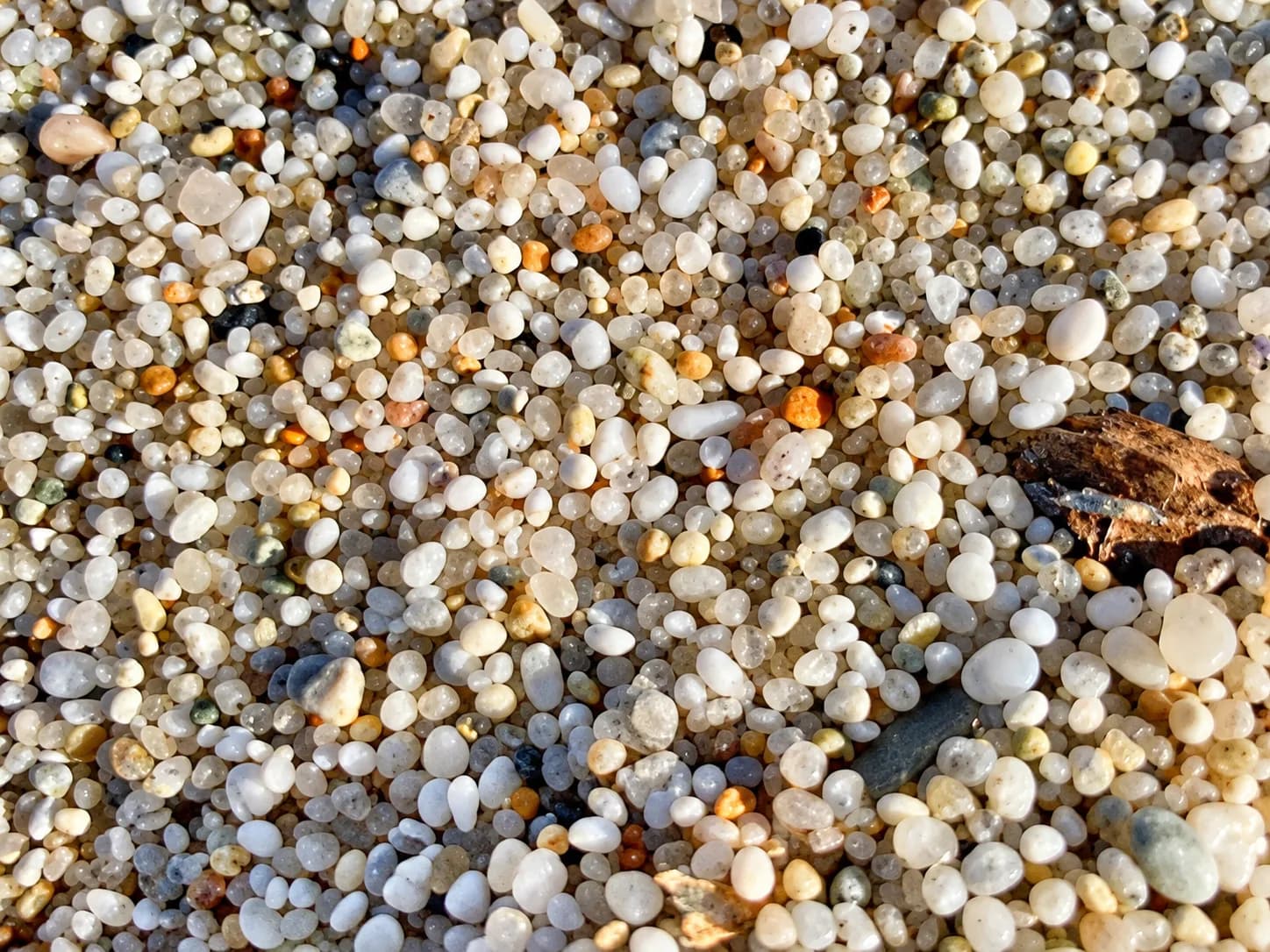
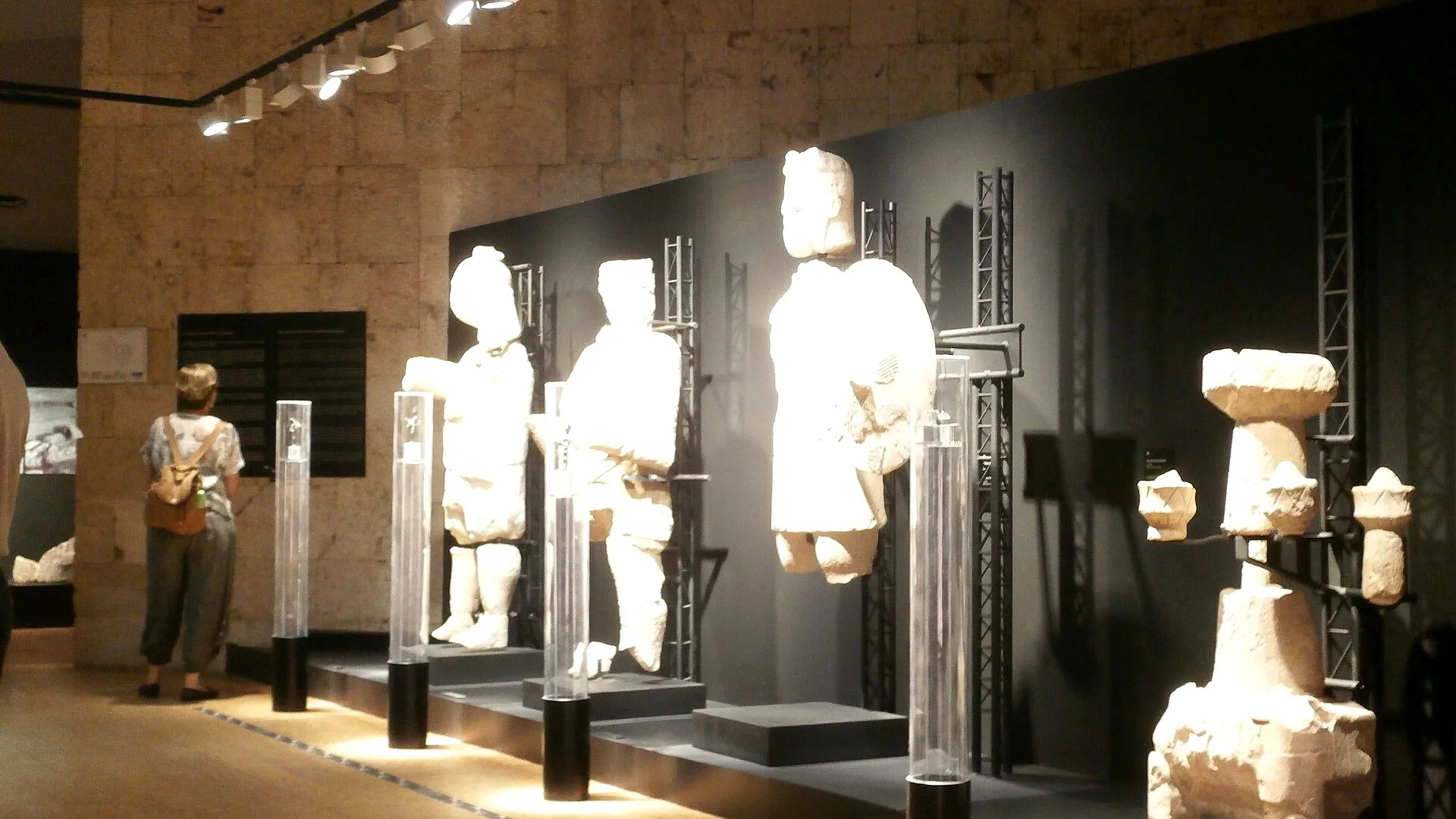
A plan that works with the winter hours: the Cabras museum when it opens at 10:00, to see the Mont'e Prama statues (our guide to the giants of Mont'e Prama has the background), lunch, the tower at 15:00, then the ruins until the gates close at 17:00. The museum and Tharros are 13 km apart. Our Cabras guide covers the lagoon and its bottarga, and the quartz-grain beach in our Is Arutas guide is on the same peninsula. For what else stays open on the island between November and March, see Sardinia in winter.
Planning more archaeology on the same trip? Rental12, a holiday-rental company in Olbia that shares an owner with Sardinia Blog, covers the Bronze Age sites around Olbia and Arzachena in Archaeological Sites in Northern Sardinia. It is a weak match for this article: Tharros appears there only as a long day trip from the north. It is a company guide, not independent research.
Sources: Penisola del Sinis cooperative, hours and tickets · Penisola del Sinis cooperative, about · Torre spagnola di San Giovanni · Trenino di Tharros · Ministero della Cultura, Area archeologica di Tharros · SardegnaTurismo, Ancient city of Tharros · Sardegna Cultura, Tharros Archaeological Area · IDESE, Tharros · IDESE, Church of San Giovanni di Sinis · Finestre sull'Arte, 3 September 2025. Sunset times calculated for 39.87 N, 8.44 E; road distances from OpenStreetMap routing, 25 November 2026.
Photo credits: The ruins of Tharros running down to the sea, with the two rebuilt columns on the left (Norbert Nagel, CC BY-SA 3.0, via Wikimedia Commons); The two columns of Tharros with the sea and a sailing boat behind (GiorgioGaleotti, CC BY-SA 4.0, via Wikimedia Commons); The Spanish tower of San Giovanni di Sinis above the ruins, November 2024 (Mike Peel, www.mikepeel.net, CC BY-SA 4.0, via Wikimedia Commons); The tower above the beach of San Giovanni di Sinis, November 2024 (Mike Peel, www.mikepeel.net, CC BY-SA 4.0, via Wikimedia Commons); The church of San Giovanni di Sinis and its dome (Unukorno, CC BY 4.0, via Wikimedia Commons). Fact sheet and chart: Sardinia Blog, from the sources listed above.