

Last updated: 10 November 2026
Meet the aragosta, Sardinia's red lobster
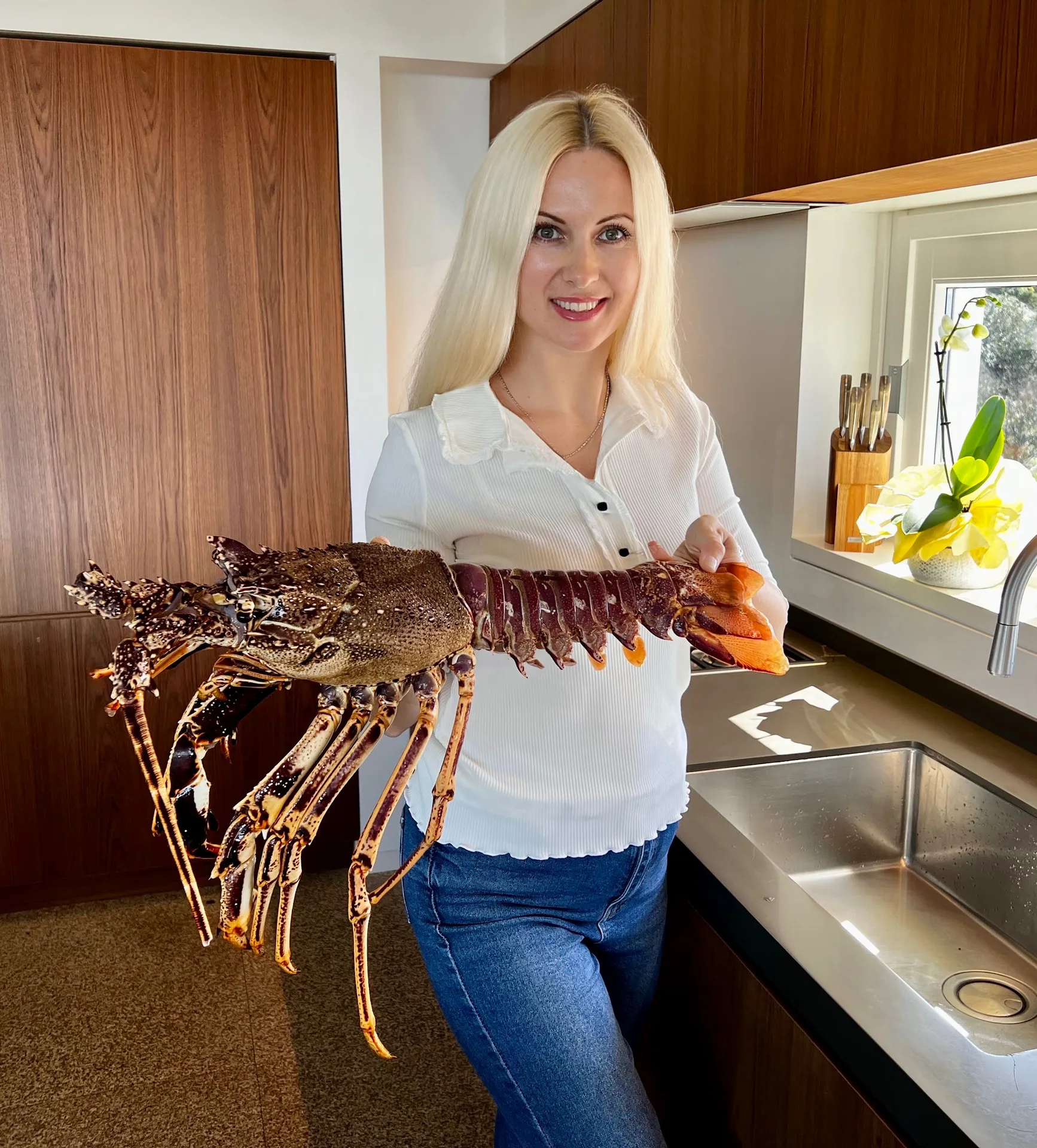
In Sardinia, "lobster" almost always means the aragosta rossa, the European spiny lobster (Palinurus elephas). It has no big claws like the northern clawed lobster. Instead it carries long spiny antennae, a rough reddish-brown shell and a tail full of sweet, firm meat. Most of the flavor is in the tail, which is why Sardinian cooks keep the recipes so simple.
According to the Sardinian Region's consumer guide to local seafood, the red lobster commonly reaches about 40 cm, can grow to 50 cm, lives up to around 15 years and is found from 5 to 200 meters deep. The same guide lists it as a vulnerable species, which is why the rules below matter.
Where it is caught
Lobster fishing is mainly concentrated along Sardinia's western coast, at depths of 30 to 200 meters, according to guidelines published by the Sardinian Region in 2009. The same document says more than a quarter of the island's small-scale fishing boats worked on lobster at the time, using trammel nets and pots.
That is why the lobster towns are mostly on the west and north-west: Alghero, Bosa, Stintino and Castelsardo on the Gulf of Asinara. You will also find live lobster on menus on the east coast, especially in summer.
Fishing season and rules
Sardinia protects its lobster with a closed season. Fishing for lobster, European lobster and spider crab is banned in Sardinian waters from 1 September to the end of February, according to La Nuova Sardegna (August 2023) and the regional Forestry Corps. In short:
Fishing season: from March to 31 August.
Live lobsters caught by 31 August can be kept and sold until 30 September, but each one must carry a label with its marking date and a progressive number.
From 1 October to the end of February, holding, transporting and selling live Sardinian lobster is also banned.
Minimum size: 9 cm carapace length. Smaller lobsters must go back into the sea.
In the lobster repopulation areas, fishing restrictions apply all year.
The closed season falls in the period when lobsters carry their eggs, local fishing officials explained to Alghero Notizie. Rules can be updated by regional decree, so check the current year before you plan a lobster trip.
A tip for visitors: if you order lobster in Sardinia between October and February, it was not caught in Sardinian waters that season. Ask where it comes from. Many restaurants are happy to tell you.
Protecting the lobster: Su Pallosu
Sardinia also works to restock lobster at sea. In 1998 the Region created a protected repopulation area at Su Pallosu, on the Sinis coast, together with the local fishing cooperative, according to the Region's 2009 guidelines. The idea is simple: leave one stretch of sea alone so lobsters can grow, breed and spread to the surrounding fishing grounds.
Aragosta alla catalana, the Alghero classic
Alghero has spoken a form of Catalan since the Catalan conquest of 1372, and its best-known dish shows it. Aragosta alla catalana is lobster boiled, cut into pieces and served at room temperature with raw tomatoes, thinly sliced sweet onion, olive oil and lemon. Nothing else. The lobster has to be very fresh, because there is no sauce to hide behind.
In Alghero it is a summer dish and also a festive one: the Rome-based food writer Katie Parla notes that it is popular on Christmas Eve, when Alghero families serve a fish-only feast. Restaurants across the island now serve their own catalana, sometimes with celery, citrus or a touch of vinegar.
Aragosta alla castellanese, from Castelsardo
Castelsardo has its own lobster recipe, less known outside Sardinia. For aragosta alla castellanese, a female lobster with eggs is boiled, and the eggs are whisked with olive oil, lemon and a little white wine vinegar into a silky sauce served with the warm lobster, according to the recipe published by L'Unione Sarda. There is also a red version, where the egg sauce is stirred into a light tomato sauce with garlic, onion and chili. The dish is common along the coast of Anglona and the Gulf of Asinara.
Other ways Sardinians cook lobster
Pasta with lobster: spaghetti or linguine cooked in a sauce made with the lobster's own juices and fresh tomato, a summer favorite on seafood menus around the island.
Simply grilled or boiled, with good olive oil and lemon.
Where to eat it
For aragosta alla catalana, Alghero is the natural place to start, and our Alghero guide covers the old town and Catalan food. On the north-east coast, Gente di Mare in Golfo Aranci serves live lobster pasta on its sea terrace (the lobster pasta photos here were taken there), and Trattoria del Porto nearby is known for very fresh seafood.
Lobster is priced by weight in most restaurants. Ask to see the lobster and confirm the price per 100 grams or per kilo before it goes into the pot.
How to choose a good lobster
It should be alive and move when touched.
The tail should feel firm, not soft.
In season (March to August), ask if it was caught locally.
Smaller lobsters, just above the legal size, are often the sweetest.
Rental12, a holiday-rental company in Olbia that shares an owner with Sardinia Blog, lets its own homes in Olbia and Golfo Aranci.