
Sassari, Sardinia's second city with 120,231 residents at the end of 2025, is worth a day or two for its medieval old town, the Fontana di Rosello and the Museo Sanna, north-west Sardinia's main museum. Every 14 August it stages the Faradda di li Candareri, a candlestick procession on UNESCO's intangible heritage list since 2013. Few tourists stay: the regional tourism observatory recorded 274,114 overnight stays in 2025, about 15% of Alghero's total.
Sassari quick facts
Population: 120,231 at 31 December 2025 (provisional ISTAT demographic data), second only to Cagliari's 145,981.
Where: north-west Sardinia, 33 km from Alghero-Fertilia airport.
History: self-governing under its own statutes from 1294; Sardinia's first university gained royal status on 9 February 1617 (University of Sassari history).
Language: Italian and Sassarese, named in Sardinia's language law 22 of 2018.
Big days: the Cavalcata Sarda in May (17 May in 2026) and the Candelieri on 14 August.
Visitors: 107,337 arrivals in 2025, staying 2.55 nights on average.
Is Sassari worth visiting?
Yes, if you want a working Sardinian city rather than a resort. Sassari has no beach in town: Platamona, long called the beach of the Sassaresi, is about 10 km away. Instead it offers a medieval centre once ringed by walls with 36 towers, an early 17th-century fountain, a cathedral that mixes Romanesque, Gothic and Baroque, and a museum that tells the archaeology of central and northern Sardinia.
How to spend a day in Sassari
This walk suits Tuesday to Saturday. On Wednesday and Friday the museum opens only in the afternoon, so swap steps 2 and 6.
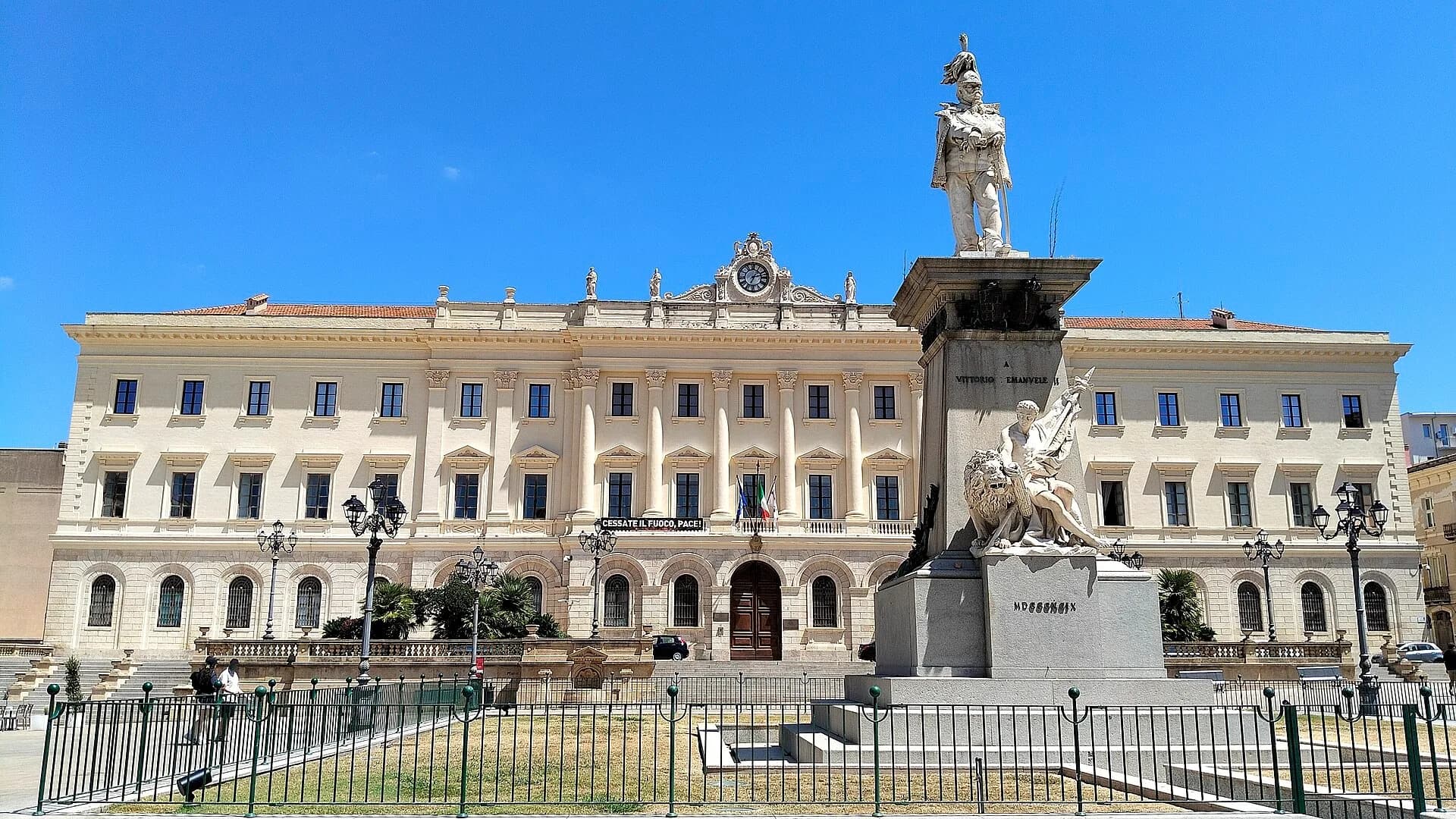
Piazza d'Italia. Levelled from 1872 as a square about 100 m a side, it centres on Giuseppe Sartorio's statue of Vittorio Emanuele II, unveiled in 1899 at the first Cavalcata Sarda. The neo-Renaissance Palazzo della Provincia, whose frescoed Sala Sciuti opens only on special days such as Monumenti Aperti, faces the neo-Gothic Palazzo Giordano.
Museo Sanna. Seven minutes down Via Roma, at number 64, the Museo nazionale archeologico ed etnografico G.A. Sanna holds finds from Monte d'Accoddi, Nuragic bronzes and Roman Porto Torres; the ethnographic section is closed for refitting. It opens Tuesday, Thursday and Saturday 9:00 to 13:45, Wednesday and Friday 14:00 to 19:30, and the first Sunday of the month 9:00 to 13:45 (hours checked on 27 October 2026, comune page for the Museo Sanna).
Corso Vittorio Emanuele II and the Duomo. The old main street, route of the Candelieri, runs into the walled town. Just off it, the Duomo di San Nicola, a cathedral since 1441, pairs a Romanesque bell tower with a Baroque façade. Entry is free, Monday to Saturday 8:45 to 12:00 and 16:30 to 19:00, Sundays and holidays 9:00 to 11:30 and 17:00 to 19:00.
Palazzo Ducale. Built from 1775 to 1804 for the Duke of Asinara and the town hall since 1878, it has a free courtyard. The Duke's rooms and cellars cost €4 each and open Tuesday to Friday 10:00 to 14:00 and Saturday 10:00 to 13:20.
Lunch. Order fainè (see below).
Fontana di Rosello. Built in its present form in 1605 and 1606 by Genoese craftsmen, the city's symbol has 12 bronze spouts for the months and four statues of the seasons. Entry is free, Tuesday to Saturday 10:00 to 19:00 and Sunday 10:00 to 14:00, last entry 30 minutes before closing (Rete Thàmus page for Rosello).
Santa Maria di Betlem. End at the 12th-century church where the Candelieri finish; it opens around service times.
The Candelieri and the Cavalcata Sarda
The Faradda di li Candareri, Sassarese for the descent of the candlesticks, takes place every 14 August for the Assumption. Thirteen gremi, the old trade guilds, carry wooden candelieri about 3 m tall and weighing up to 400 kg, eight bearers to each, from Piazza Castello along Corso Vittorio Emanuele II and Corso Vico to Santa Maria di Betlem, where late at night the city fulfils its vow for ending the plague (Comune di Sassari on the Candelieri). Since 2013 the descent has been part of UNESCO's Celebrations of big shoulder-borne processional structures, with Nola, Palmi and Viterbo.
The Cavalcata Sarda is lay, not religious. It is usually held on the penultimate Sunday of May, though in 2026 it fell on 17 May. More than 2,000 people in traditional dress parade for about 2 km, followed by more than 300 riders, with pariglie riding displays in the afternoon (comune page on the Cavalcata). The 2027 date had not been announced by 27 October 2026.
What to eat in Sassari
Start with fainè, a thin flatbread of chickpea flour, water, olive oil and salt, baked in low, tinned copper pans and listed among Sardinia's traditional food products. It is eaten hot, plain or with ground black pepper; for more than 25 years shops have also offered onion or sausage on top. Almost all fainè shops are seasonal rather than open all year. The regional tourist board names two more local dishes: favata, a broad-bean stew, and monzette, small snails cooked with batter.
Day trips: Monte d'Accoddi, Saccargia and Castelsardo
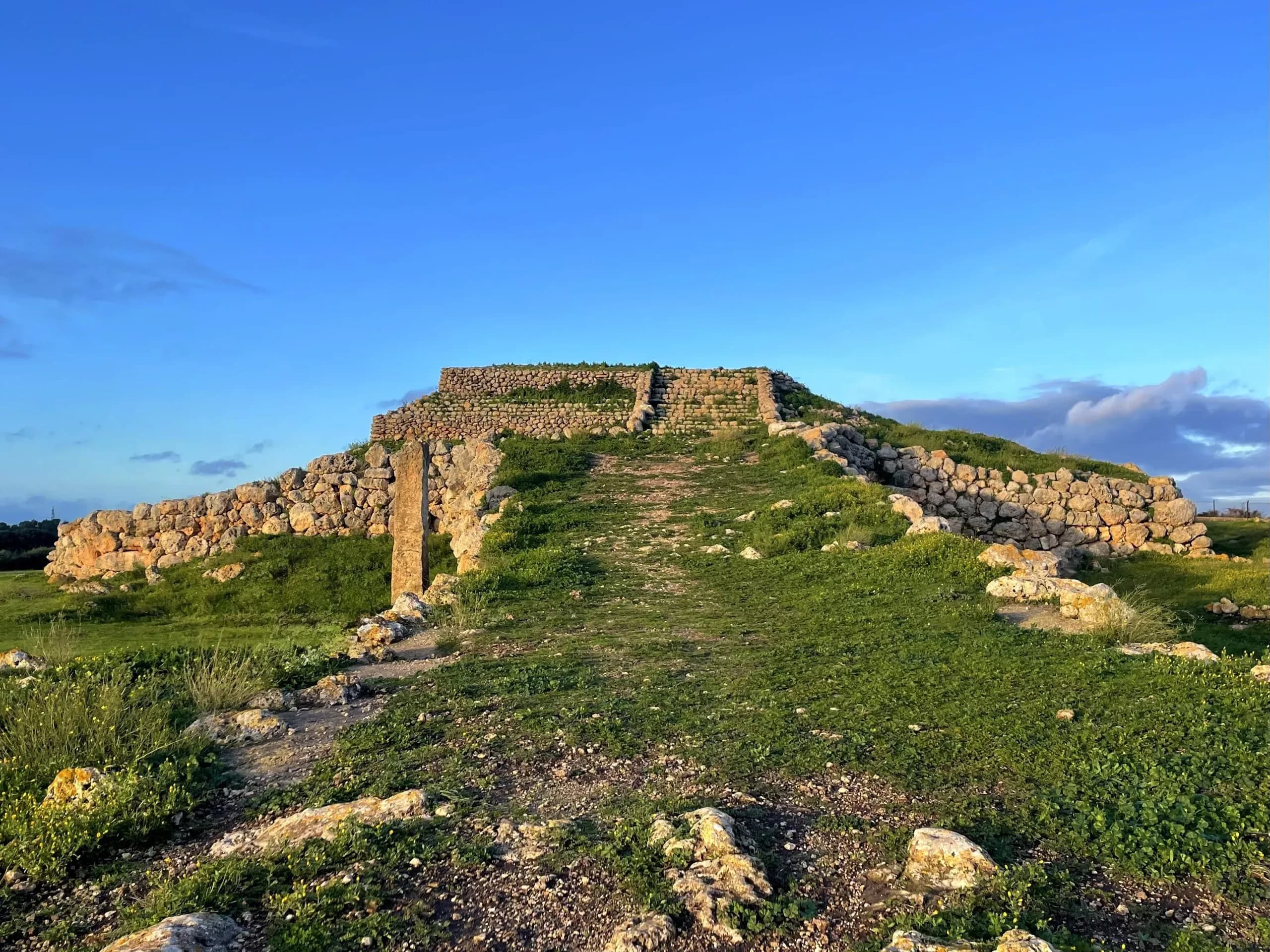
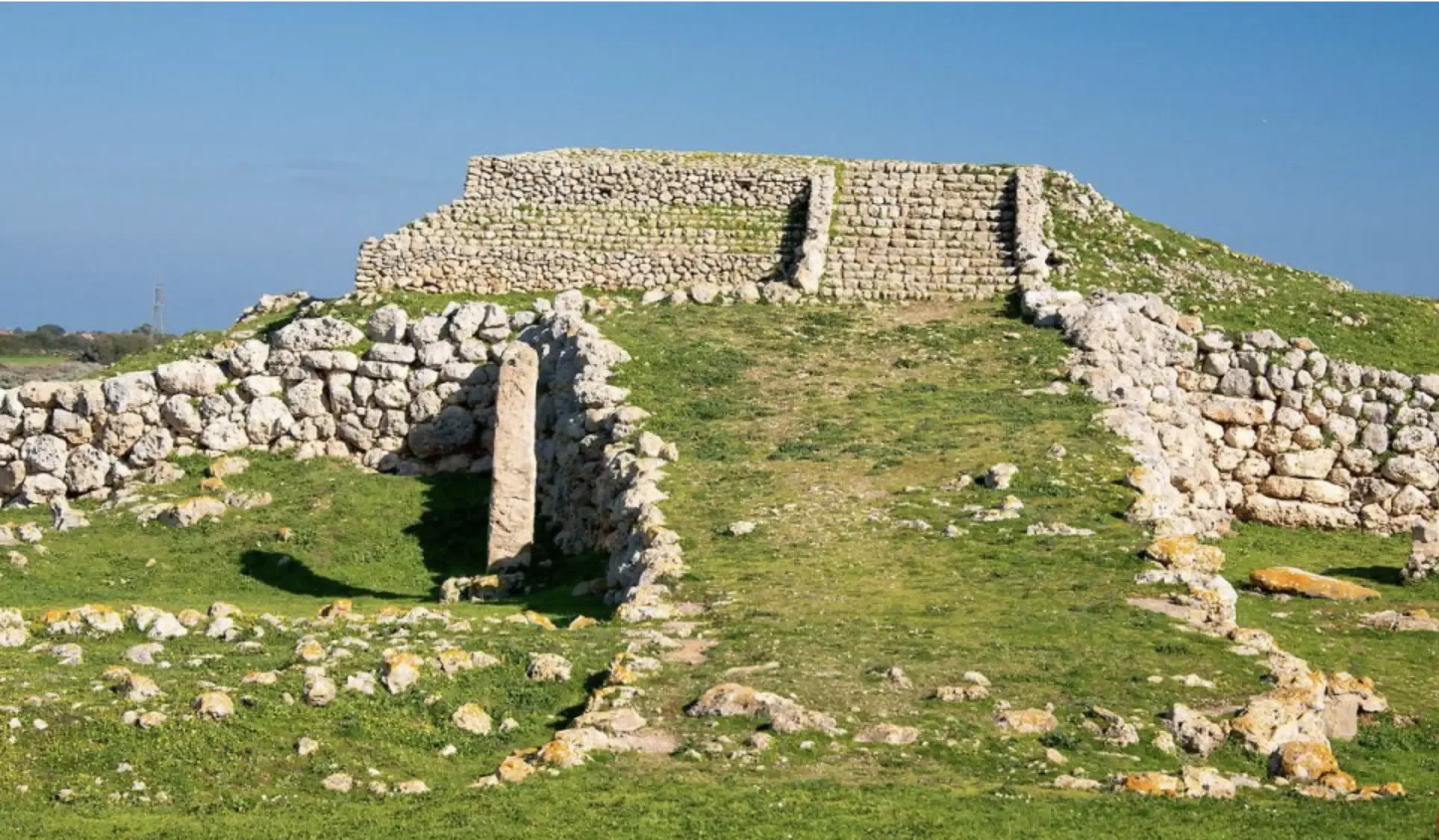
Monte d'Accoddi, about 12 km: a terraced prehistoric altar some 5,000 years old, often compared with Mesopotamian ziggurats, off the old SS131 to Porto Torres. In November and December 2026 it opens Tuesday to Sunday 10:00 to 14:00, last tickets 13:00 (10:00 to 18:00 from April to October), and the €5 ticket includes a guided tour (Monte d'Accoddi times and tickets). ARST line 719 has a Monte d'Accoddi stop on the SS131. More in our guide to Sardinia's prehistoric altar.
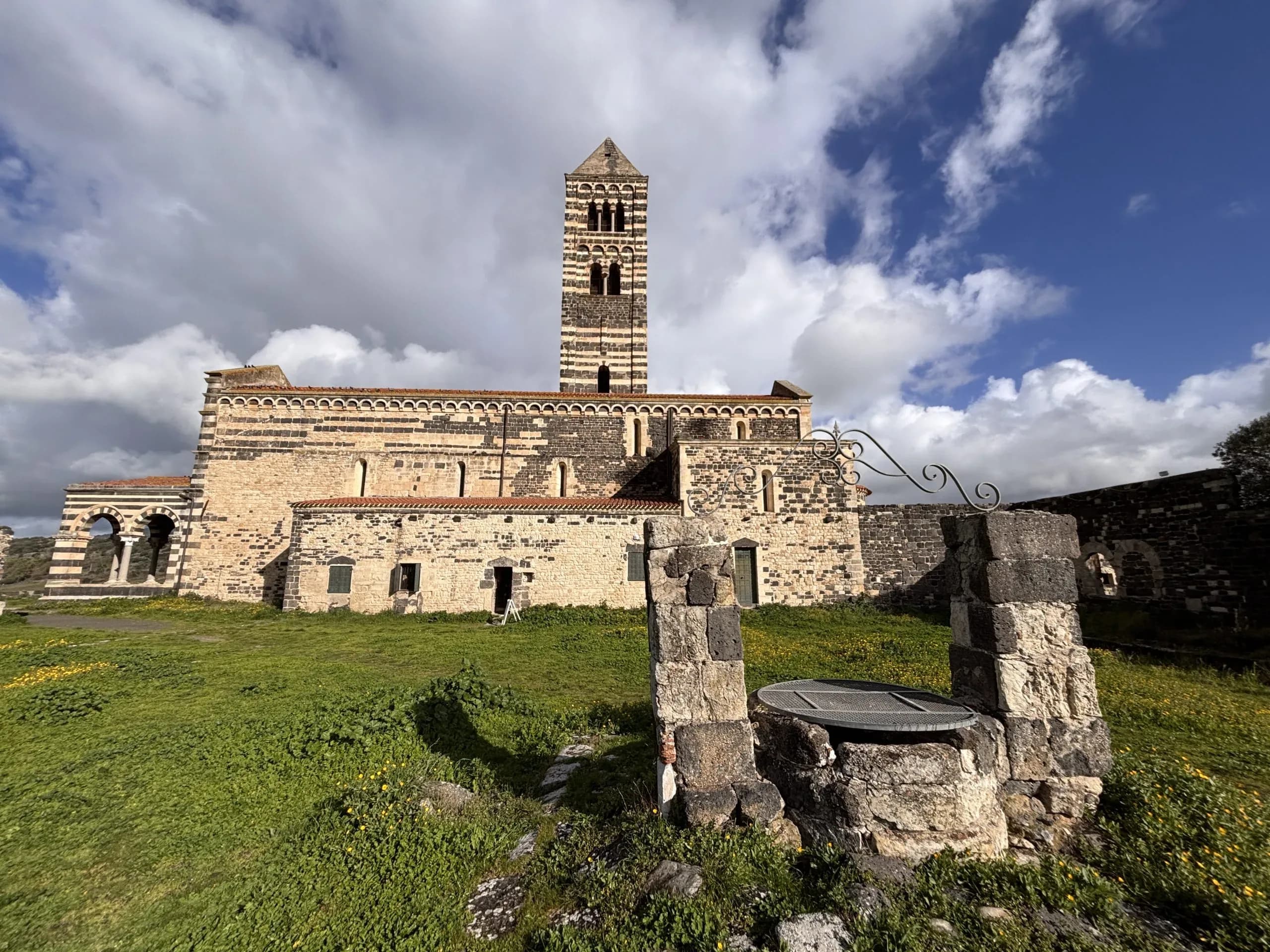
Saccargia, about 17 km: the striped basalt and limestone Basilica della Santissima Trinità near Codrongianos was consecrated in 1116, the date given in the abbey's condaghe, or register, and keeps Sardinia's only intact Romanesque wall paintings (SardegnaTurismo on Saccargia). See our Basilica di Saccargia visit guide.
Castelsardo, about 32 km: the Doria castle above the Gulf of Asinara houses a museum of Mediterranean basket weaving; the Roccia dell'Elefante, 4 km out, holds two domus de janas tombs, part of a UNESCO World Heritage site since 2025. Plan it with our Castelsardo guide to history, craft and sea views.
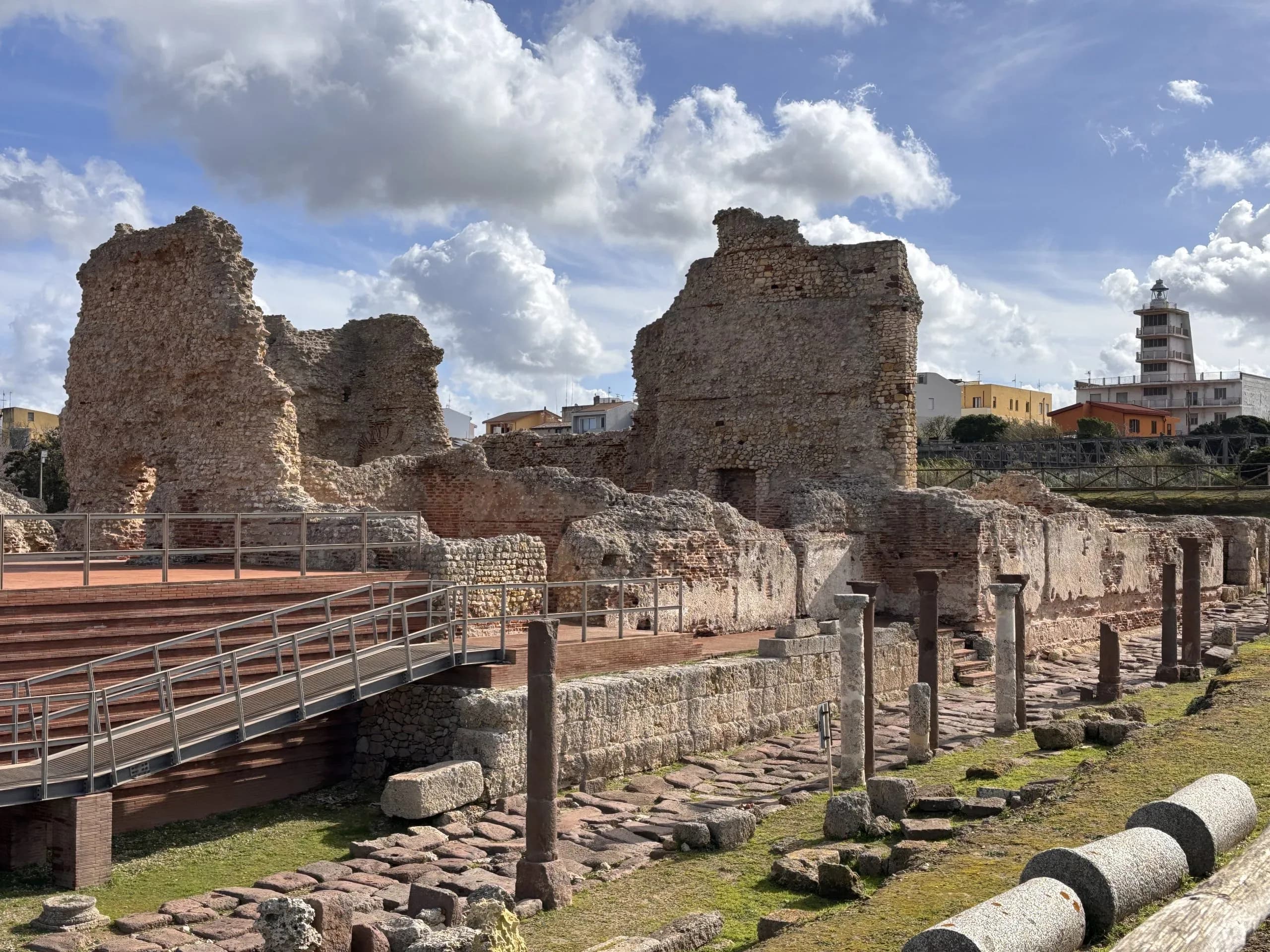
Porto Torres, about 25 km: the Roman city of Turris Libisonis and the Basilica di San Gavino, built between 1030 and 1080; start with our Turris Libisonis visitor's guide.
When to go, getting there and what it costs
When to go: Tuesday to Saturday, when the main sights are open; a Sunday in May for the Cavalcata (17 May in 2026); 14 August for the Candelieri.
By air: Alghero-Fertilia airport, 33 km away, handled 1,770,493 passengers in 2025 (Assaeroporti). ARST line 760 runs to Sassari all year in 30 to 45 minutes, with tickets from the machine at arrivals; by car it is 25 to 30 minutes on the SS291. Our Alghero travel guide covers the airport town.
By train: a sample November 2026 weekday had seven Trenitalia connections from Cagliari, three of them direct, taking 3 h 11 to 3 h 41 for €16.50. From Olbia allow about 2 hours; until 12 December 2026 those trains leave from Olbia Terranova during works at the main station. Timetables change on 13 December.
From the port: Porto Torres is Sardinia's second port by passengers and freight. ARST line 719 reaches Sassari in 30 to 45 minutes, with frequent buses on weekdays and 11 on Sundays and holidays.
Parking: use a multi-storey, such as Mercato Civico (212 spaces), Via dei Mille (395) or Emiciclo Garibaldi (400).
Tickets (checked 27 October 2026): Museo Sanna €6 (€2 for EU citizens aged 18 to 25); Monte d'Accoddi €5, under-18s free. The €10 Thàmus pass covers Palazzo di Città, the Duke's rooms and cellars, Rosello's guided visit and the Barbacane, and is sold only at the Infopoint in Via Sebastiano Satta 13. The Duomo and the Brigata Sassari museum are free.
Tourist tax: €1 to €2.50 per person per night by room rate, for up to 5 nights (comune tourist tax table, checked 27 October 2026).
Local tips: what most guides get wrong
The Candelieri are on 14 August, the eve of Ferragosto, not the 15th: the guilds gather in Piazza Castello from early afternoon and finish late at night.
Avoid Mondays. The Museo Sanna, the Rosello fountain, the Duke's rooms and Monte d'Accoddi all close, and the last three also close on public holidays such as 8 December. The Sanna opens on one Sunday a month, the first, when entry is free.
The 128,000 population figure is out of date. ISTAT's provisional figure for the end of 2025 is 120,231 residents.
There is no Trenino Verde from Sassari. The Sassari to Tempio line is not among the five heritage routes running in 2026.
The Barbacane is guided only. Tours of the castle defences under Piazza Castello run in small groups on Tuesday, Thursday and Saturday mornings; book on 393 0782124. They stop in hot weather, and a heat-closure notice was still online on 26 October 2026, so ring first.
Park outside the walled town. Many street spaces inside are reserved for residents' permits, and Sassari is on the transport ministry's January 2026 list of towns authorised to use ZTL cameras.
Rental12, a holiday-rental company in Olbia that shares an owner with Sardinia Blog, describes Sassari and the Logudoro as one of seven sub-regions of the north in North Sardinia: Where to Stay, What to See 2026. It is a company guide, not independent research.
Sources: ISTAT · Comune di Sassari, Museo Sanna · Comune di Sassari, Rosello · Università di Sassari · Comune di Sassari, Candelieri · UNESCO · Comune di Sassari, Cavalcata · Comune di Sassari, Monte d'Accoddi · SardegnaTurismo, Saccargia · Comune di Sassari, tourist tax
Photo credits: The Palazzo della Provincia, seat of the province from 1878 and now of the Città Metropolitana, on Piazza d'Italia in Sassari (Ottantafame, CC BY-SA 4.0, via Wikimedia Commons); The Fontana di Rosello, built in its present form in 1605 and 1606, below Sassari's old town (Basilicofresco, CC BY-SA 4.0, via Wikimedia Commons); The ribboned top of a candeliere of the Gremio dei Fabbri during the Faradda di li Candareri in Sassari on 14 August 2012 (Gianni Careddu, CC BY-SA 3.0, via Wikimedia Commons); The Baroque facade of the Duomo di San Nicola, Sassari's cathedral since 1441 (Dr. Thomas Liptak, CC BY-SA 4.0, via Wikimedia Commons); The striped basalt and limestone Basilica della Santissima Trinità di Saccargia near Codrongianos, about 17 km from Sassari (Andrea.gph, CC BY-SA 4.0, via Wikimedia Commons). Fact sheet and chart: Sardinia Blog, from the sources listed above.