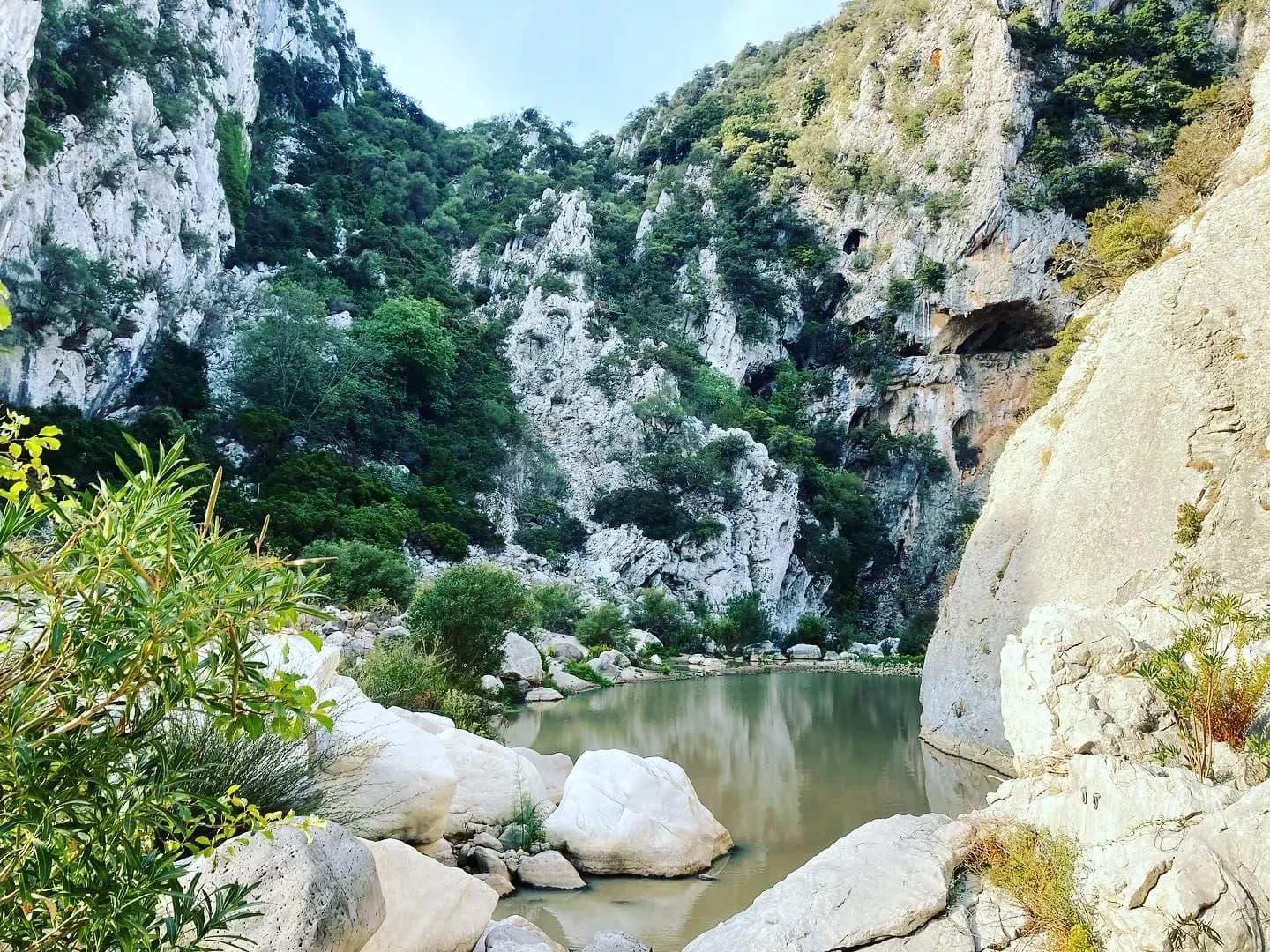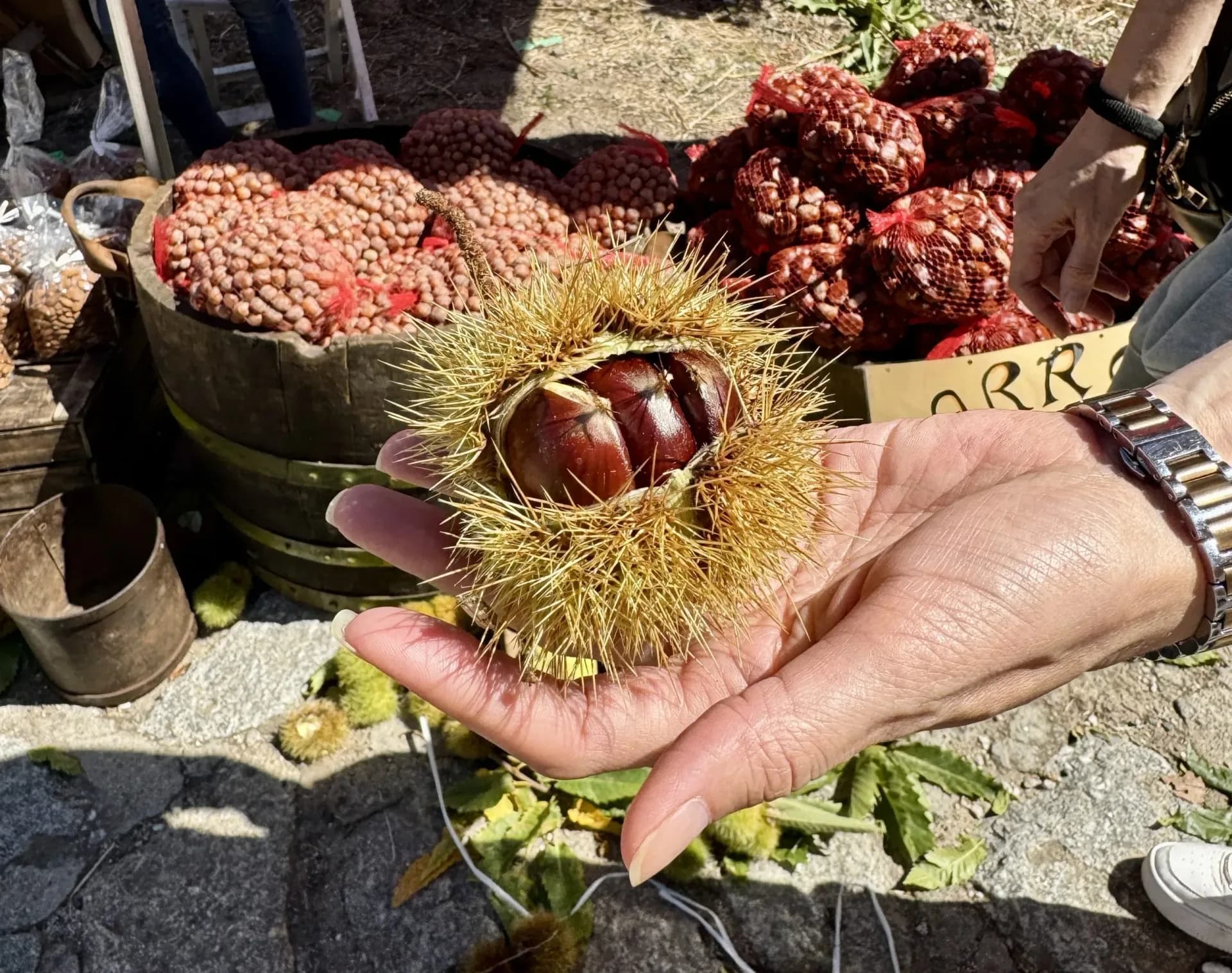

Sardinia's inland autumn is at its peak. On 25 October 2026 L'Unione Sarda counted about 150 events in the island's interior between October and November. The biggest is Autunno in Barbagia: 33 village stops, 5 September to 13 December, with an expected 450,000 to 500,000 visits. Thirteen of those stops are still ahead, from Desulo on 31 October to Orune, Ortueri and Seulo on 13 December. A second circuit, Saboris Antigus, visits nine villages in Trexenta and Sarcidano until 20 December, mostly on Sundays. This guide covers every remaining date, what each village is known for, the All Saints customs that fall in the same weeks, and how to get there without a wasted day on mountain roads.
The short version
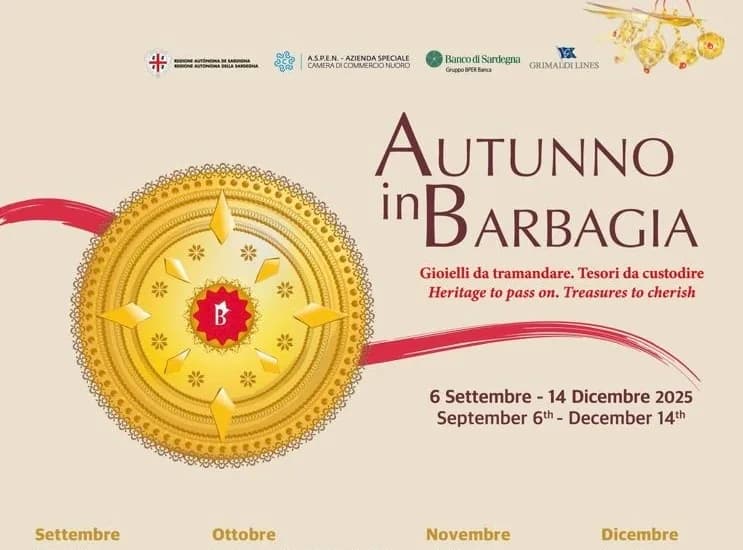
What: Autunno in Barbagia, also called Cortes Apertas ("open courtyards"). Villages in the mountains around Nuoro open the courtyards of old stone houses for a weekend, with food, crafts, music and guided visits.
When: 5 September to 13 December 2026, one or several villages each weekend. Remaining dates: Desulo 31 October to 1 November; Mamoiada 6 to 8 November; Ovodda 7 to 8 November; Nuoro, Tiana and Ollolai 14 to 15 November; Atzara 21 to 22 November; Gadoni and Oniferi 28 to 29 November; Fonni 6 to 8 December; Ortueri, Orune and Seulo 12 to 13 December.
Who runs it: the Camera di Commercio di Nuoro through its agency ASPEN, with each village's council and Pro Loco. The 2026 theme is "Il gusto antico dell'ospitalità", the old taste of hospitality.
Cost: entry to the villages is free. Food and drink are paid at the stalls and courtyards. Some villages sell a tasting carnet: in Gavoi this year it was sold on Via Roma.
Getting there: by car. Nuoro is about 1 hour 40 from Olbia airport and about 2 hours 30 from Cagliari. Public transport exists but does not fit a village weekend well.
Also on: Saboris Antigus in nine villages of Trexenta and Sarcidano (mostly Sundays, 25 October to 20 December), the All Saints customs on 31 October and 1 November, and Salude&Trigu in the north.
All remaining stops are also in the Sardinia Blog events calendar, each with its own page, map pin and a link to add it to your calendar.
What Cortes Apertas actually is
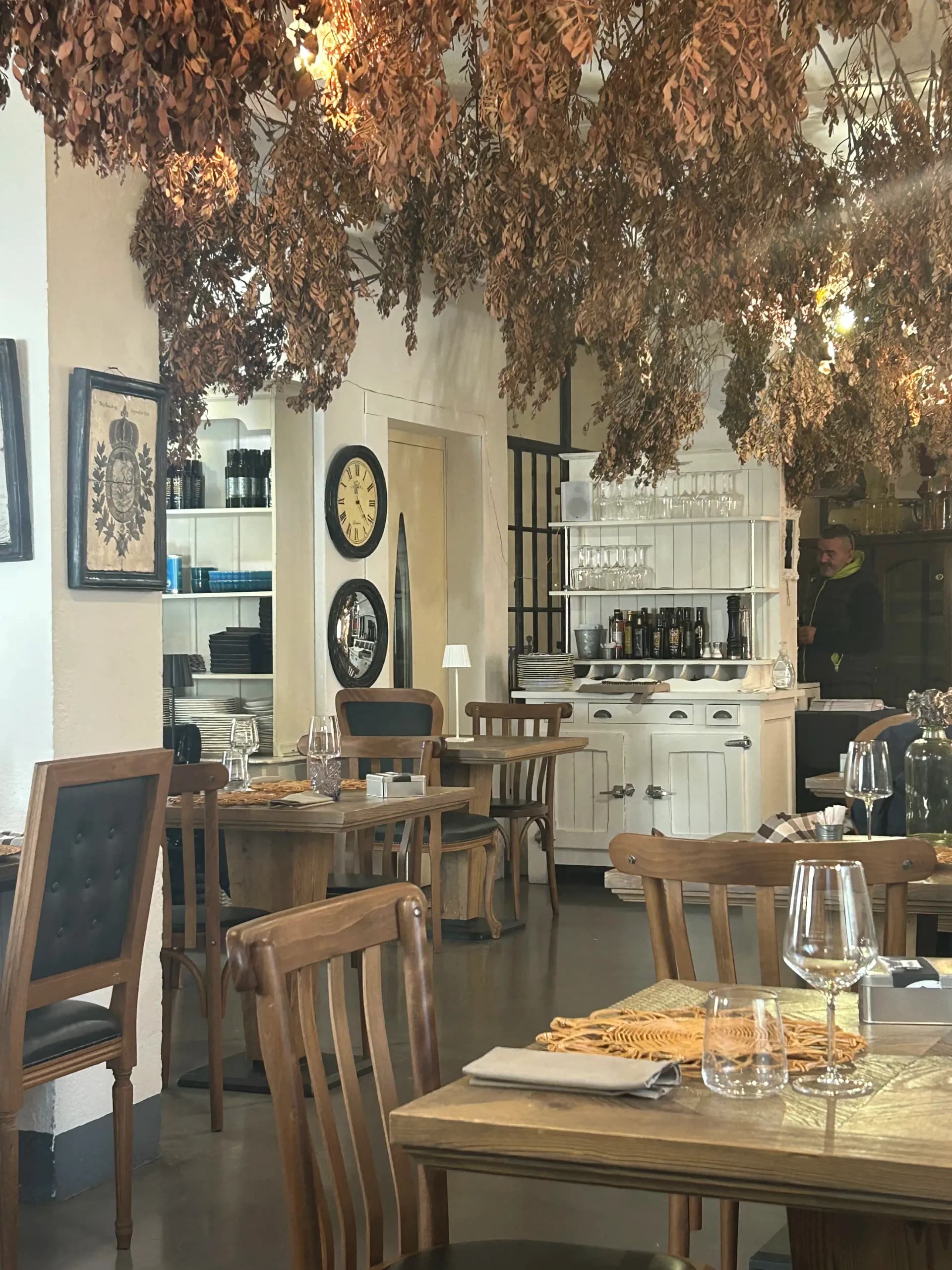
The idea is simple, and it started in one place. In 1996 Oliena, a village of stonemasons and Cannonau growers at the foot of the Supramonte, opened the courtyards of its old houses to visitors for a weekend. In the Barbagia a corte is the inner yard of a family house, where bread was baked, wine was pressed and animals were kept. For one weekend the owners let strangers in. Women made pane carasau in front of them, men roasted meat, and someone sold cheese from a table under the fig tree.
A year later the Camera di Commercio di Nuoro started a project called Cuore della Sardegna to link villages that wanted to do the same. In 2001 the result got its current name, Autunno in Barbagia, and its current shape: a circuit of villages, each taking one weekend between September and December. The 2020 and 2021 editions were cancelled because of Covid. In 2026 the circuit marks 25 years under that name and 30 since Oliena's first open courtyards. Sources do not agree on the edition number: Sardegna Turismo calls 2026 the 26th edition, L'Unione Sarda the 25th.
What you find inside a corte depends on the village and on the family. In practice a stop means:
Courtyards, cellars and old kitchens open along a marked route through the historic centre, usually from mid-morning.
Craftspeople working in front of visitors: weavers, knife makers, woodcarvers, basket makers, embroiderers, mask carvers in Mamoiada and Ottana.
Food made on the spot. Bread in wood ovens, culurgionis and other filled pasta, roast pork and lamb, cheese, sweets with almonds and honey. Wine from local cellars.
Small museums, churches and private houses open with guides.
Music, from canto a tenore choirs to brass bands and the occasional concert in the square.
The circuit is not a polished festival. Signage can be thin, queues for food form fast at lunch, and the most interesting things are often in a doorway you would walk past. That is also why it works. You are let into houses where people still live.
The 2026 edition in numbers
The 2026 calendar runs 5 September to 13 December. It has 33 stops in 32 municipalities, because Nuoro takes part twice: once through Lollove, its hamlet, on 10 and 11 October, and once in the city on 14 and 15 November. Bitti opened the season; Orune, Ortueri and Seulo close it. Seulo is a first-time stop, Tonara is back after a gap, and Teti is not on this year's map, L'Unione Sarda reported on 3 September.
The figures quoted for the season come from the organisers. Speaking to L'Unione Sarda on 25 October, Agostino Cicalò, president of the Camera di Commercio di Nuoro, said: «Partecipano 33 paesi e 2.700 imprese, più gli hobbisti» (33 villages and 2,700 businesses take part, plus hobbyists). He put turnover at about 12 million euro and said «Il 25% degli ospiti sono stranieri» (25% of guests are foreign). The same article gives 450,000 to 500,000 visits.
Cicalò also named the circuit's main problem, which is its own success: «La manifestazione è cresciuta nel tempo, e adesso siamo al punto che spesso c'è la necessità di limitare gli accessi» (the event has grown over time and we are now at the point where access often has to be limited). Most of these villages have a few hundred to a few thousand residents and one road in. A Sunday crowd of tens of thousands fills every street.
The region is behind it. Franco Cuccureddu, the regional tourism councillor, told the same paper that the Region funds «tredici cartelloni attrattori turistici che premiano la destagionalizzazione», thirteen event programmes chosen to draw visitors outside the summer. The article does not list the thirteen, and we could not find a published list, though Autunno in Barbagia is presumably among them.
The remaining calendar, village by village
Dates are from the official calendar on cuoredellasardegna.it, checked on 25 October 2026. Programmes for each village come out a week or two before the weekend, usually on the village's own social media and on the circuit's Instagram (autunnoinbarbagia). Check the programme before driving: opening hours and what is on vary a lot between villages.
Desulo, 31 October and 1 November
Desulo sits at nearly 900 metres on the north-western side of the Gennargentu, which makes it one of the highest stops in the circuit. Its weekend runs under its own name, "La Montagna Produce", the mountain produces. It is also the only stop that falls on All Saints, so you may see the evening customs described further down alongside the courtyards.
Look out for two things. The women's costume, among the most striking in Sardinia: velvet, damask and scarlet wool, and in Sardegna Turismo's words «rosso, blu e giallo sono un riferimento alle tre regioni barbaricine», the three colours standing for three parts of the Barbagia. The Montanaru museum, dedicated to the poet Antioco Casula, who wrote in Sardinian under that name. Desulo is also the starting point of the trail to Punta La Marmora, Sardinia's highest peak at 1,834 metres, though in early November a full ascent is a separate day out, not something to add after lunch.
Mamoiada, 6 to 8 November
Mamoiada is the stop most visitors have heard of, because of its carnival masks. The Mamuthones wear a black wooden mask and carry about 30 kilos of cowbells on their backs; the Issohadores, in red jackets and white masks, throw a rope at people in the crowd. To be clear: they do not parade in autumn. Their first outing of the year is on 16 January, the night of the Sant'Antonio bonfires. In November you can see the masks at the Museo delle Maschere Mediterranee, and in carvers' workshops, where they are made from wood with a mallet and chisel.
The other reason to go is wine. Mamoiada is Cannonau country at altitude: Decanter counted 33 small producers in 2024, with vineyards at an average of about 730 metres and some close to 1,000. The producers' association Mamojà was founded in 2015. Sardegna Turismo also mentions the local white grape, granazza. Mamoiada runs three days this year, Friday to Sunday, which gives you a calmer Friday. Before or after, read our guides to Mamoiada and the Mamuthones and to eating at Su Tapiu.
Ovodda, 7 and 8 November
Ovodda, about 50 km south of Nuoro in the Barbagia di Ollolai, overlaps with Mamoiada's weekend, and the two are close enough to combine. It is a village of about 1,600 people, known for granite and cork work, murals on its squares and a carnival of its own: on Ash Wednesday, at Mehuris de lessia, people with soot-blackened faces put a figure called Don Conte "on trial" as a symbol of noble abuse. Below the village the Tino and Taloro rivers meet in the Cucchinadorza lake, built in 1960. For the courtyards, look for local breads such as pane 'e fresa, sweets such as puzzoneddos and pistiddos, and almond fruttinas.
Nuoro, Tiana and Ollolai, 14 and 15 November
Three stops on one weekend, and an easy weekend to plan around a base in Nuoro.
Nuoro takes part a second time, in the city itself, after Lollove's weekend in October. In past editions the city stop has used the old quarters of Seuna, the farmers' district, and Santu Predu, the craftsmen's. Nuoro is also the place for a rainy afternoon: the Museo del Costume (Museo Etnografico), the MAN art museum and Grazia Deledda's birthplace are all in the centre. Our guide to eating in Nuoro has a starting point for dinner.
Tiana is small, about 500 residents at roughly 600 metres, and has one of the best stories in the circuit. It is "il paese dell'orbace", the village of orbace, the heavy woollen cloth of traditional winter clothing. The cloth was finished in water-powered fulling mills along the rivers; the museum "Le vie dell'acqua" at Gusagu keeps sa Cracchera de tziu Bellu, described by Sardegna Turismo as the last working fulling mill on the island. Tiana was also home to Antonio Todde, recorded by Guinness as the world's oldest man in 2001, at 112. During Autunno in Barbagia look for fruttine, small almond-paste sweets.
Ollolai gave its name to the whole Barbagia di Ollolai. Its women weave baskets from asphodel, and the village keeps up s'istrumpa, a form of Sardinian wrestling. Monte Santu Basili rises above it, with views over the Gennargentu on a clear day.
Atzara, 21 and 22 November
Atzara is a different Barbagia: the Mandrolisai, on the south-western slopes of the Gennargentu where the provinces of Nuoro and Oristano meet. It is listed among the "borghi più belli d'Italia", with granite houses from the Catalan period and a late-15th-century Gothic-Catalan parish church, Sant'Antioco. Spanish painters came here in the early 20th century, among them Antonio Ortiz Echagüe, and the village's modern and contemporary art museum carries his name. His best-known painting is Donne di Sardegna. Atzara is also wine country: the Mandrolisai red is made from the vineyards around it. Atzara's patron saint's feast falls in mid-November too.
Gadoni and Oniferi, 28 and 29 November
These two are far apart, on opposite sides of the circuit, so pick one per day.
Gadoni sits at 700 metres in the Barbagia di Belvì and was a mining village until the late 20th century. At Funtana Raminosa copper was smelted in the Nuragic period and dug again by Phoenicians, Carthaginians and Romans; the mine is now an industrial archaeology museum in the Parco Geominerario della Sardegna. The village feast for Santa Barbara, the miners' patron saint, is held at the mine in early December. Most people come for the outdoors: the Flumendosa valley, the Crontas forest and the cliffs of Lattinazzu. Gadoni also weaves sa burra, a rug once used as a blanket.
Oniferi, about 20 km from Nuoro just off the SS131 DCN road, sits at nearly 500 metres. Beside the road toward Nuoro is the necropolis of Sas Concas: about twenty rock-cut tombs, domus de janas, dated to around 2700 BC and described by Sardegna Turismo as the largest and oldest in the Barbagia. Some carry carvings of upside-down human figures, possibly representing the dead. Oniferi is also one of the villages where canto a tenore is still active.
Fonni, 6 to 8 December
Fonni calls itself the highest village in Sardinia, at about 1,000 metres. In early December it can be cold, and in some years there is snow on Bruncu Spina above it. The stop runs three days, Sunday to Tuesday, ending on the 8 December holiday. Go for the Basilica della Vergine dei Martiri and its cumbessias (pilgrims' lodgings), a Franciscan convent from 1610, the Museo della cultura pastorale, and the old houses roofed with wooden shingles called scandulas. Fonni is known for its savoiardi biscuits and for its carnival masks, Urthos and Buttudos. Sardegna Turismo says some loggias and cellars are opened specially for Autunno in Barbagia. Our guides to Fonni and to snow in Fonni cover the village outside the event.
Ortueri, Orune and Seulo, 12 and 13 December: the finale
The last weekend has three stops in three different corners of the circuit.
Ortueri, "la più occidentale delle Barbagie" in Sardegna Turismo's phrase, lies between Oristano and Nuoro in the Mandrolisai forests. It celebrates its patron saint in early December with a procession, dances, choirs and a sweet called s'angule. There is a park, Mui Muscas, with about 50 Sardinian donkeys.
Orune stands at nearly 800 metres, about 25 km from Nuoro, with views over the Barbagia, Baronia, Logudoro and Gallura. Its great monument is Su Tempiesu, a late Bronze Age sacred spring temple in carved trachyte and basalt, one of the most refined of its kind in Sardinia. Orune has a strong canto a tenore tradition and works carpets, velvet and cork.
Seulo is new to the circuit and the furthest south, across the Flumendosa from the Gennargentu. It is a place for walkers: the gorges of the Flumendosa, the waterfalls of Piscina 'e Licona and Sa Stiddiosa, and Su Stampu 'e Su Turrunu, where a stream disappears into a sinkhole and comes out as a waterfall into a small lake. Sardegna Turismo says Seulo recorded twenty centenarians between 1996 and 2016; we could not trace the figure to a primary source, so treat it as the village's own claim.
Already passed in 2026
For reference and for next year's planning, these stops have taken place: Bitti (5 and 6 September), Oliena (12 and 13 September), Lodine and Sarule (19 and 20 September), Austis, Dorgali and Orani (26 and 27 September), Lula, Meana Sardo, Orotelli and Sorgono (3 and 4 October), Gavoi, Lollove, Onanì and Tonara (10 and 11 October), Belvì and Orgosolo (17 and 18 October), Aritzo, Olzai and Ottana (24 and 25 October, ending today). Read our earlier guides on Lollove's weekend, on eating in Lollove and on Cortes Apertas.
Saboris Antigus: the southern circuit
South of the Barbagia, in the low hills of Trexenta and Sarcidano between Cagliari and the Gennargentu, a smaller circuit runs mostly on Sundays. Saboris Antigus, "old flavours", is backed by the Camera di Commercio di Cagliari-Oristano and the Region and reaches its 13th edition in 2026 under the title "Gusto e Territori. Protagonisti in prima persona". Each village pairs with a Sardinian chef, and this year's edition includes an exchange with Izmir in Turkey.
The 2026 dates and chefs:
Gergei, 25 October, with Rossano Zedda
Selegas, 31 October and 1 November, with Alessio Piràs and guest Maria Luisa Congiu
Serri, 8 November, with Samuele Gaviano
Siurgus Donigala, 15 November, with Antonello Perra
Gesico, 22 November, with Terenzio Schirru
Suelli, 29 November, with Massimiliano Garau
Guasila, 6 December, with Paola Casula
Nurri, 13 December, with Roberto Cancedda
Mandas, 20 December, with Umberto Oppus
Trexenta is wheat and bread country, and the food is lighter on roast meat than the Barbagia and heavier on bread, pasta, vegetables and sweets. The villages are smaller and the crowds much thinner. Serri is worth a longer stop for the Nuragic sanctuary of Santa Vittoria on its plateau. Mandas is the station where the Trenino Verde tourist line to Laconi starts, though the official booking calendar lists no runs after 1 November this year. Saboris Antigus has no website of its own: programmes go out on its Facebook and Instagram pages. From Cagliari the villages are 45 minutes to 1 hour 15 by car, which makes them the easier option for anyone based in the south.
Salude&Trigu: the north's year-round programme
L'Unione Sarda's article also mentions Salude&Trigu, run by the Camera di Commercio di Sassari. It is not an autumn circuit in the same sense: it runs from April to December across 77 municipalities in northern Sardinia. In March L'Unione Sarda reported 100 events selected from 156 applications, more than 350 initiatives in all, and over 1 million euro of funding. Its inland dates this November include Putifigari, Cheremule, Ozieri and Buddusò, and the Martis Ethno's Festival. The calendar is at saludetrigu.it. If you are staying around Olbia and cannot face the drive to Nuoro, it is the nearer option.
All Saints in the mountains: Is Animeddas, Su Mortu Mortu and the souls' night
On the night between 31 October and 1 November, Sardinian children used to go from door to door asking for something "for the souls". Many villages still do it. The custom has a different name almost everywhere. Sardegna Turismo lists Is Animeddas in the south of the island; Su Mortu Mortu, Is Panixeddas and Su Bene 'e sas Animas in the Marghine, Goceano and the Barbagie; Su Peti Coccone in Baronia; and "a pedire a sos moltos" in the Logudoro. In Galtellì the children's line was "carchi cosa a sas ànimas", something for the souls. In some families the table was left laid overnight for the dead.
Sources disagree on the map, so treat any single version as approximate. A 2022 L'Unione Sarda piece puts Su Mortu Mortu in Nuoro, Is Animas, Is Animeddas and Is Panixeddas in the Campidano, Su Peti Cocone in Dorgali and Baronia, Su Biddiu Longu in the Sulcis, and Su Prugadoriu in Tiana and Seui. Seui, in the Barbagia di Seulo, holds its Su Prugadoriu as a public event around All Saints; check the village's programme for the 2026 dates.
The gifts were food. In the Barbagie children received chestnuts and sweets made for the day: papassinos, copulettas and ossus de mortu, "dead men's bones", almond biscuits shaped like bones. Papassinos take their name from papassa, raisins. In the Campidano the old gifts were pane 'e sapa (a dark bread sweetened with cooked grape must and cinnamon), oranges, pomegranates and almonds. In Orune, children were given shaped breads, a doll for girls and birds for boys.
Is this Sardinian Halloween? Only in appearance. Sardegna Turismo says the custom "assomiglia", resembles, the Anglo-Saxon festivals; no source we found claims a shared origin, and we do not either. What it shows is how old the idea of feeding the dead is in Sardinia. Desulo's stop, and Selegas on the Saboris Antigus circuit, both fall on these two days. If you are near Olbia instead, the pumpkin park at Turri and the Halloween nights in our events calendar are the modern version.
What to eat and drink
The courtyard food is the reason most Sardinians go. A few things worth knowing before you queue:
Cheese
Fiore Sardo is the mountain cheese: whole raw sheep's milk, lamb or kid rennet, lightly smoked. It became a DOC in 1955 and a DOP in 1996, and although it can be made anywhere on the island, so much of it comes from Gavoi that people sometimes simply call it "Gavoi". Raw milk is rare among Italian sheep's cheeses, and it is part of the flavour. Buy it from the maker at the courtyard table and ask how long it has aged; the young one is mild, the old one hard and sharp enough to grate.
You will also hear about casu marzu, the soft cheese with live fly larvae. Under Italian and EU hygiene rules it may not be sold. It is listed as a traditional regional product, and making it at home for your own family is not an offence. Sometimes it is offered as a "gift"; it is still outside food-safety rules, so you eat it at your own risk.
Bread and pasta
Pane carasau, the paper-thin flatbread the Italians call "carta da musica", is made in front of you in many courtyards: the dough is rolled, puffed in a hot oven, split in two and baked again. Oliena's pane guttiau is the same bread with oil and salt. In the Ogliastra and the southern Barbagia look for culurgionis, pasta parcels filled with potato, cheese and mint and closed with a plaited seam. The official name, protected since 2016, is Culurgionis d'Ogliastra IGP.
The rarest pasta in Sardinia comes from Nuoro. Su filindeu, "threads of God", is made by stretching semolina dough into hundreds of fine strands and laying them in layers to dry. Only a handful of people still know how; Paola Abraini is the best known. It is served in mutton broth to the pilgrims who walk from Nuoro to the sanctuary of San Francesco di Lula in May and October. A few restaurants now serve it, but it is rarely on a menu.
Meat
Roast suckling pig (porceddu), lamb and kid on spits are standard. Expect boiled mutton with potatoes and onions in the higher villages, and offal dishes such as cordula, lamb intestines plaited and roasted or stewed with peas.
Sweets and chestnuts
Autumn is chestnut season, and the higher villages, Aritzo, Tonara, Desulo and Belvì, are chestnut villages. Tonara's torrone, made from honey, nuts and egg white, is sold at every stop; its own torrone festival is on Easter Monday, not in autumn. Look for papassinos and pan'e sapa in the All Saints weeks, and almond sweets almost everywhere.
Wine
Cannonau di Sardegna DOC has three named subzones, and two are in or next to the Barbagia: Oliena (also called Nepente di Oliena) and Jerzu, plus Capo Ferrato in the south-east. The wine must be at least 85% Cannonau, 90% for the Classico, which can only come from the provinces of Nuoro and Ogliastra. In the courtyards wine is often the family's own and sold by the glass or the bottle without a label. For bottled wine, Mamoiada and Oliena are the places; book a winery visit directly and ahead, as most are small and family-run.
Luigi Cau, president of the Rete Enoturismo Sardegna, a regional network of about thirty wineries, told L'Unione Sarda that the aim is «creare un sistema di ospitalità coordinato, fondato sulle relazioni», a coordinated hospitality system built on relationships. Sources disagree on when the network started: the 25 October article says 2020, while reports from Vinitaly in April 2026 present it as newly launched. For a farm stay with its own wine near Oliena, see our guide to Sa Tanca 'e Bore.
Voices and long lives: canto a tenore and the Blue Zone
Canto a tenore
If you hear four men singing in a tight circle in a courtyard or a bar, you are hearing canto a tenore. UNESCO describes it as "polyphonic singing performed by a group of four men using four different voices called bassu, contra, boche and mesu boche", and notes that it is "often performed spontaneously in local bars called su zilleri". It was proclaimed a Masterpiece of the Oral and Intangible Heritage of Humanity in 2005 and inscribed on UNESCO's Representative List in 2008. "Most practitioners live in the region of Barbagia and other parts of central Sardinia."
Bitti has a museum dedicated to it, the Museo multimediale del Canto a Tenore. Orune, Oniferi and Orgosolo also have active groups. The bassu and contra voices are guttural, produced in the throat, and the sound is unlike anything else in European music. Choirs perform at many stops; programmes usually list them by name.
The Blue Zone
Many of the villages on the circuit are inside Sardinia's "Blue Zone", the area of the island where unusually many people reach 100. The idea comes from a 2004 paper by Michel Poulain, Giovanni Mario Pes and colleagues in Experimental Gerontology, which mapped an Extreme Longevity Index for people born between 1880 and 1900 and found a cluster in the mountainous centre-east. One finding stood out: elsewhere centenarians are overwhelmingly women, but in this zone the ratio of women to men was much closer. The paper did not explain why; isolation and genetics were among the hypotheses.
A 2023 research article by Donatella Carboni and Giampietro Mazza in Documenti Geografici lists 17 municipalities in the zone: Arzana, Baunei, Fonni, Gavoi, Lodine, Lotzorai, Mamoiada, Oliena, Ollolai, Orgosolo, Ovodda, Seulo, Talana, Tiana, Triei, Urzulei and Villagrande Strisaili (it also gives a narrower 14-village core that leaves out Lodine, Lotzorai and Seulo). Six of this year's remaining stops are on it: Mamoiada, Ovodda, Tiana, Ollolai, Fonni and Seulo. Poulain's later work, on centenarians born from 1907 to 1910, found that the zone has spread west and south of the Gennargentu.
A word of caution on the many longevity tours and diet books: the research describes where long lives cluster, not a recipe. What you will see in these villages, older people walking steep streets and eating with their families at the courtyard tables, is real. The rest is marketing.
Getting there and getting around
Driving times
These are our estimates from a routing engine, rounded up, for dry roads and no traffic. On event Sundays add time for the last few kilometres into each village.
Olbia airport or port to Nuoro: about 105 km, 1 hour 40 minutes, on the SS131 DCN dual carriageway.
Golfo Aranci port to Nuoro: about 125 km, 1 hour 55 minutes.
Alghero airport to Nuoro: about 150 km, 2 hours 20 minutes.
Cagliari airport or port to Nuoro: about 180 km, about 2 hours 30 minutes.
Nuoro to Mamoiada: about 20 km, 25 minutes. To Fonni: 33 km, 40 minutes. To Desulo: about 70 km, 1 hour 15.
The roads that matter: the SS131 DCN links Olbia and Abbasanta past Nuoro and is the fast spine. The SS128 Centrale Sarda climbs from the south through Laconi, Atzara, Sorgono, Tiana, Ovodda, Fonni, Gavoi and Orani to Oniferi; south of Laconi it is easy, north of it slow and winding. The SS389 variant is the quick crossing from Nuoro over the Gennargentu toward Lanusei; the old road through Mamoiada and Fonni was downgraded to a provincial road in 1997 and is still the normal way into both villages.
Without a car
The official mobility page of the circuit points to the regional travel planner at sardegnamobilita.it and lists no event shuttles. Regional ARST buses and private operators connect Olbia airport with Nuoro, and ARST runs local lines from Nuoro to the villages, but weekend services are sparse and rarely fit a festival day. Some private coach companies in Olbia, Sassari, Alghero and Cagliari sell day trips to individual stops; check what is included before you book. Nuoro has a narrow-gauge railway only to Macomer. Realistically: rent a car, or join an organised day trip.
Altitude, weather and daylight
The villages sit between about 500 and 1,000 metres. Fonni is around 1,000 metres, Desulo nearly 900, Tonara about 900, Aritzo about 800, Mamoiada about 650, Nuoro about 550. That makes them noticeably cooler than the coast. Long-term averages for Nuoro (an unofficial source, 1995 to 2020) put November at around 15°C by day and 7°C at night, with about 11 rainy days. The higher villages are colder, and December can bring snow on the Gennargentu. Bring layers, shoes that can handle wet cobbles, and a waterproof.
The clocks went back on 25 October. In Nuoro the sun now sets around 17:20 in early November and just before 17:00 in early December. Plan to leave the mountain roads before dark, when livestock on the road and fog are harder to see.
Hunting season
Wild boar hunting opened on 1 October 2026, with dogs. Hunting days are Thursdays, Sundays and midweek holidays, 8 December included, and the general season closes on 31 January 2027. That means the Sunday of every event weekend is a hunting day. If you combine a village visit with a walk in the woods, stay on marked paths, wear something bright and avoid the woods on hunting days if you can.
Mushrooms
Autumn rain brings porcini and other mushrooms, and you will see them at some stalls. A Regione Sardegna information sheet says no regional law governs picking, so the national law of 1993 is the reference. Ask in the village before picking, and never eat a wild mushroom that has not been checked. The ASL Nuoro mycology service checks private finds for free, by phone appointment.
Animals on the road
Cows, sheep, pigs and goats graze unfenced across much of the Barbagia. Nuoro's traffic police recorded 68 crashes involving stray animals in 2022, the latest figure published, mostly on the SS131 DCN and the road to Lanusei. Drive the bends slowly, especially at dusk.
Where to stay
Beds near the villages are limited and the popular weekends fill. Nuoro city has the widest choice. Oliena, Orgosolo, Gavoi and Fonni have small hotels, B&Bs and agriturismi. Book early for Mamoiada and Fonni, and expect to drive 20 to 40 minutes each way from wherever you sleep. A coast base is possible: Cala Gonone and Orosei are 40 to 50 minutes from Nuoro, and Olbia is a long but simple drive on the dual carriageway for a single day out.
How to do a stop well
Arrive early. Lunch queues build quickly and parking fills by late morning. A Saturday, or the first day of a three-day stop, is usually calmer than a Sunday.
Bring cash. Card readers are spreading, but not every courtyard has one and signal can be weak.
Park where you are told to. In small villages the marshals are usually volunteers; a car in the wrong place blocks a whole street.
Pick up the village map at the info point and do the full loop before you choose where to eat.
Ask before photographing people working, and buy something if you have spent ten minutes watching.
Dogs: no official rule is published. In narrow, crowded lanes most dogs are better left at home.
For questions the website does not answer, the organisers' office is ASPEN in Nuoro: 0784 242504.
Combine it with
A weekend in the Barbagia leaves time for one more day out. Our guides to the area:
The Supramonte, the limestone mountains between Oliena, Orgosolo, Dorgali and Urzulei.
Su Gorropu, the gorge between Dorgali and Urzulei, at its best in cool autumn weather.
The Golgo plateau above Baunei, with its sinkhole and pools.
Cala Gonone, the nearest coast to Nuoro, quiet in November.
A note on the numbers
All 2026 figures in this guide (2,700 businesses, 450,000 to 500,000 visits, about 12 million euro, 25% foreign guests) are organiser statements reported by L'Unione Sarda on 25 October 2026, made while the season is still running. They are estimates, not results. They are in line with earlier reported editions: more than 450,000 visitors and more than 13 million euro of turnover for 2024, according to L'Unione Sarda on 3 September 2026. In July the same paper reported about 2,500 businesses, and in September it gave 2,850 for the 2024 edition.
Two smaller corrections. The 25 October article speaks of sixteen weekends; the official 2026 calendar has fifteen. And the number of villages varies between 31, 32 and 33 depending on whether a source counts municipalities or stops, and whether Lollove is counted separately from Nuoro. We use the official calendar: 33 stops in 32 municipalities. "Visits" are not unique visitors: one person going to five villages counts five times.
Sources
L'Unione Sarda, "La stagione delle aree interne: centinaia di eventi in due mesi", Cristina Cossu, 25 October 2026 · English version · Autunno in Barbagia 2026, official calendar (ASPEN, Camera di Commercio di Nuoro) · Sardegna Turismo, Autunno in Barbagia 2026 · Sardegna Turismo, Gavoi stop 2026 · L'Unione Sarda, 28 July 2026 · L'Unione Sarda, 3 September 2026 · Sardegna Turismo village pages: Desulo, Mamoiada, Ovodda, Tiana, Ollolai, Atzara, Gadoni, Oniferi, Fonni, Ortueri, Orune, Seulo, Lollove · Sardegna Turismo, Janas e animeddas · L'Unione Sarda, Is Animeddas, Su Mortu Mortu (2022) · Sardegna Turismo, festive sweets · UNESCO, Canto a tenore · Decanter, Mamoiada, 21 January 2024 · ONAF, Fiore Sardo · Cannonau di Sardegna DOC specification · Eunews, Culurgionis d'Ogliastra IGP · Il Post, casu marzu · Asharq Al-Awsat / New York Times, su filindeu · Poulain, Pes et al., Experimental Gerontology 2004 · Documenti Geografici 2023/3 · Poulain, the Sardinian Blue Zone in 2023 · Regione Sardegna, hunting calendar 2026-2027 · Regione Sardegna, mushroom picking rules · Autunno in Barbagia, mobility · Trenino Verde calendar · Salude&Trigu · L'Unione Sarda, Salude&Trigu 2026, 12 March 2026 · L'Unione Sarda, 28 July 2026 (Italian) · L'Unione Sarda, 3 August 2022 · Eventi e Sagre, Cortes Apertas history · ASL Nuoro, mushroom checks 2025
Planning a stay on the island? Explore the Rental12 ecosystem for hand-picked places across Sardinia.